Which Christmas markets in Europe do travelers actually love most? We wanted real answers, so we asked our Europe Christmas Markets Facebook group to pick just one favorite destination that captured their heart. The results show where the season truly shines! From imperial capitals to tiny medieval towns, from centuries-old traditions to emerging favorites, here's what over 1,000 experienced travelers told us.
How We Gathered This Data
We surveyed the members of our 120,000+ Europe Christmas Markets Facebook group and asked past travelers to pick just one favorite Christmas market destination. These are real travelers who have visited multiple markets across Europe - they know what they're comparing!
This isn't our personal opinion or a sponsored ranking. This is what experienced Christmas market travelers told us about which destinations captured their hearts most. If you want to know our personal favorites, you can find how we ranked our market visits here!
Top Tier European Christmas Market Destinations
Thirty destinations were mentioned in total, but a clear top 10 emerged. The cities mentioned were: Aachen, Berlin, Bolzano (and South Tyrol), Brussels, Budapest, Cologne, Colmar (and surrounding area), Dresden, Frankfurt, Gdansk, Heidelberg, Helsinki, Innsbruck, Krakow, Montreux (and Lake Geneva area), Munich, Nuremberg, Paris, Prague, Regensburg, Riga, Rothenburg, Salzburg, Strasbourg, Stuttgart, Tallinn, Vienna, Wroclaw, Zagreb, and Zurich.
Any destination that didn't crack the top 10 received no more than 5 votes. The top 10, though? Those cities earned significantly more love from travelers who've been to multiple markets across Europe!
The Top 10 Crowd-Favorite European Christmas Market Destinations
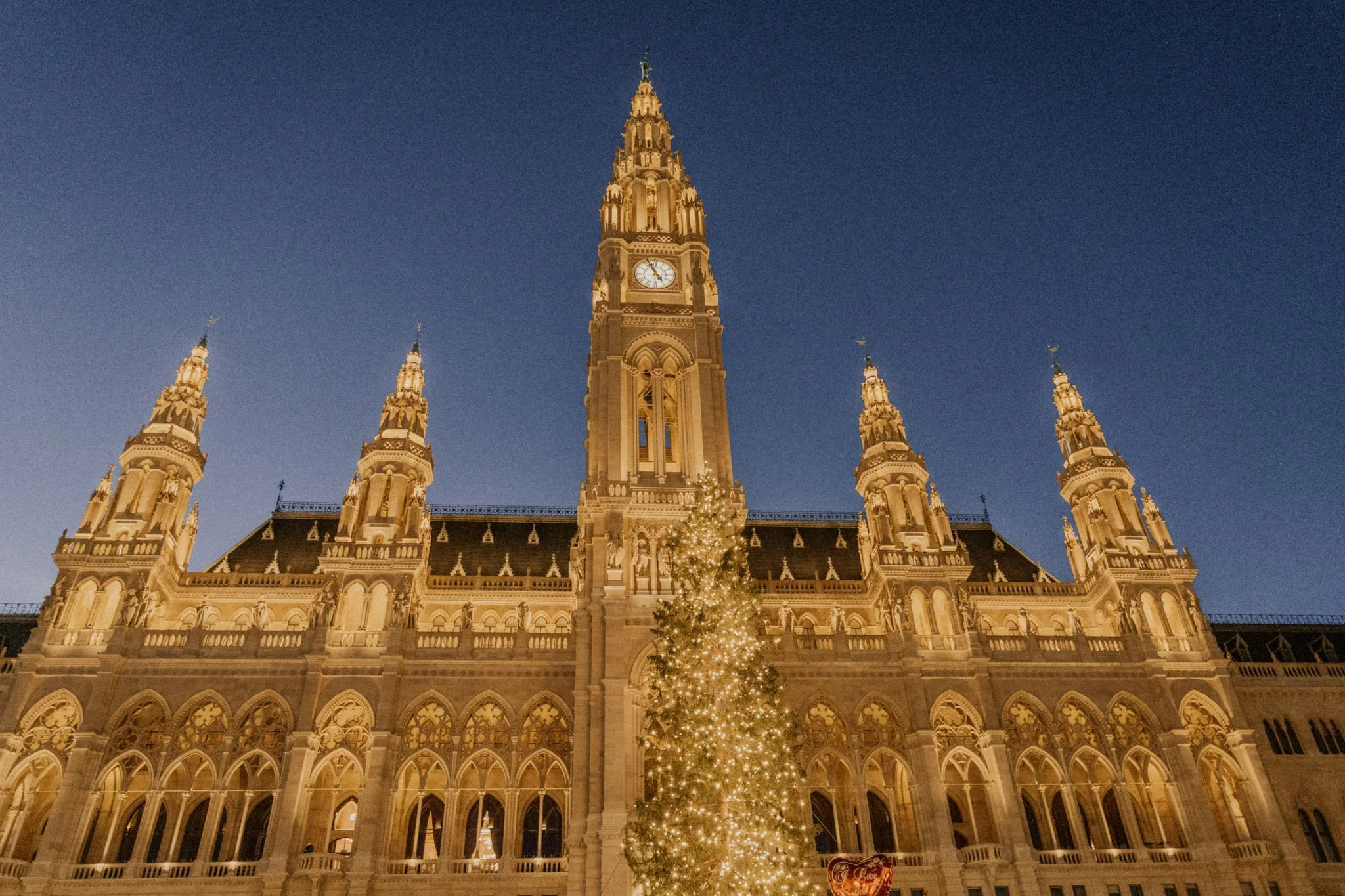
1. Vienna, Austria
Vienna took first place, and it makes sense. The Austrian capital hosts over 20 Christmas markets throughout the city, each offering something different. You'll find imperial elegance at Schönbrunn Palace and neighborhood charm at Spittelberg - variety without sacrificing quality.
Vienna also opens early. The markets start before American Thanksgiving, which works perfectly if you're trying to fit in a holiday trip during time off. Not all markets open at once though. Some don't start until late November, so check dates before you book.
What travelers loved: The fairy-tale backdrops, the variety of markets, and how easy it is to explore by public transit. Vienna delivers a consistent Christmas atmosphere across the entire city.
Check out our Vienna Christmas Markets guide for planning tips.
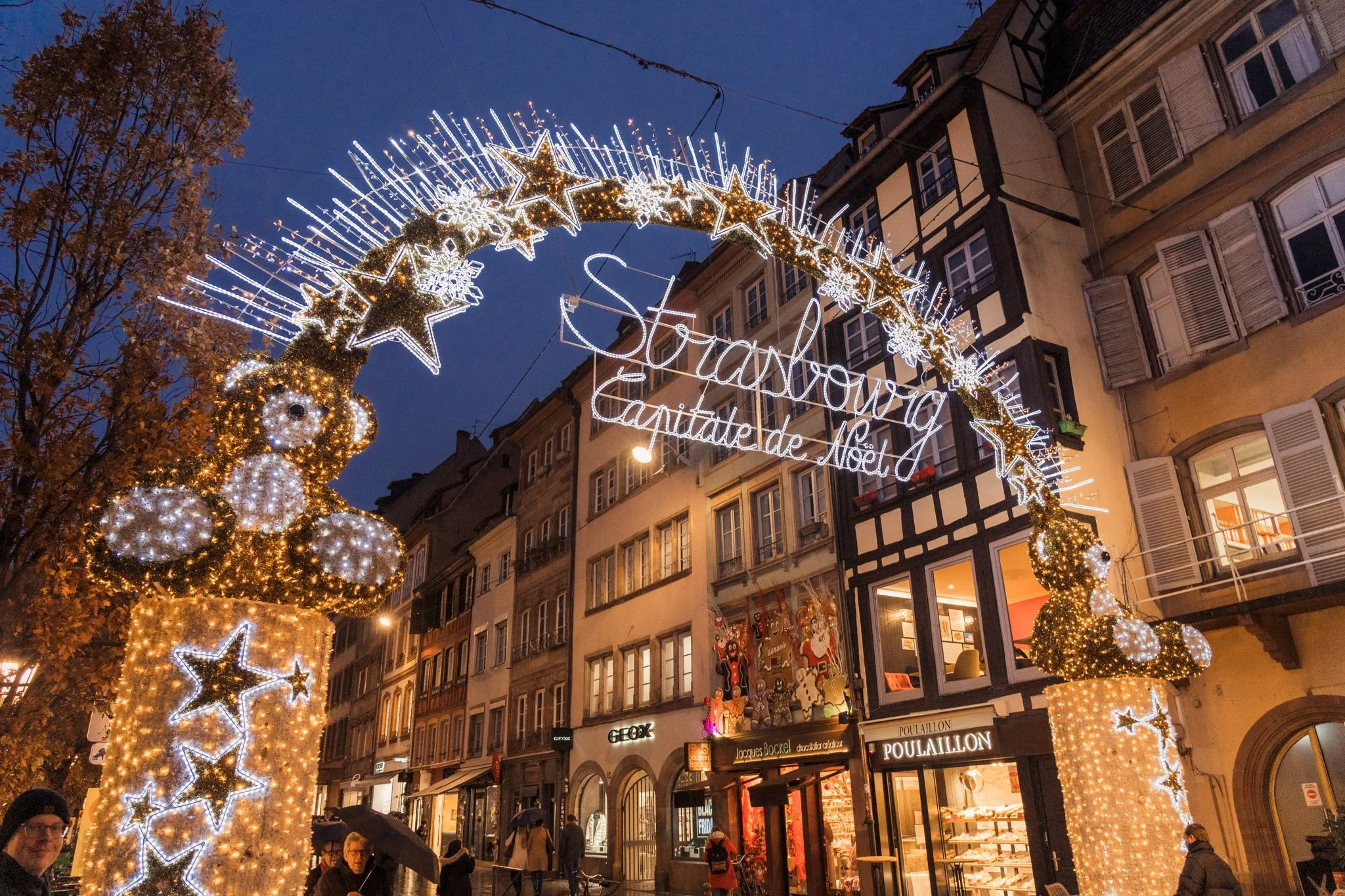
2. Strasbourg, France
Strasbourg calls itself the Capital of Christmas, and it's been earning that title since 1570 when it hosted France's first Christmas market. The entire historic Grande Île transforms during the season.
Nearly every corner of the old town gets decorated. The 30-meter Christmas tree at Place Kléber. Chandeliers hanging at street intersections. Multiple distinct markets, each with its own character. The street decorations alone justify the trip, and the food scene seals the deal - tarte flambée, bredele cookies, pain d'épices, spätzle in cream sauce.
If you're visiting one French Christmas market, make it Strasbourg. Then add Colmar (coming up at #5) for the full Alsace experience.
Want details on what to expect? Check out our Strasbourg Christmas Markets Guide.
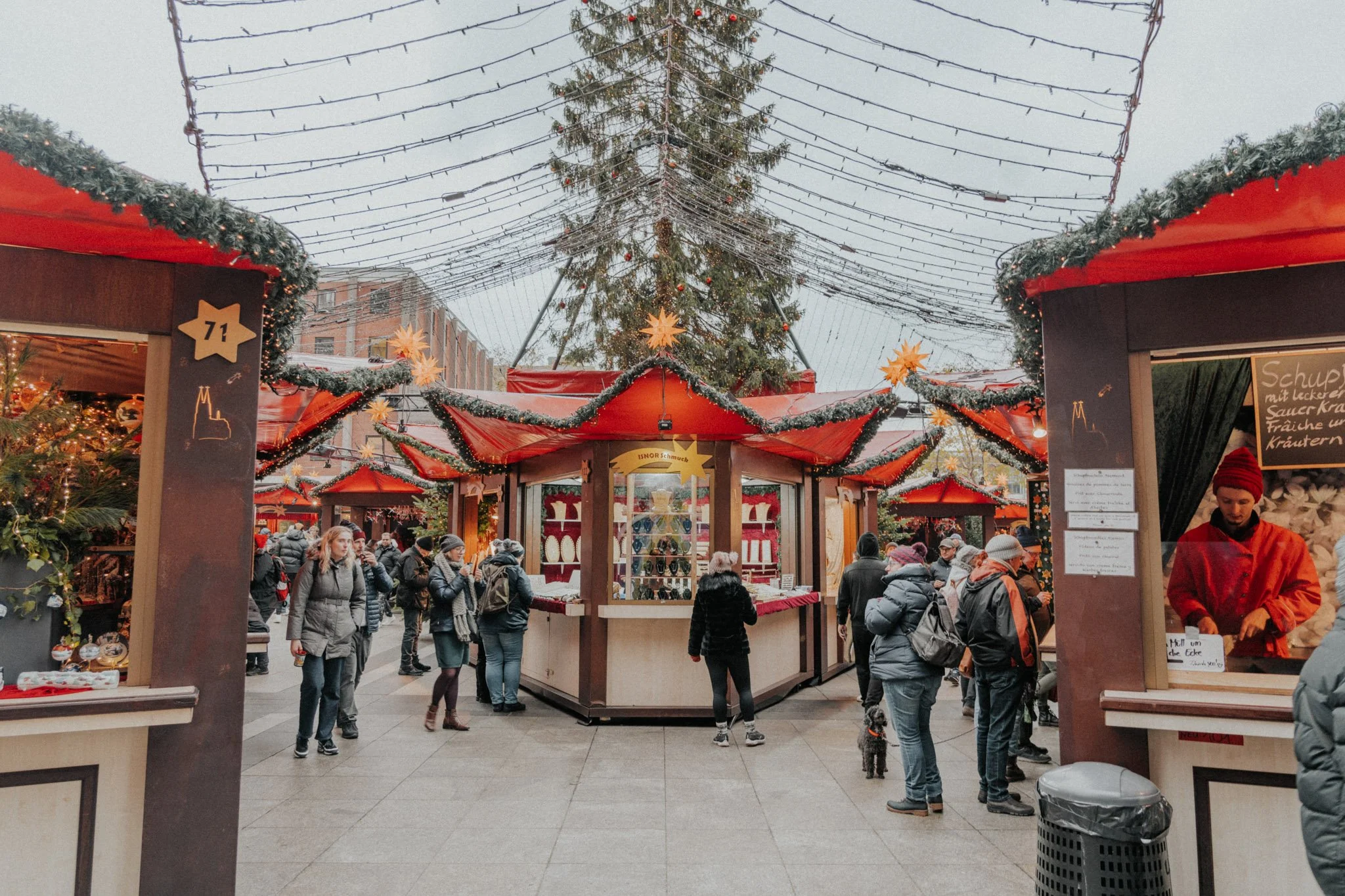
3. Cologne, Germany
Cologne hosts multiple themed Christmas markets, and that variety is what travelers appreciate most. You've got a traditional market (the Dom Market) beneath the Gothic Cathedral with a 50,000-LED Christmas tree. Whimsical themed markets like the Gnome market, Ice skating rinks, curling, maritime-themed stalls, and so much more. Each market feels completely different!
The food is consistently excellent across all the markets as well. Cologne is also great for mug collectors - each market offers distinct ceramic designs, with some featuring different variations annually. A Christmas Market express train runs between markets for about 10 euros (hop-on-hop-off day pass with departures every 15 minutes).
The markets get packed on weekends, especially evenings. We highly suggest a visit on a weekday if you want a more relaxed experience.
Check out our Cologne Christmas Markets guide to find out what you need to know before you go!
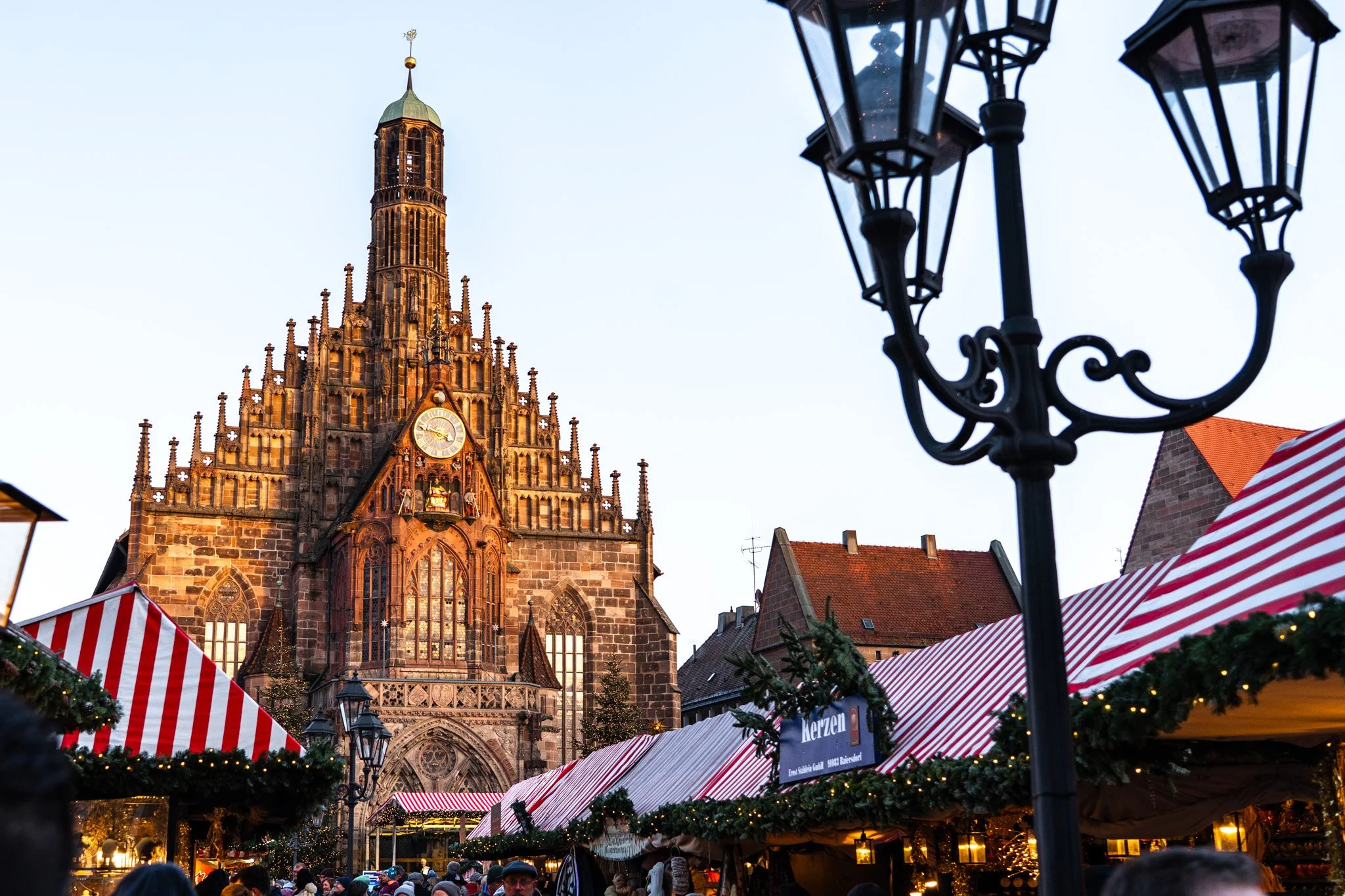
4. Nuremberg, Germany
Nuremberg sets the standard for German Christmas markets. The Christkindlesmarkt has been running since at least 1628. The city maintains strict quality standards for local and handmade goods, earning it the nickname "little city of wood and cloth" for those distinctive red-and-white striped wooden stalls set in front of the Gothic Frauenkirche.
While most German cities feature Santa, Nuremberg elects a young woman to play the Christkind (angel) every two years. She opens the market with a prologue from the church balcony.
The city is known for protected regional specialties you can't find anywhere else - Drei im Weckla (multiple small bratwurst in one bun) and Elisenlebkuchen (traditional gingerbread dating back to the 18th century).
Nuremberg also features international stalls from partner cities and dedicated children's areas with craft workshops. The market draws massive crowds, especially opening day (Friday before first Advent) and weekends.
Find out more details about visiting Nuremberg in our Nuremberg Christmas Markets guide.
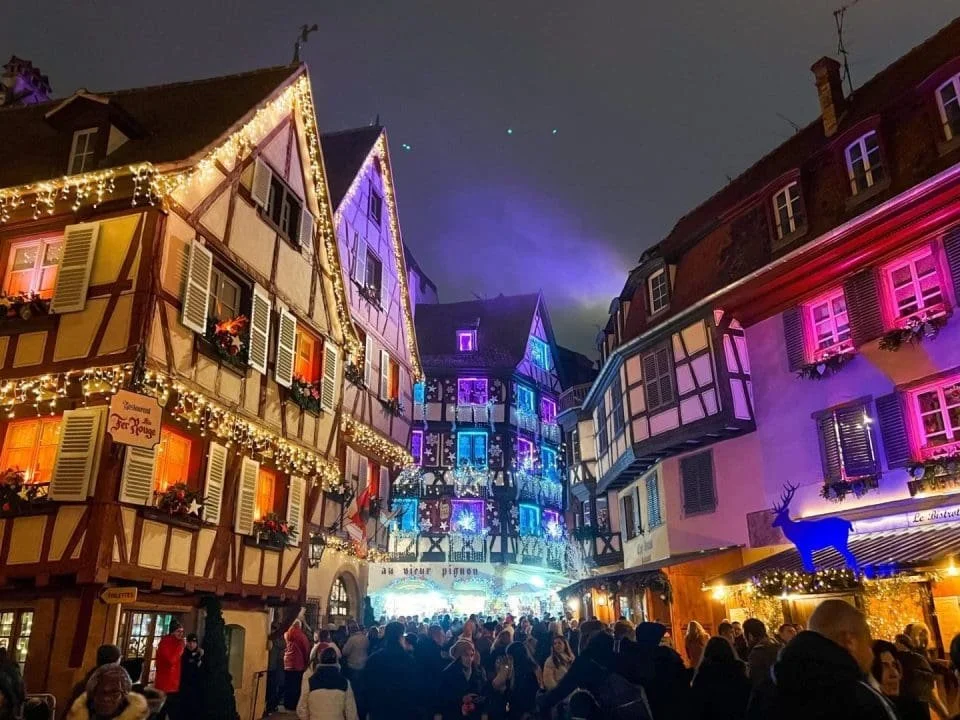
5. Colmar, France
Colmar earned more votes than Berlin despite Germany's capital hosting over 60 Christmas markets, somewhat proving that scenery, atmosphere and charm beat can scale when it comes to which market is the crowd-favorite.
Colmar features six distinct markets within walking distance, all set among colorful half-timbered houses and cobblestone streets winding along canals. Nearby villages inspired Disney's Beauty and the Beast, and the town absolutely delivers that fairy-tale aesthetic.
The culinary market is a standout - some of the best food of any Christmas market city, such as duck, onion soup, truffle pasta, and excellent mulled wine. On certain weekend evenings, Papa Noël floats down the canal in a boat full of singing children! It’s the perfect stop for precious Christmas music and unforgettable memories.
Colmar draws huge crowds even on weekdays since it's an easy trip from Strasbourg and Basel, so we highly recommend planning to visit this one as far in advance as possible. We would highly recommend visiting on a weekday rather than a weekend evening as well.
For our breakdown of Colmar’s markets, check out our Colmar Christmas Markets guide.

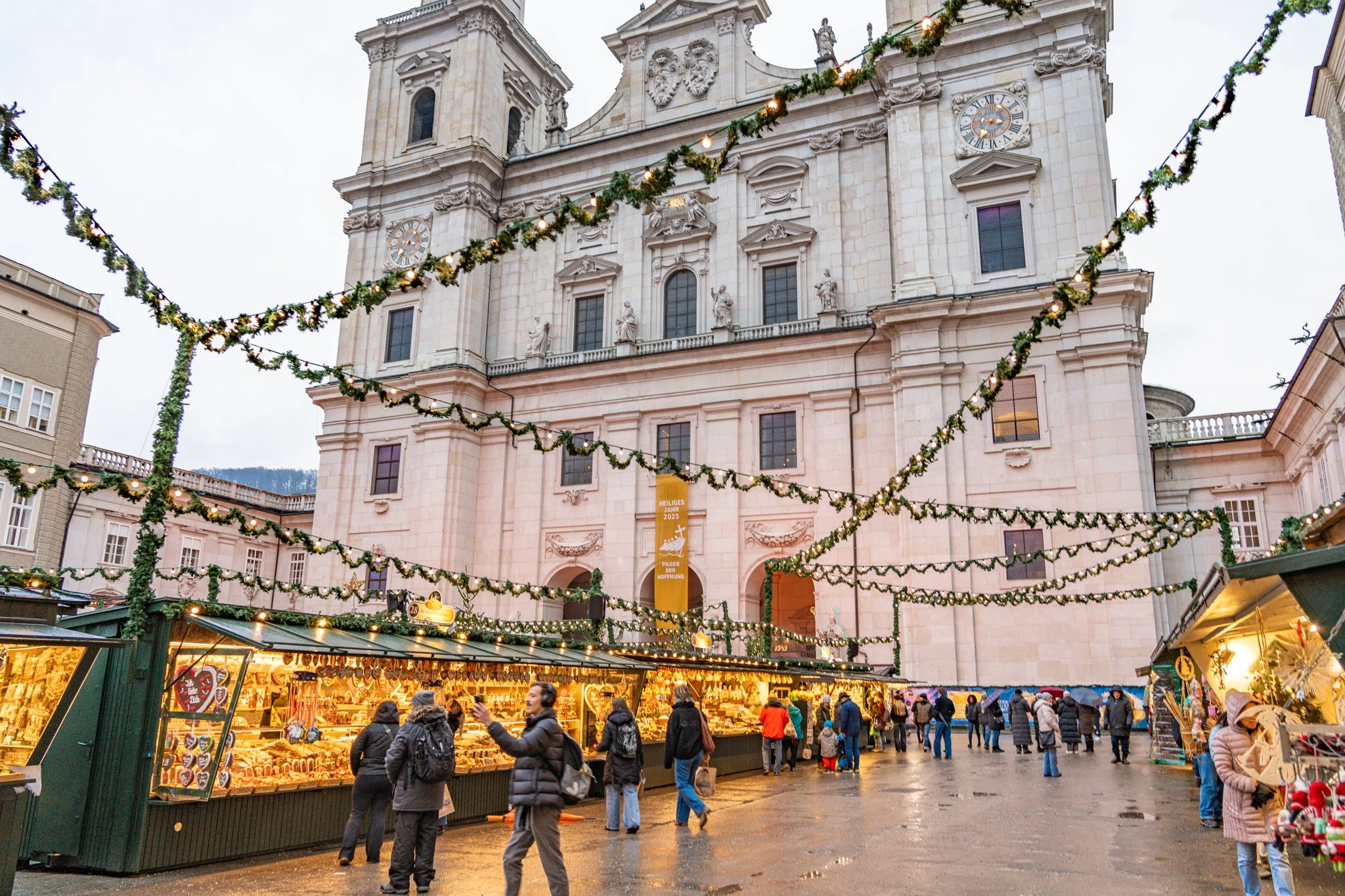
6. Salzburg, Austria
Salzburg combines Alpine grandeur with compact charm. The UNESCO World Heritage Old Town sits at the foot of Hohensalzburg Fortress with snow-capped peaks in the distance - postcard scenery that feels especially magical during Christmas.
The city's musical heritage sets it apart. As Mozart's birthplace, the markets feature singalongs and regular performances. Silent Night was written nearby, and you can feel that connection to Christmas music history throughout the season.
Salzburg also goes all-in on the Alpine Krampus tradition - half-goat, half-demon creatures accompany St. Nicholas in early December! The city offers specialties like Salzburger Nockerl (pillowy meringue with raspberry sauce) and Mozartkugeln candies.
The markets outside the city center tend to be less crowded and offer magical forest settings with live animals, illuminated trees, and Krampus displays.
Find out more details about visiting Salzburg in our Salzburg Christmas Markets guide.
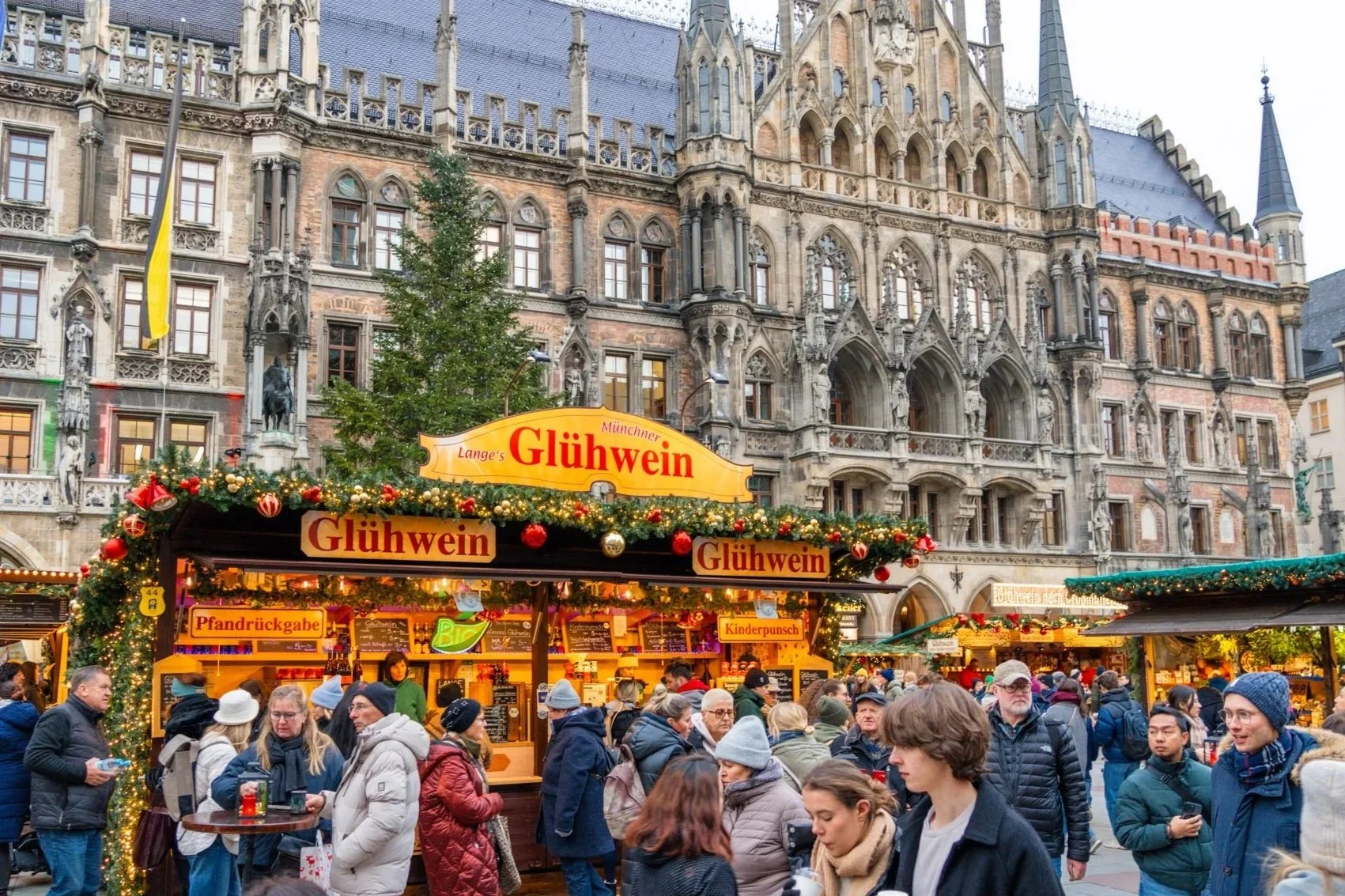
7. Munich, Germany
Munich offers serious scale! It’s home to over a dozen Christmas markets throughout the city. The Christkindlmarkt at Marienplatz dates back to the 14th century, making it one of the original Christmas markets with real historical authenticity.
The variety is impressive, from medieval-themed markets with costumed vendors and flaming mulled wine to palace courtyard settings that feel intimate and elegant. Bavarian cultural traditions add special touches like brass bands, live folk music, and Germany's largest nativity market.
The main market at Marienplatz delivers on iconic backdrops, but it can feel overwhelming with crowds and bottlenecks. The smaller markets throughout the city offer better experiences with unique themes and less congestion.
For our complete guide on which markets to prioritize, check out our Munich Christmas Markets guide!
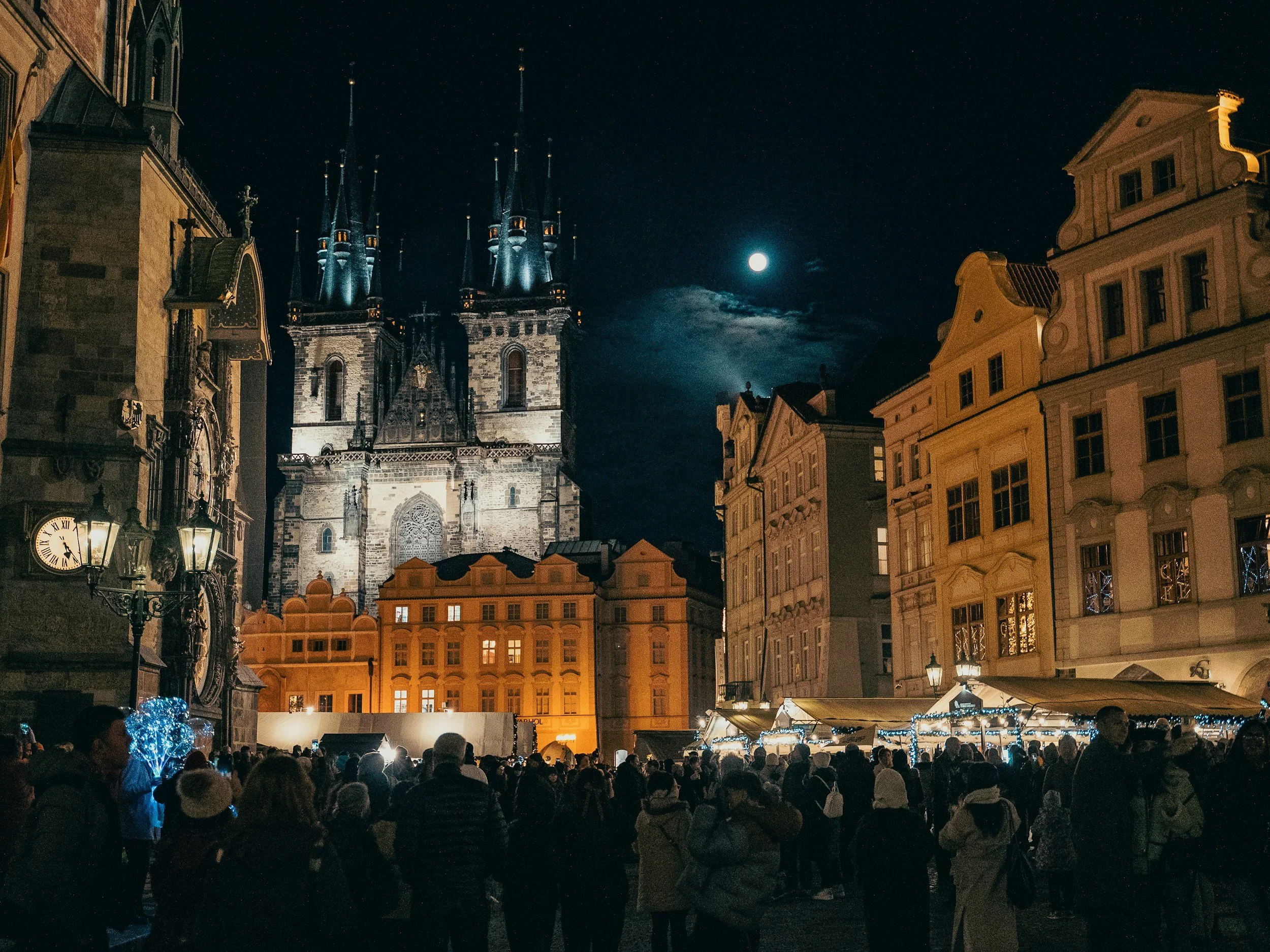
8. Prague, Czech Republic
Prague's Christmas markets aren't the most impressive in Europe for shopping. Many stalls feel repetitive and commercialized. But Prague is still magical to visit at Christmas because of one thing: the backdrop.
Old Town Square is one of the most beautiful squares in the world. Seeing it decorated for Christmas with the Gothic towers of the Church of Our Lady before Týn rising behind a 24-meter Christmas tree is breathtaking!
Prague also wins points for affordability compared to cities like Vienna and Munich, and for staying open through Christmas and New Year's when most German markets close. The Czech specialties are delicious - Trdelník (warm chimney cakes with cinnamon and sugar) and Prague ham roasted on spits.
Go to Prague for the city and the setting, not for world-class market shopping. The backdrop makes even standard stalls feel magical.
9. Rothenburg ob der Tauber, Germany
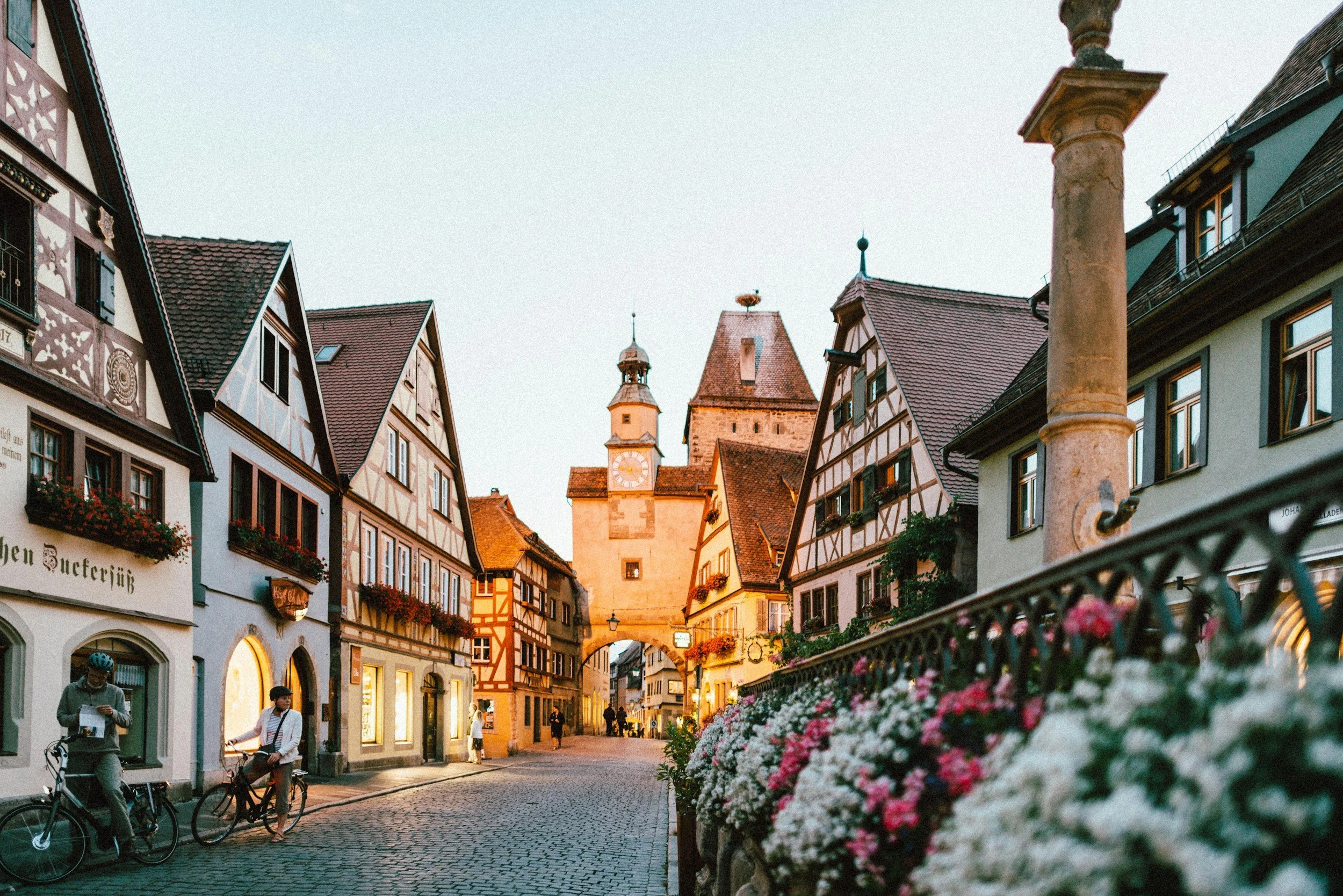
Rothenburg is Germany's best-preserved walled medieval town, and during Christmas it becomes a living fairy tale. With only 61 market stalls, it's tiny compared to Nuremberg or Munich. But nearly every traveler who visited said it was their most memorable market stop.
What makes Rothenburg special is complete medieval immersion. Half-timbered houses from the 1200s. Cobblestone streets. Intact defensive walls. You're standing in the same market square looking at the same buildings that stood there more than 500 years ago.
The town is home to Käthe Wohlfahrt's world headquarters - a massive permanent Christmas Village with a German Christmas Museum featuring a 16-foot rotating Christmas tree. The night magic is real. The glow of fairy lights illuminating old timbered buildings creates a complete fairy-tale wonderland.
What Rothenburg lacks in size, it makes up for in romantic atmosphere and medieval immersion.
10. Dresden, Germany
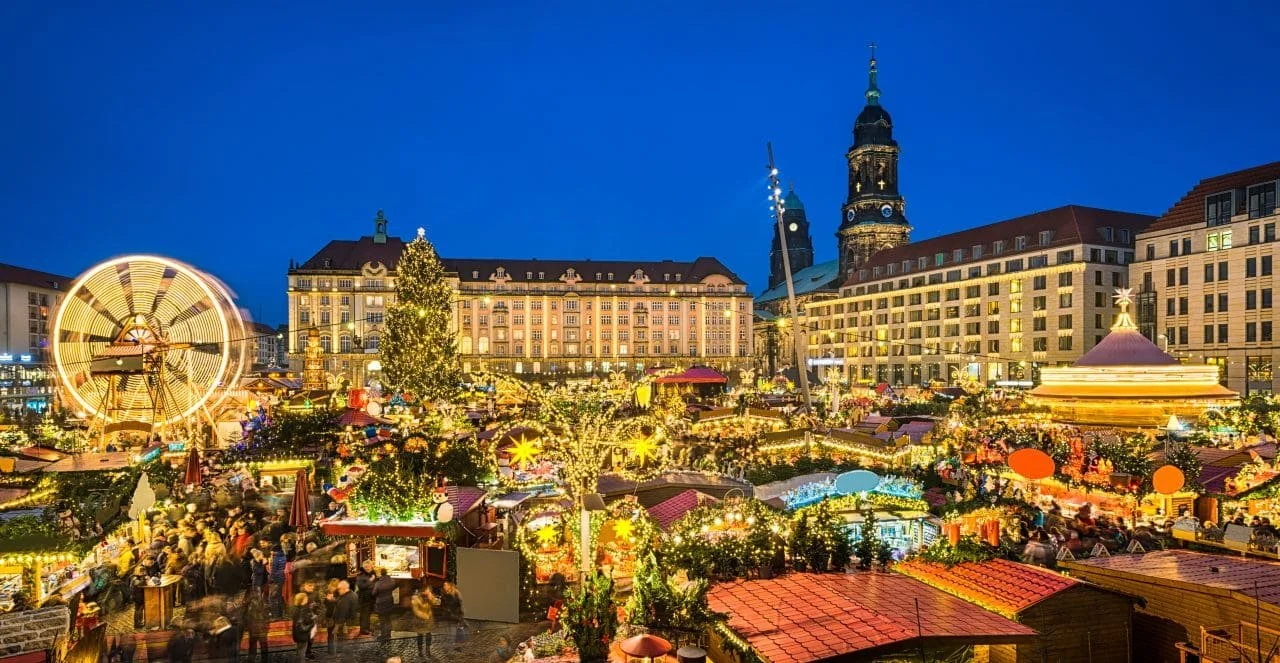
Dresden hosts the world's oldest Christmas market. The Striezelmarkt has been running continuously since 1434 - that's 590 years of tradition. The city leans into that heritage with world-record attractions you can't see anywhere else.
The world's largest Erzgebirge Christmas Pyramid stands nearly 48 feet tall with rotating tiers powered by heat from candles. The world's largest walk-in candle arch measures 13.5 meters wide, representing the arched mine entrances from the region's mining heritage. The multi-ton stollen (Christmas fruit cake) gets paraded through the old town and cut with a 1.6-meter long knife.
Dresden's traditions stem from nearby Erzgebirge (Ore Mountains) mining culture. The authentic crafts like Christmas pyramids, candle arches, smoking men, nutcrackers are genuine regional specialties, not mass-produced imports.
The city offers three main markets plus seven more throughout Dresden. The markets near Frauenkirche tend to be quieter and more authentic than the main Striezelmarkt, with a magical atmosphere at night.
Shop the Christmas Market Collection
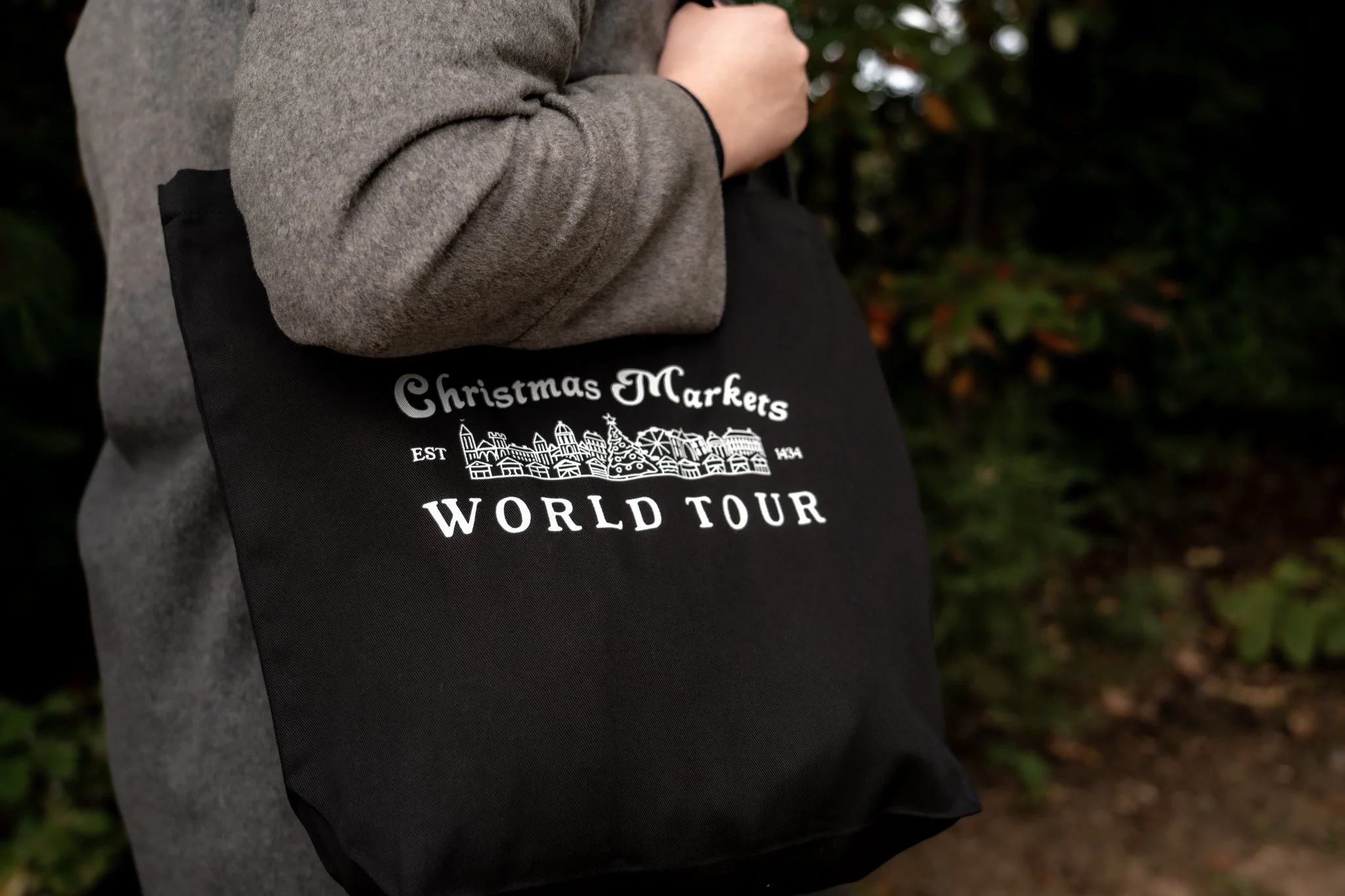
Heading on your very own Christmas Markets World Tour? Get your packing list settled and outfits ready with the newest merch for your trip!