Though there are countless European Christmas markets, there's nothing quite like the historic Christmas markets in Germany, especially the Christmas markets in Nuremberg! With uniquely German charm, iconic food, and a buzzy atmosphere, Nuremberg's historic markets have so much to love. Check out our complete 2026 Nuremberg Christmas Market guide with market opening dates, tips on where to stay, how to get around, and what to order when you go.
(This post contains affiliate links. We may earn a commission from your purchase(s) at no cost to you, but every little bit helps us keep sharing the magic and logistics of visiting Europe’s best Christmas markets. Thanks!)
How to Get to Nuremberg
By Air:
If you’re coming from Europe, you can fly into Nuremberg Airport (NUE). This is the closest and most convenient airport. It offers direct flights from various European cities. From the airport, you can easily reach the city center by the U-Bahn (subway). Line U2 takes you directly to the city center (Hauptbahnhof) in approximately 12-15 minutes. This is the quickest and most cost-effective option.
If you’re coming from another continent, Munich Airport (MUC) or Frankfurt Airport (FRA) will be your closest major international airport. These major international hubs offer a wider range of international flights. MUC is approximately 160 kilometers (100 miles) southeast of Nuremberg. High-speed ICE trains connect Munich Airport to Nuremberg Hauptbahnhof (central station) in about 1 hour to 1 hour and 15 minutes. Frequent connections make it a comfortable, efficient option. FRA is approximately 220 kilometers (137 miles) northwest of Nuremberg, with high-speed ICE trains that connect Frankfurt Airport to Nuremberg Hauptbahnhof in roughly 2 to 2.5 hours.
By Train:
Nuremberg Hauptbahnhof is a major railway hub in Germany, making it easy to reach from various cities. In 1-1.5 hours, you can reach Nuremberg from Munich. Trains from Frankfurt and Stuttgart to Nuremberg take about 2-2.5 hours. Berlin to Nuremberg takes about 3 hours. Book train tickets in advance, especially during the Christmas market season, to get the best rates! While there is a running “joke” that German trains are always on time…we’ve found German trains to be some of the most unreliable in terms of schedule during the winter months. Strikes are always possible, and winter weather can slow time frames down. Be sure to check out our blog on what to do if a train strike affects your trip so you have a plan A, B, and C!
How to Get Around Nuremberg
Stay in or near the city center and walk! Walking is always the best way to see the city. If you'd like to go a little further, trains run frequently nearby. Nuremberg’s main train station is easy to access and goes to many other major stations in many other cities. Close to Munich, Bamberg, Regensburg, Rothenburg, and Frankfurt, Nuremberg is the perfect launching pad for more European Christmas market adventures.

Nuremberg Christmas Market Locations
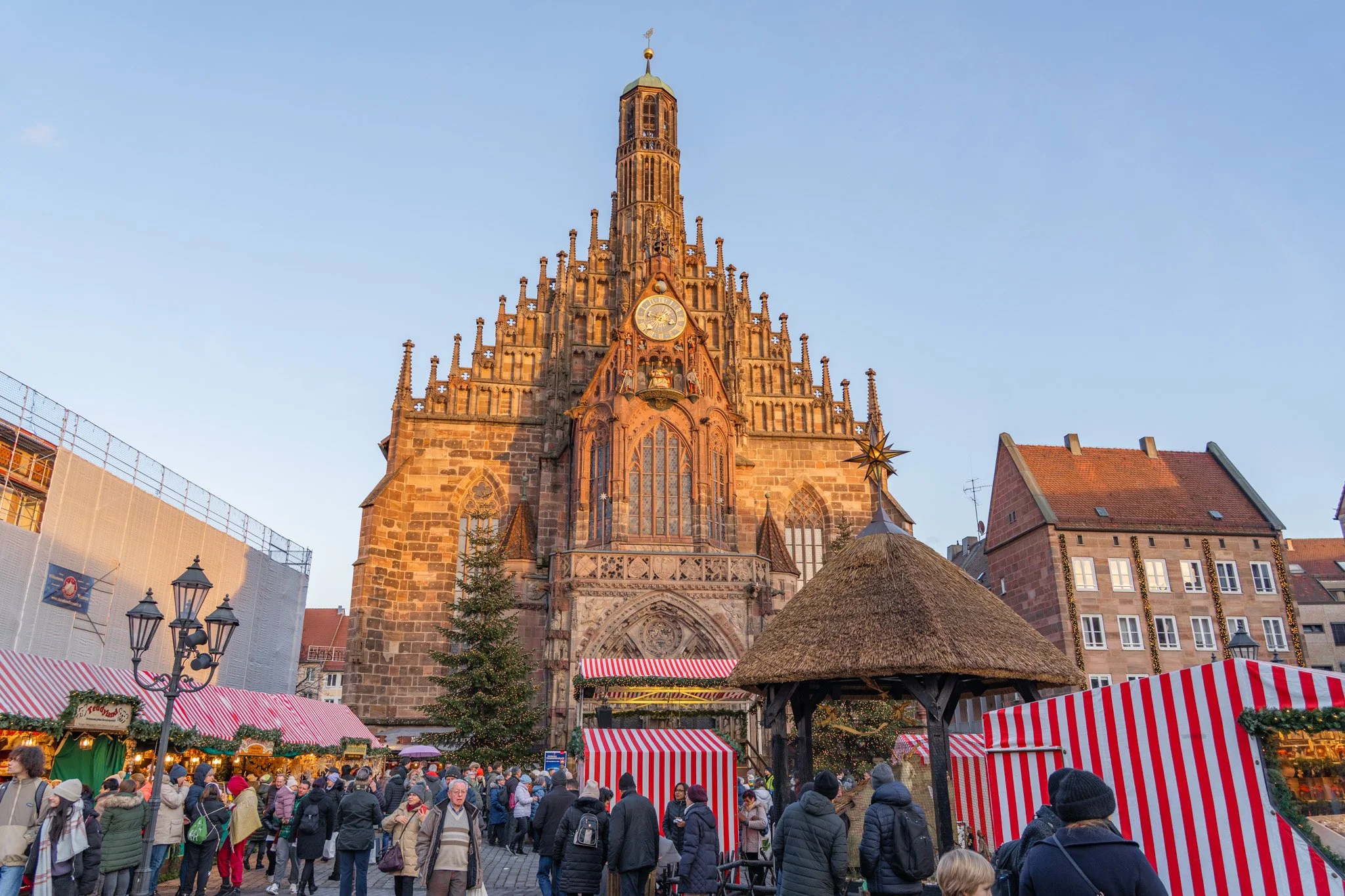
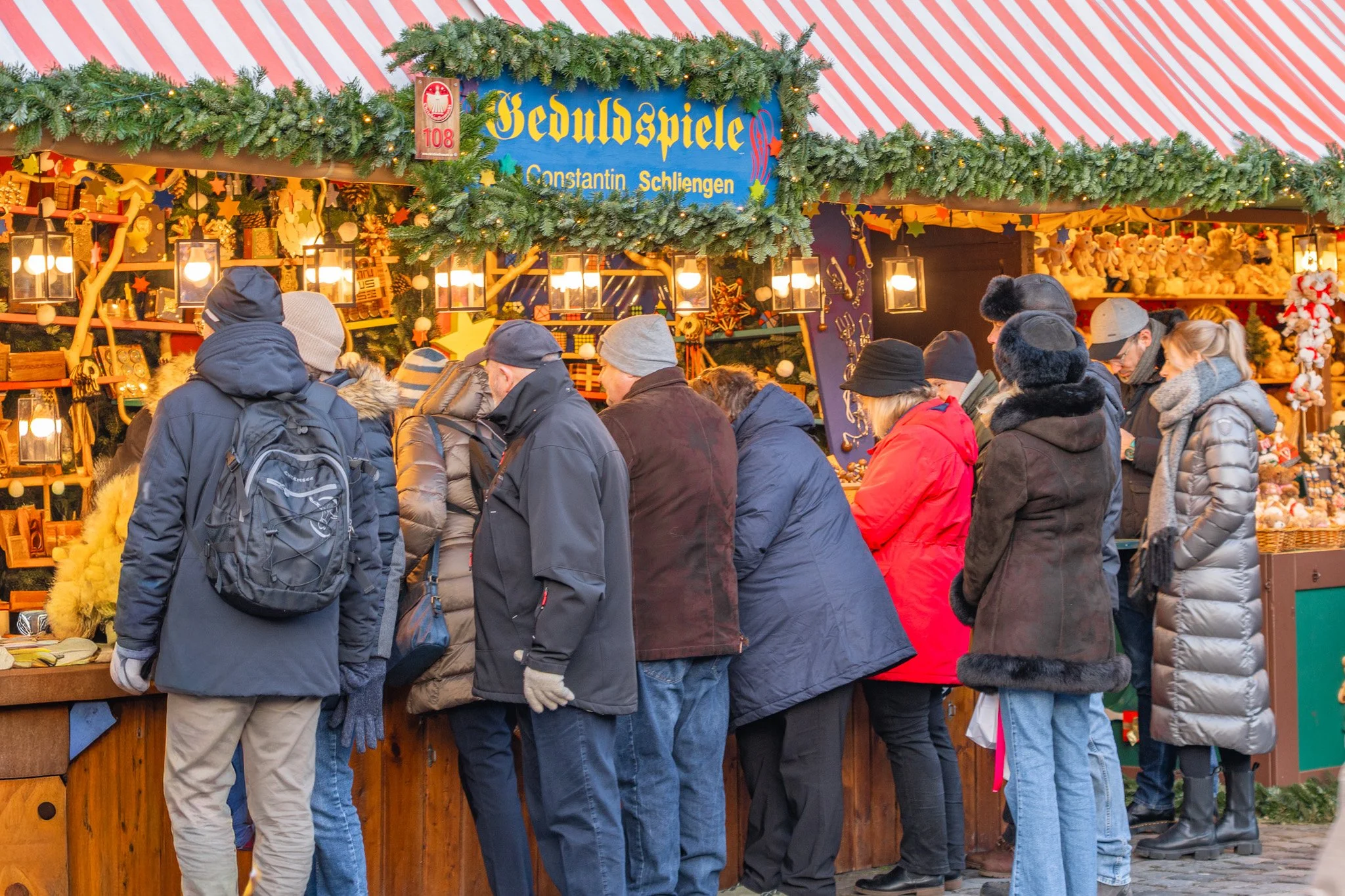
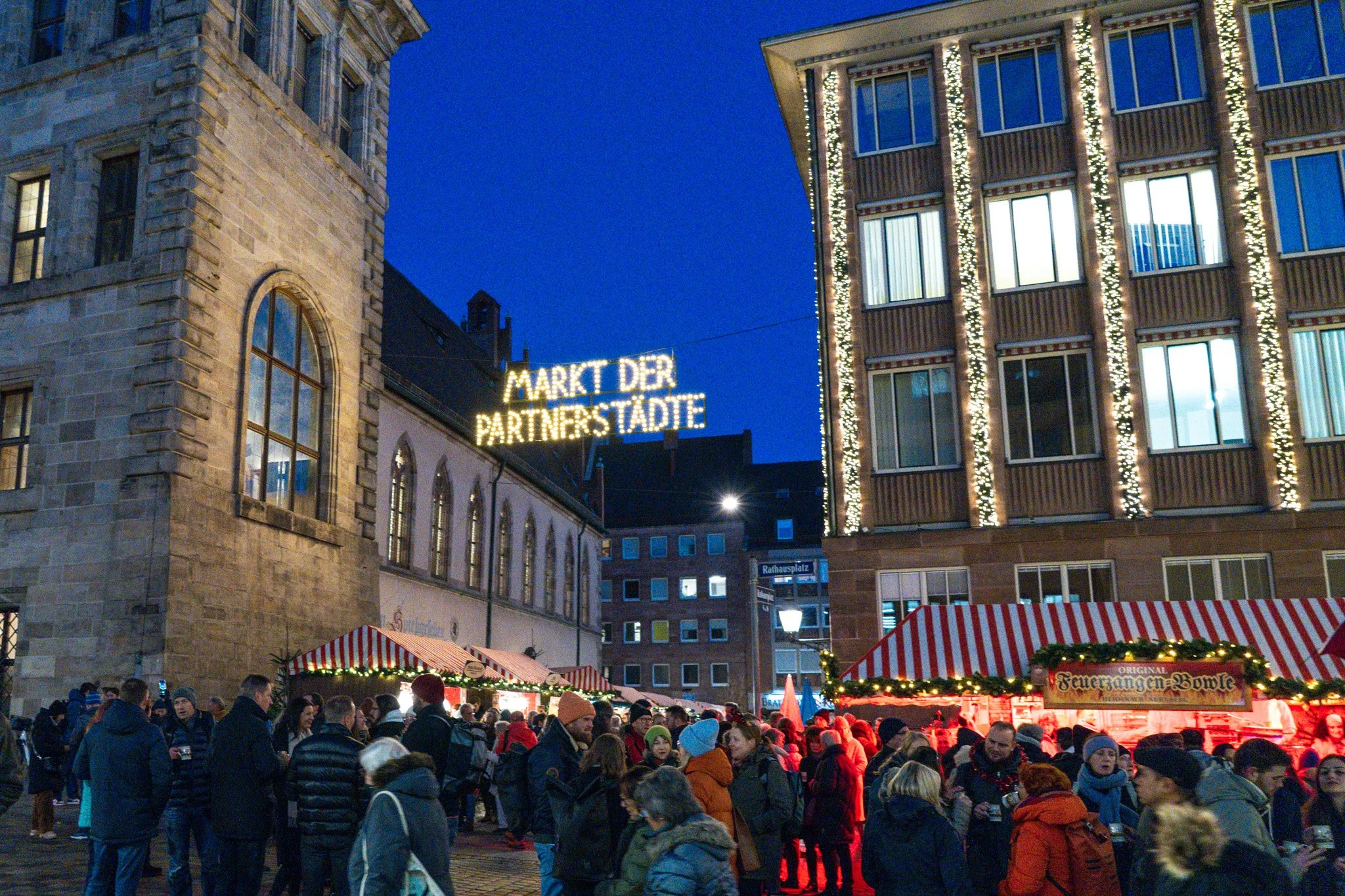
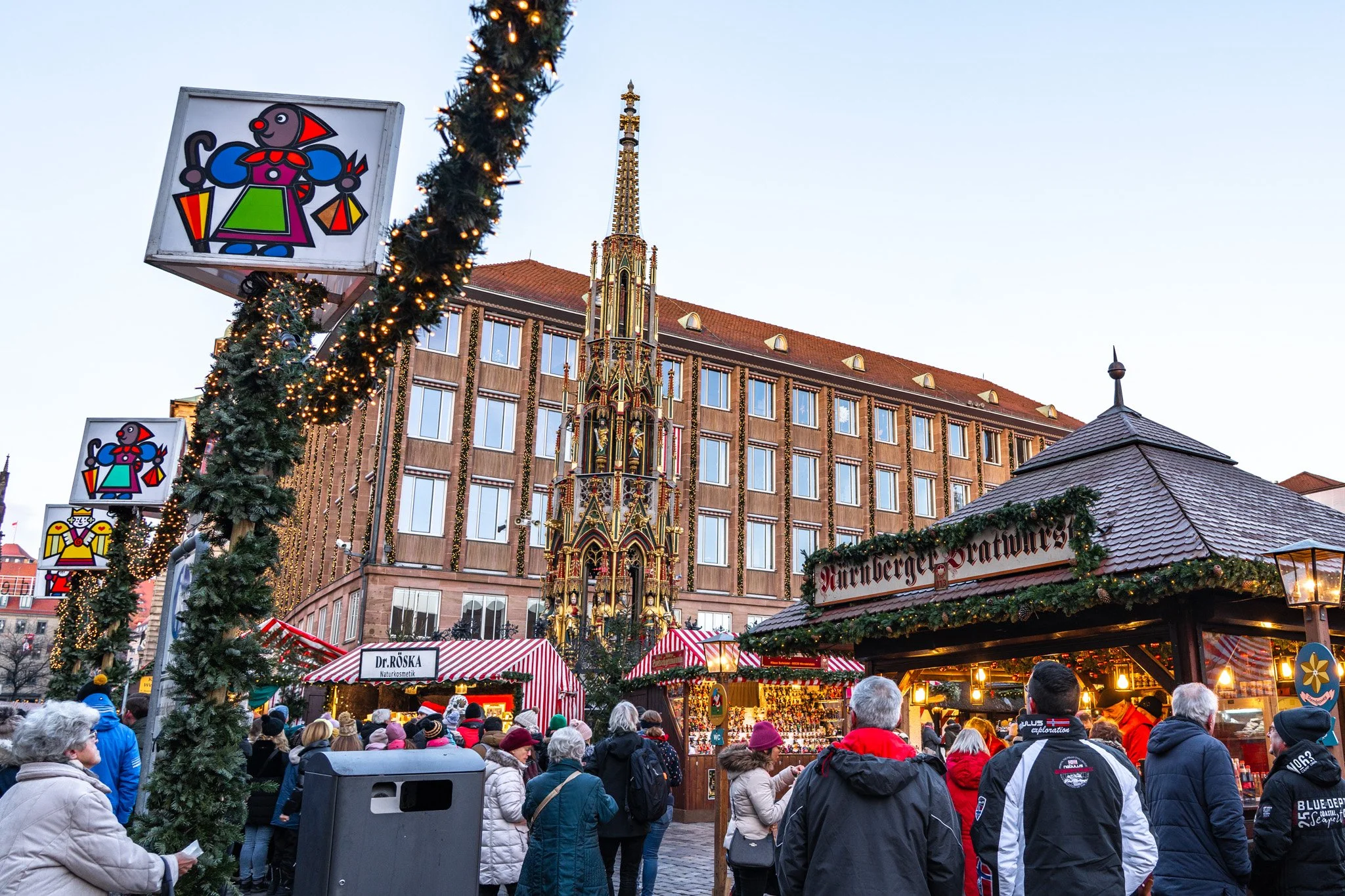
Nuremberg has three Christmas markets, each offering a unique and immersive experience. The most iconic market is the Nuremberg Christkindlesmarkt, a centuries-old tradition that fills the historic Hauptmarkt with wooden stalls, twinkling lights, and the aroma of roasted almonds and gingerbread. Nearby, the Kinderweihnacht, aka the children’s market, features a carousel, puppet shows, and a host of kids’ activities. For a taste of international flair, explore the Markt der Partnerstädte, where vendors from Nuremberg's sister cities showcase their cultural treasures and culinary specialties.
These three markets are all conveniently located within walking distance of each other.
Nuremberg Christmas Markets Opening Dates & Times
The Nuremberg Christmas Markets will be open November 27–December 24, 2026. The markets are scheduled to be open from 10 a.m. to 9 p.m. daily. Visiting during the week was quite crowded, but we thankfully didn’t encounter the shoulder-to-shoulder crowds often found on the weekend. Visiting during the day also helps you avoid some of the bigger crowds, especially on the weekend, though there's something undeniably magical about the buzz of evenings, especially under the illuminated lights of the Christkindlmarkt.
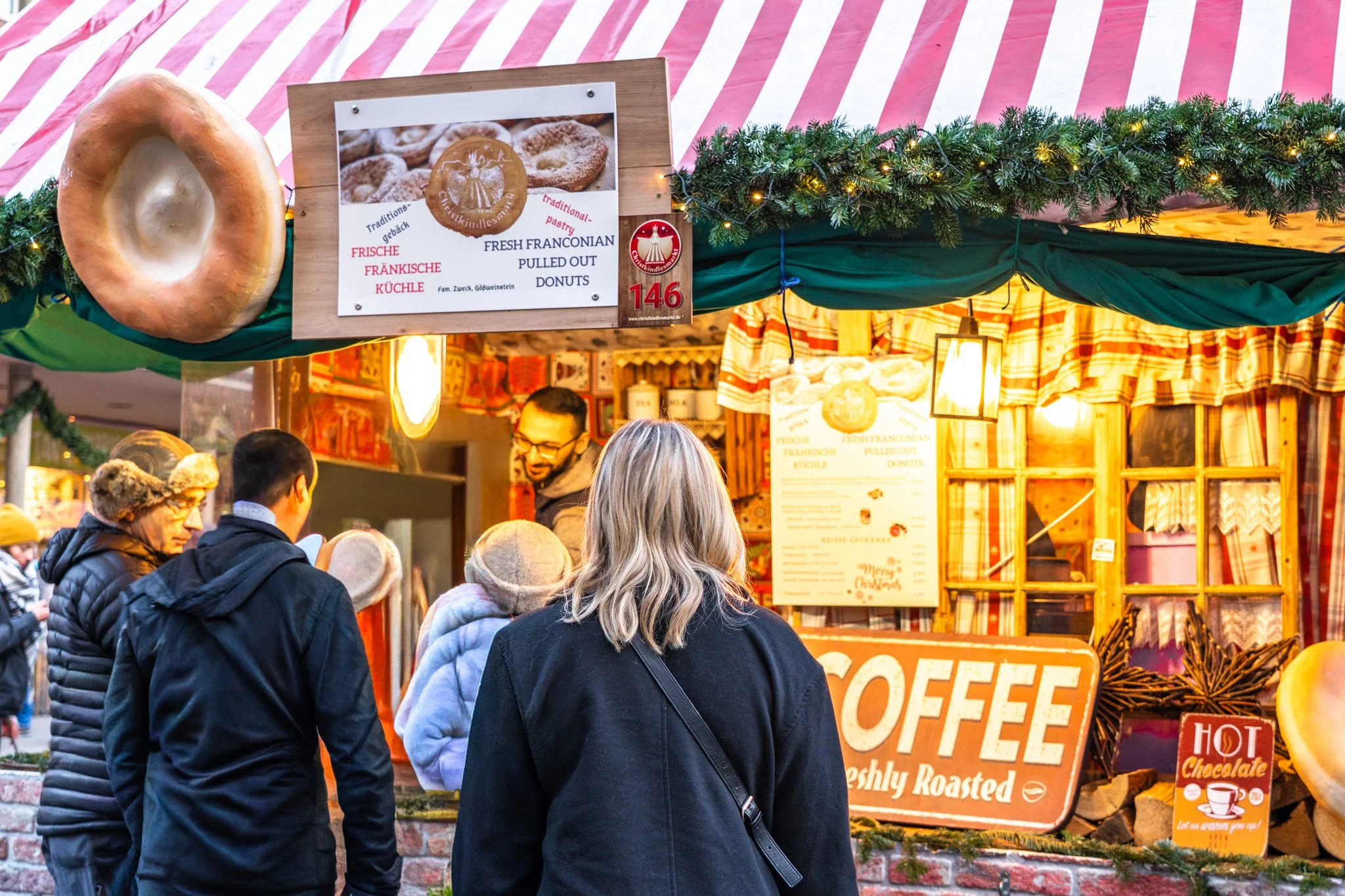
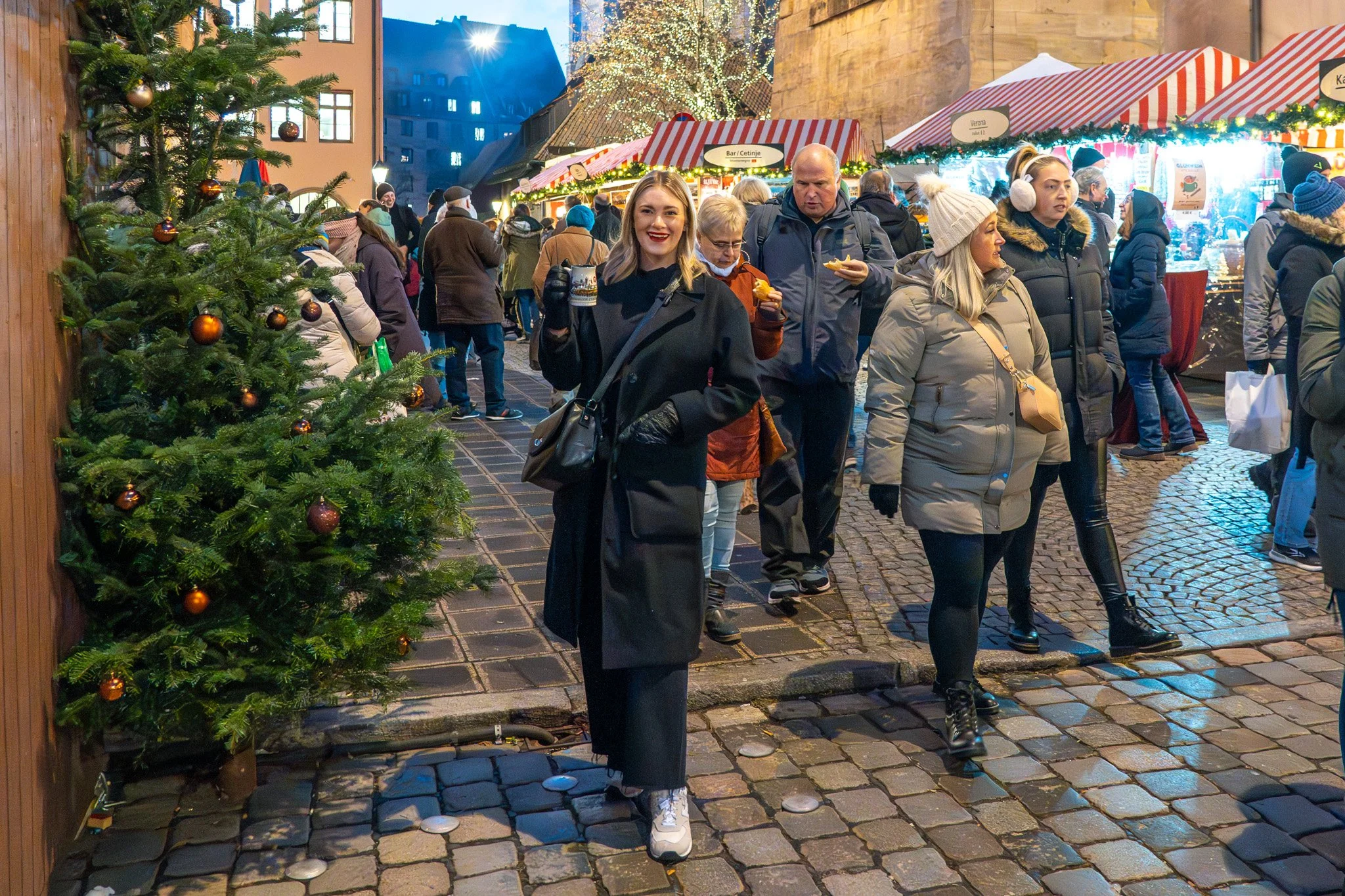
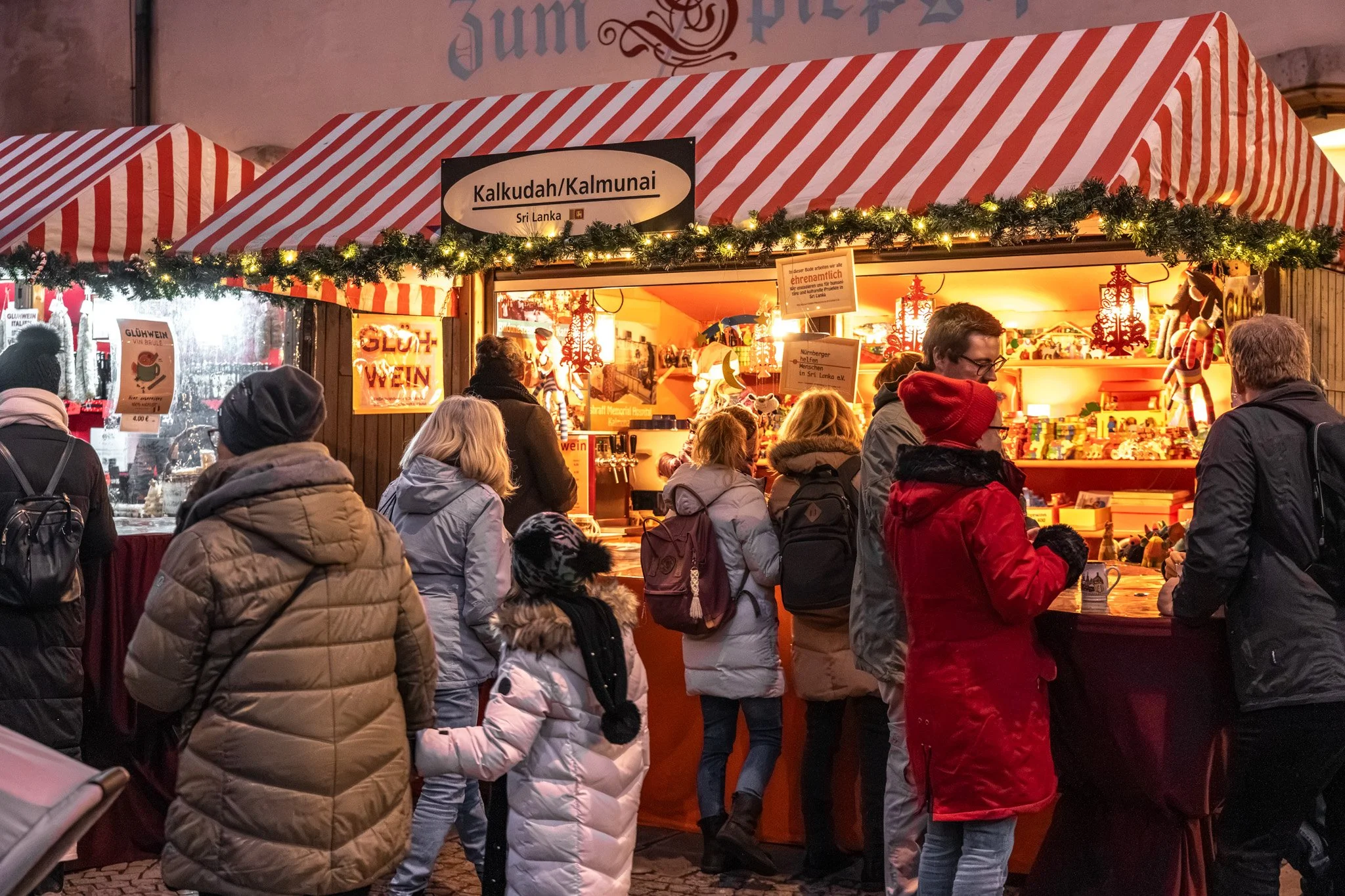
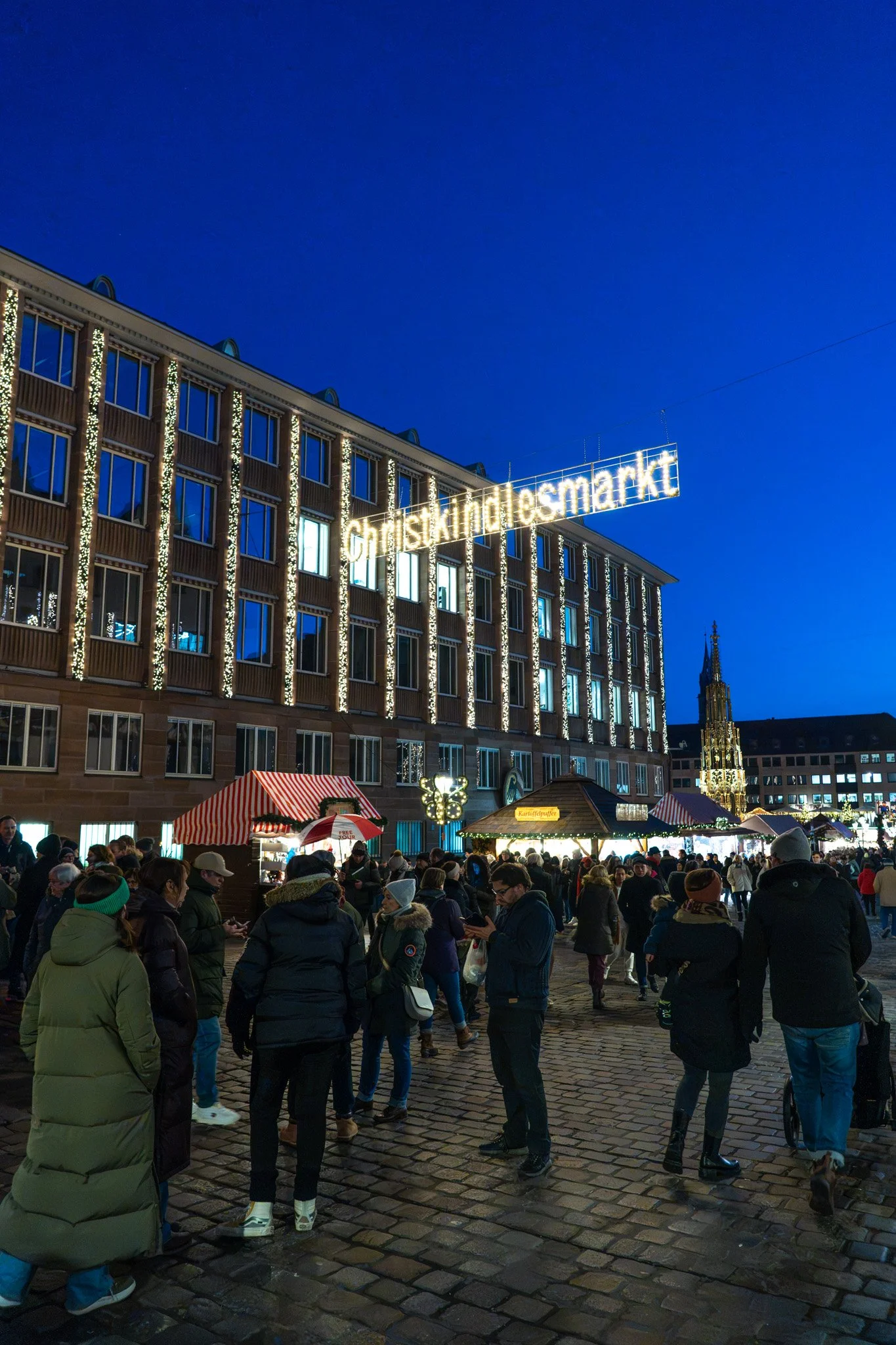
Crowds at Nuremberg’s Christmas Markets
Nuremberg is home to some of Germany's most famous Christmas markets, so naturally, they’re going to be crowded! Crowds are worst on weekend evenings, and Nuremberg’s Christmas markets are no different. To avoid the worst of the crowds, we highly recommend visiting earlier in the day, even on weekends.
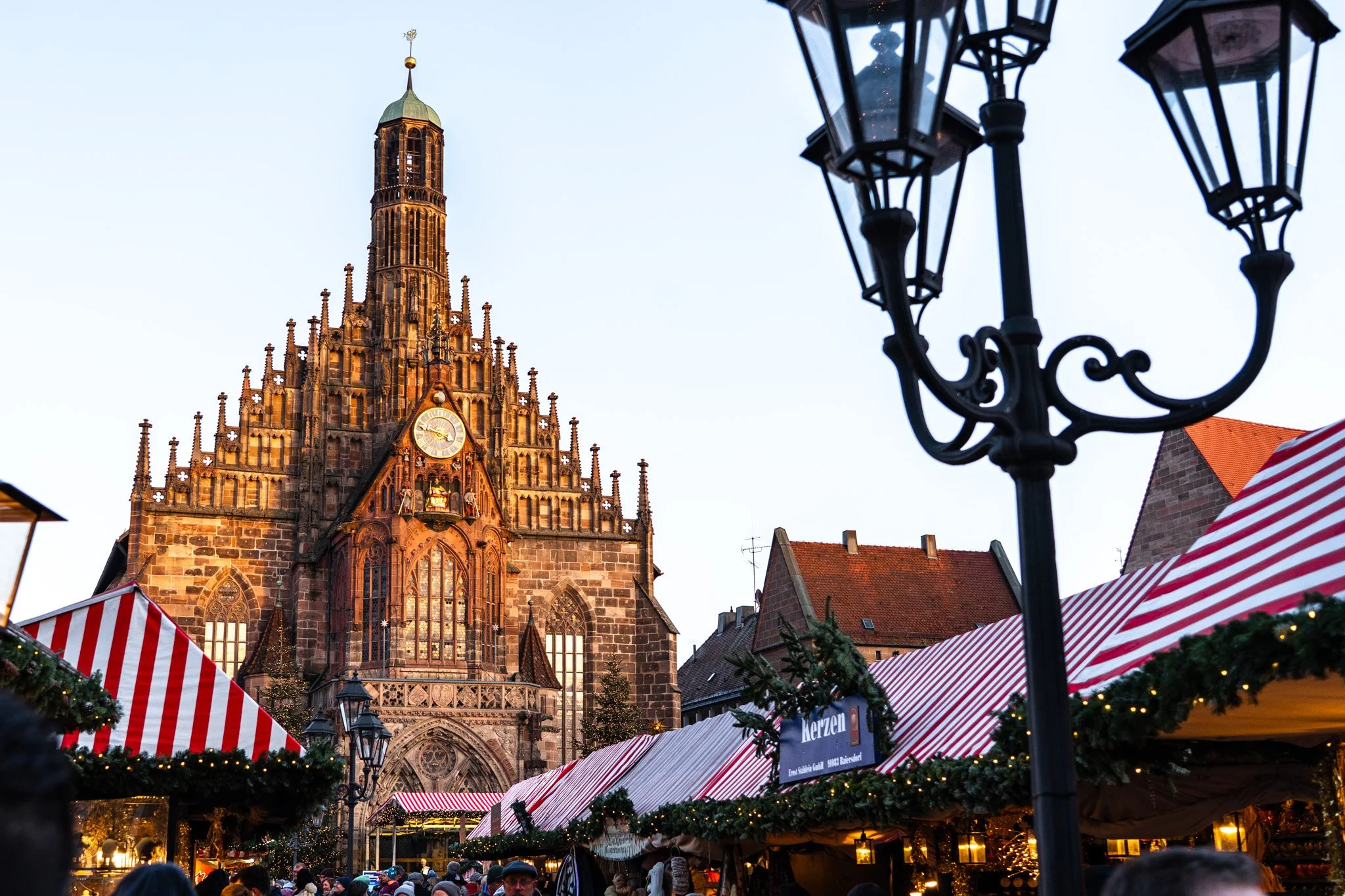
While we love seeing the glow of the lights at Christmas markets, it’s also worth visiting Nuremberg’s Christmas markets during the day. We loved seeing the iconic red-and-white striped roofs of the wooden market booths in Nuremberg during the day even more than how the city looks at night.
Foods & Drinks to Try in Nuremberg
Riesling – when in Rome, I mean, German Christmas Markets, right?! This white German wine is served at many stalls alongside staple local dishes.
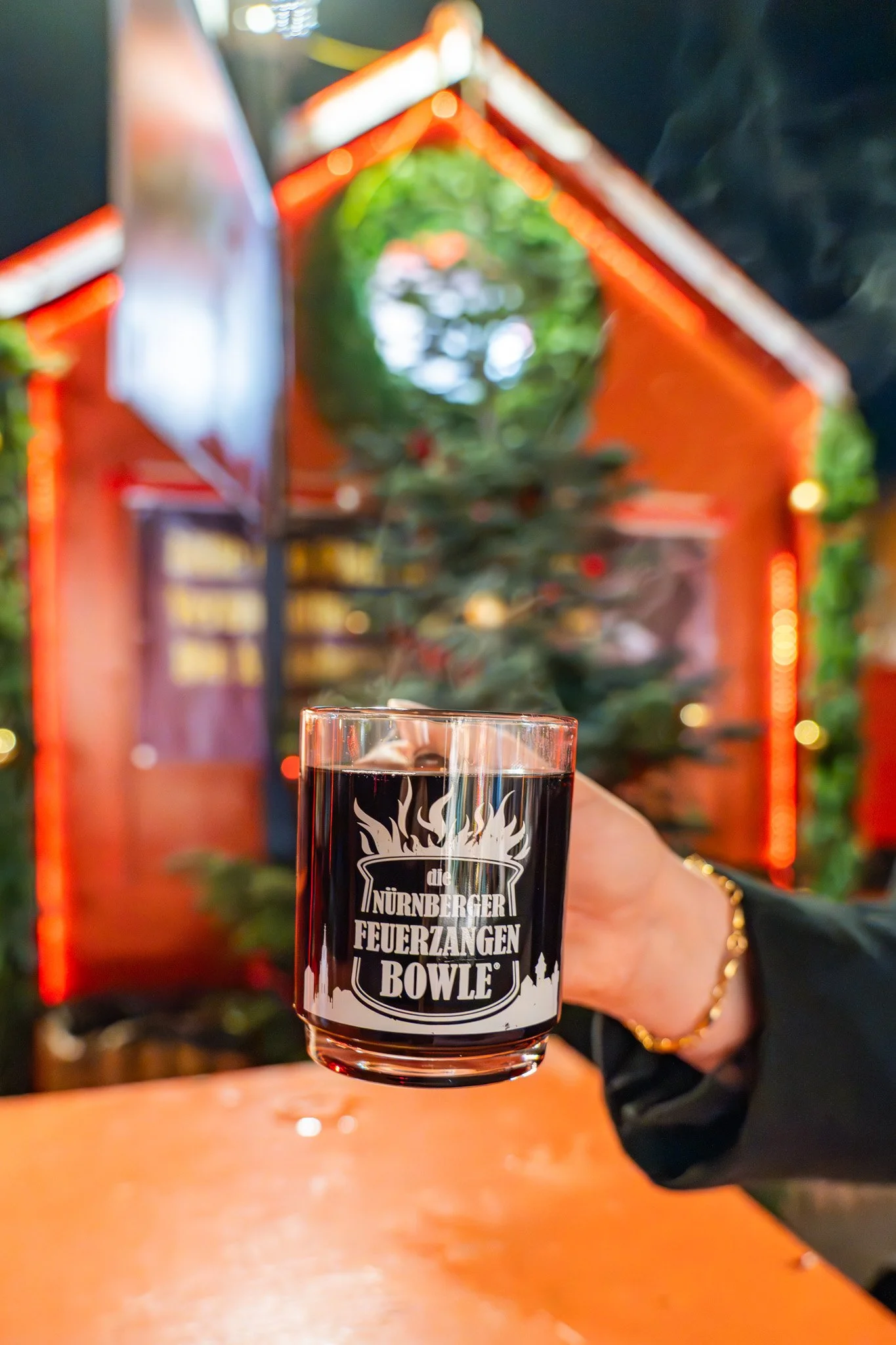
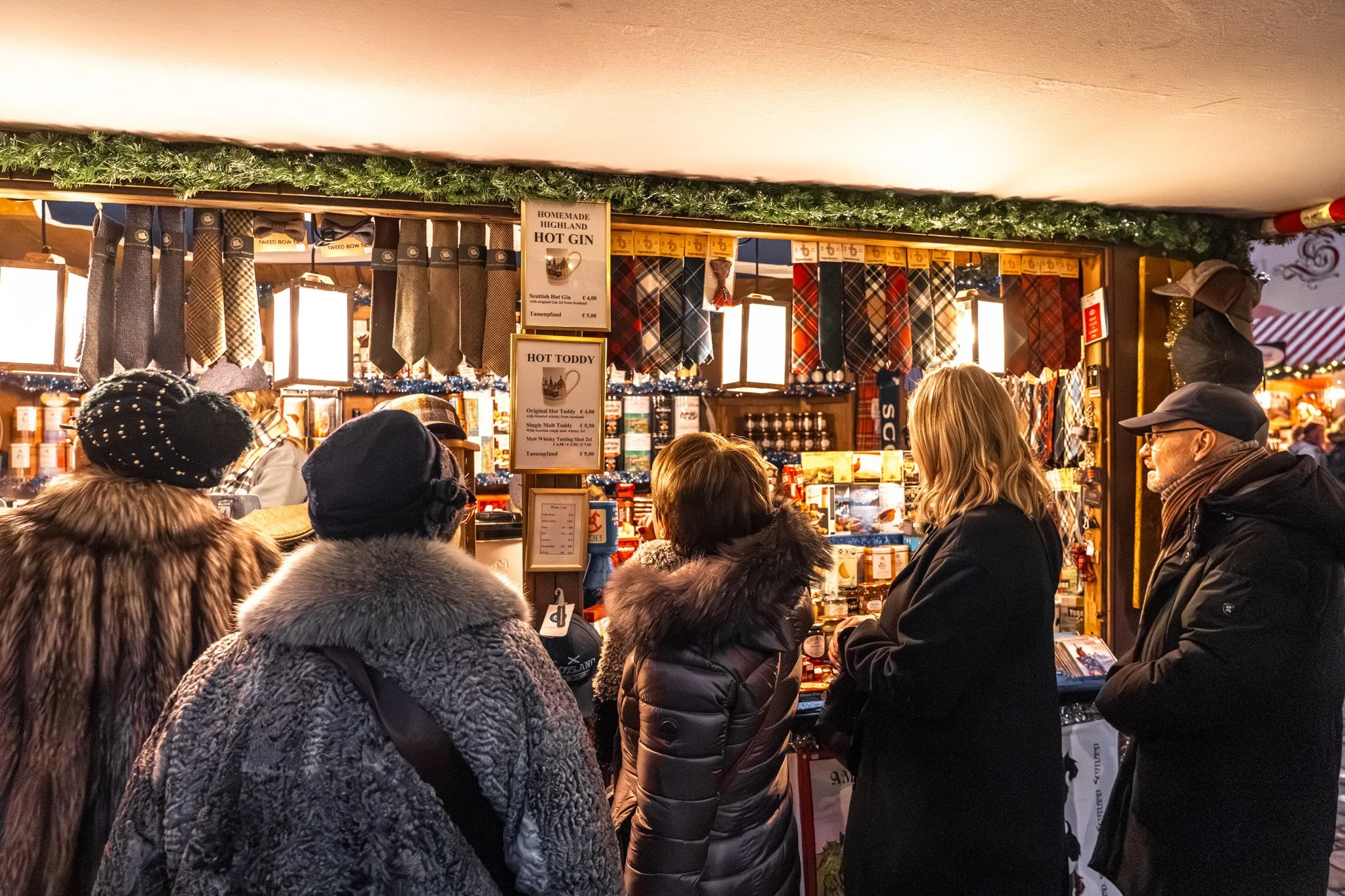
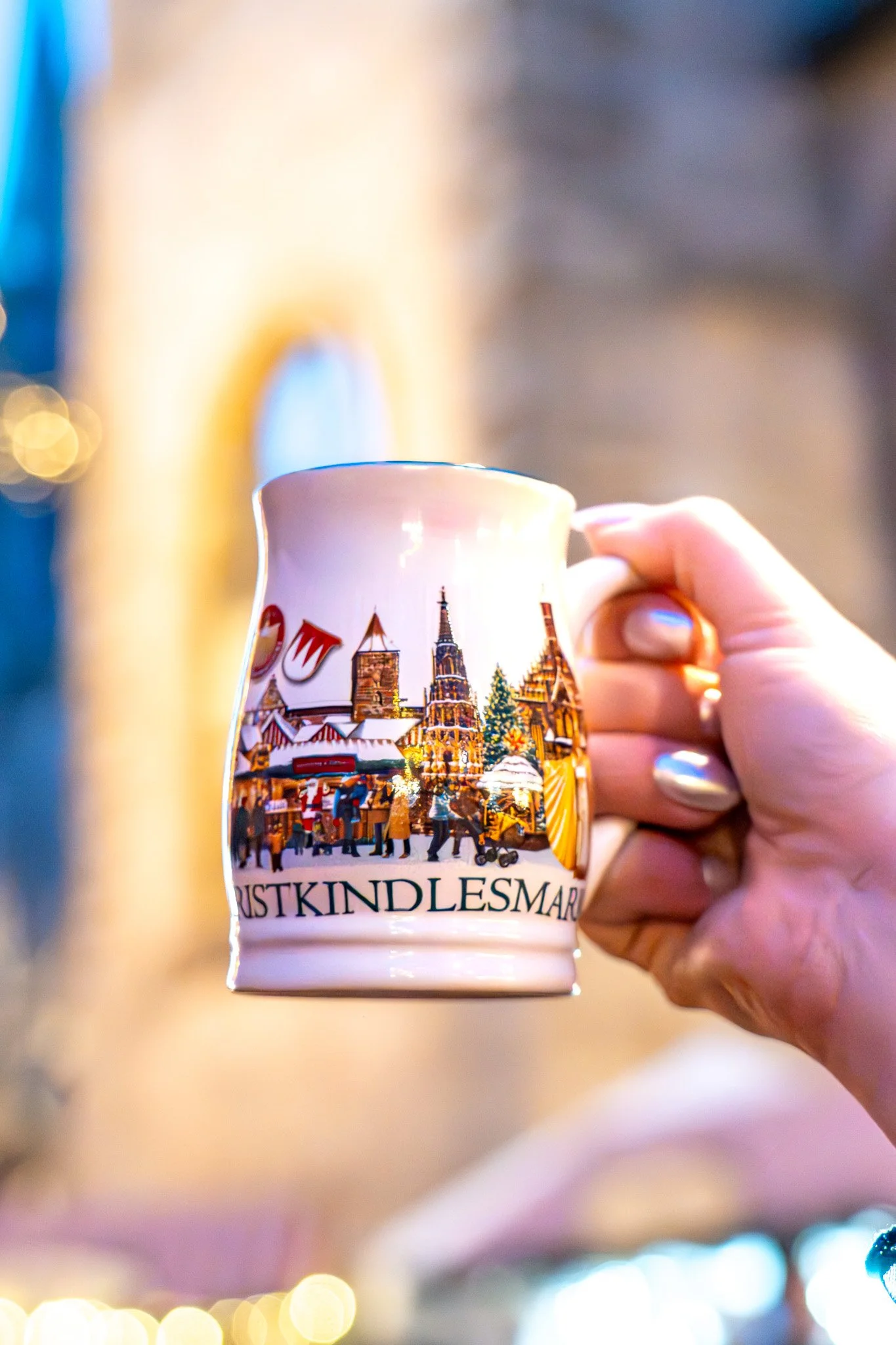
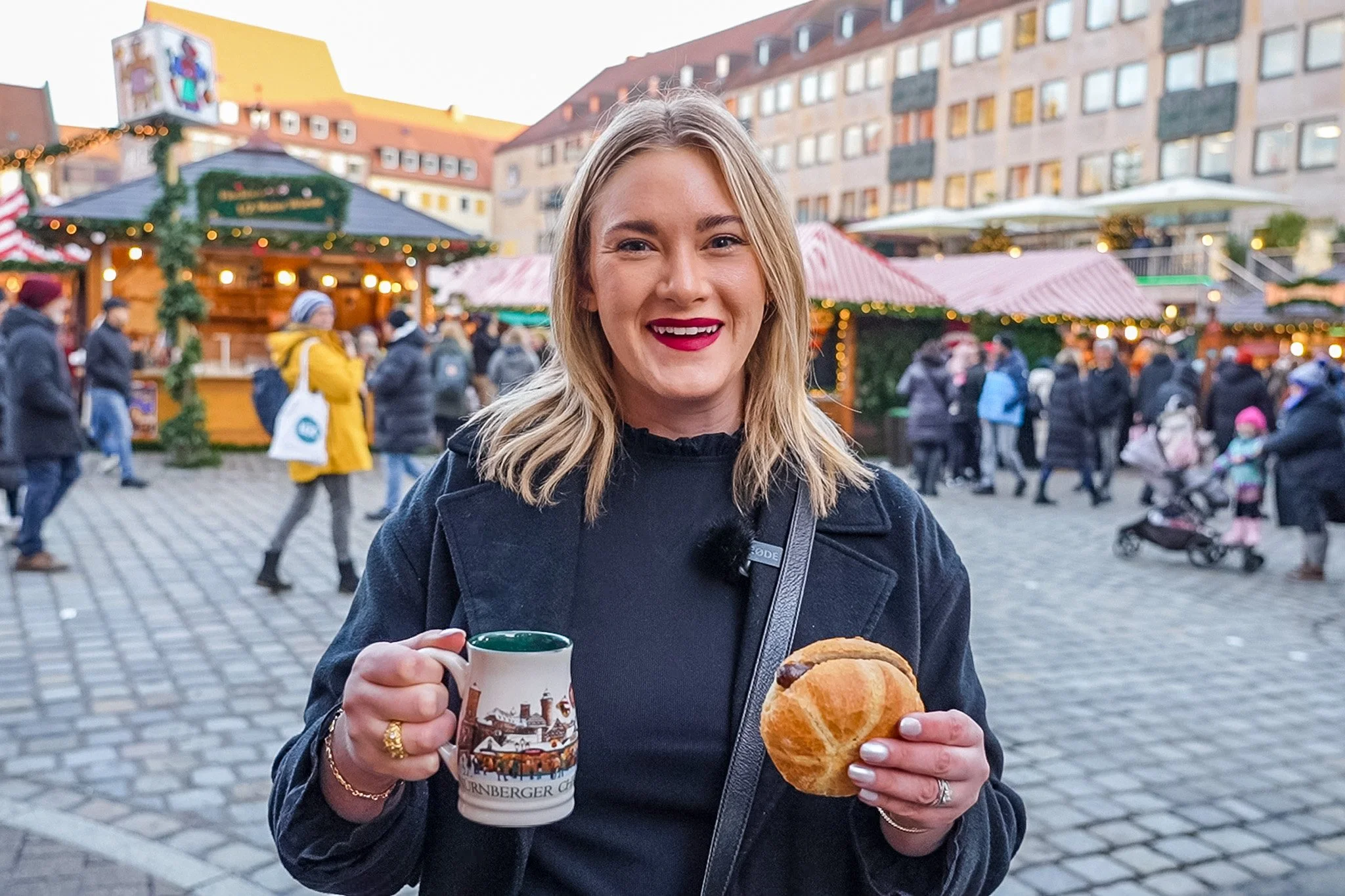
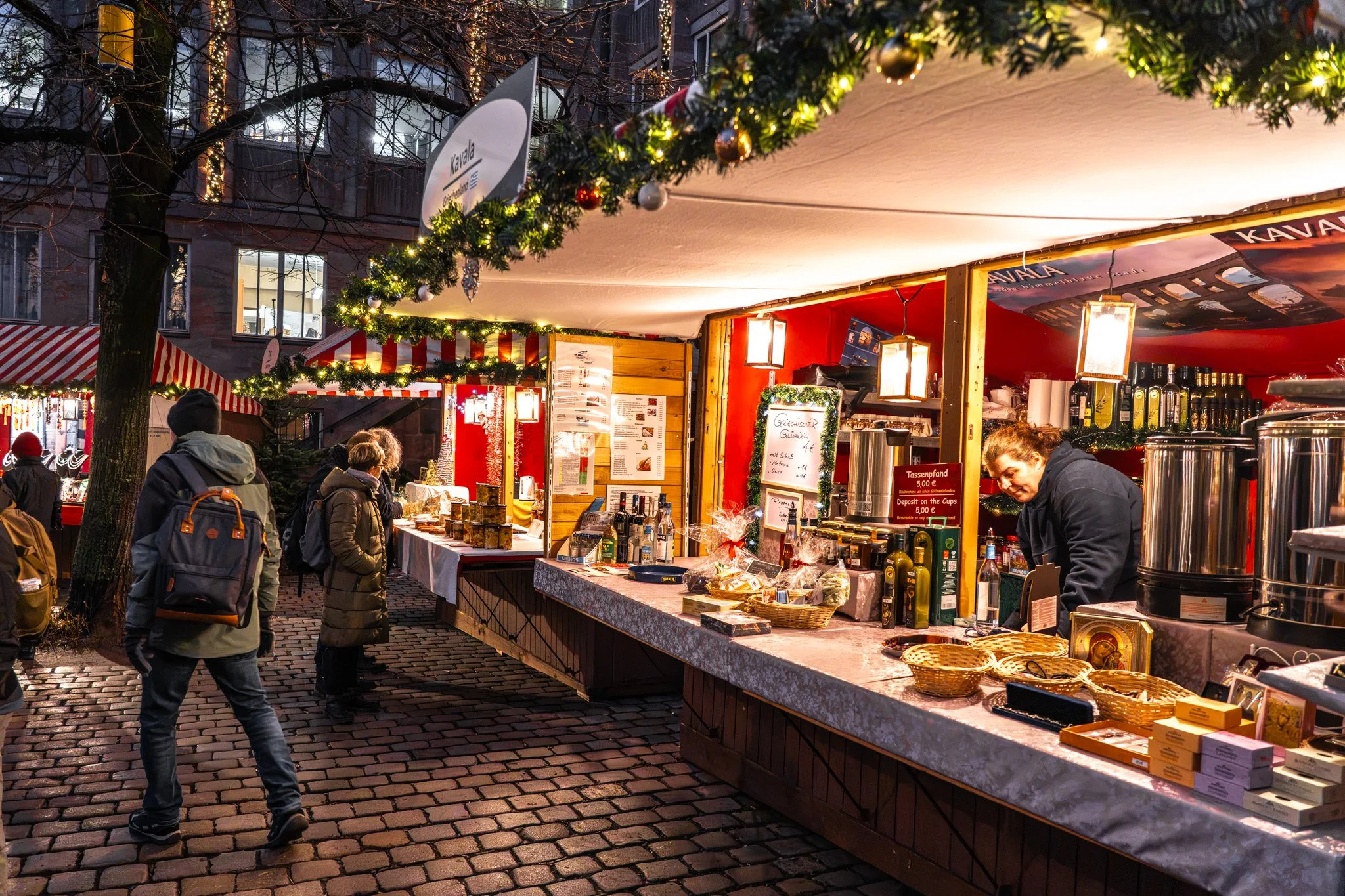
Glühwein – The mulled wine here is simply unparalleled. After years of exploring Christmas markets around Europe and sampling countless variations of this quintessential holiday drink, we found our favorite gluhwein at the Nuremberg Christmas Market. And the mugs! Adorable is an understatement.
Nuremberg Sausages (Nürnberger Rostbratwürste) – These small grilled sausages are a classic Nuremberg market staple!
Bretzels – fun fact: pretzels are called bretzels in Germany! For some reason, they taste extra delicious freshly warmed, then eaten in front of a well-lit Christmas tree with a hot cup of gluwhein.
Bratwursts – you can’t come to Germany and not try some brats! Head to the nearest booth and try one (or several) of the many different varieties.
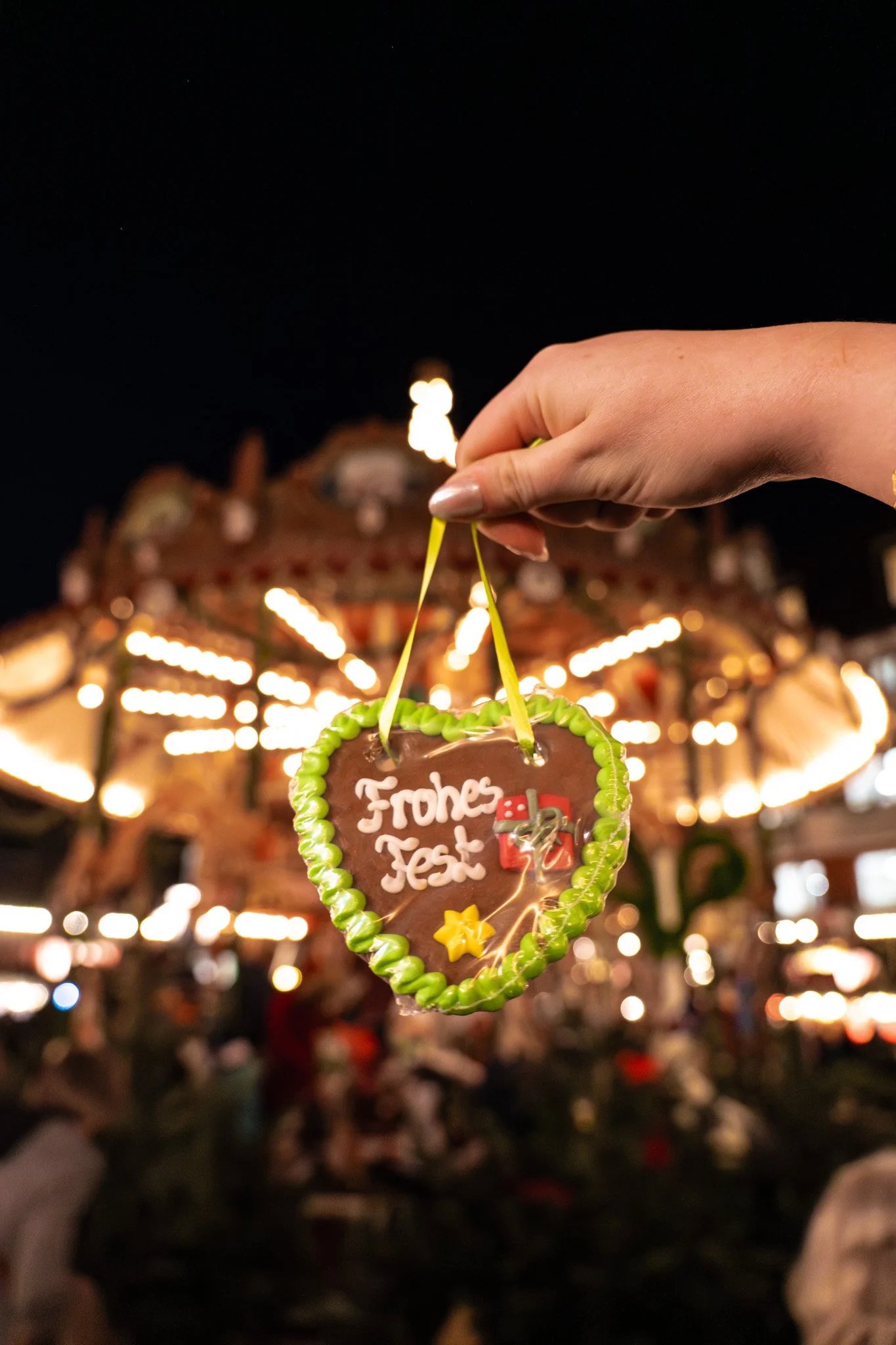
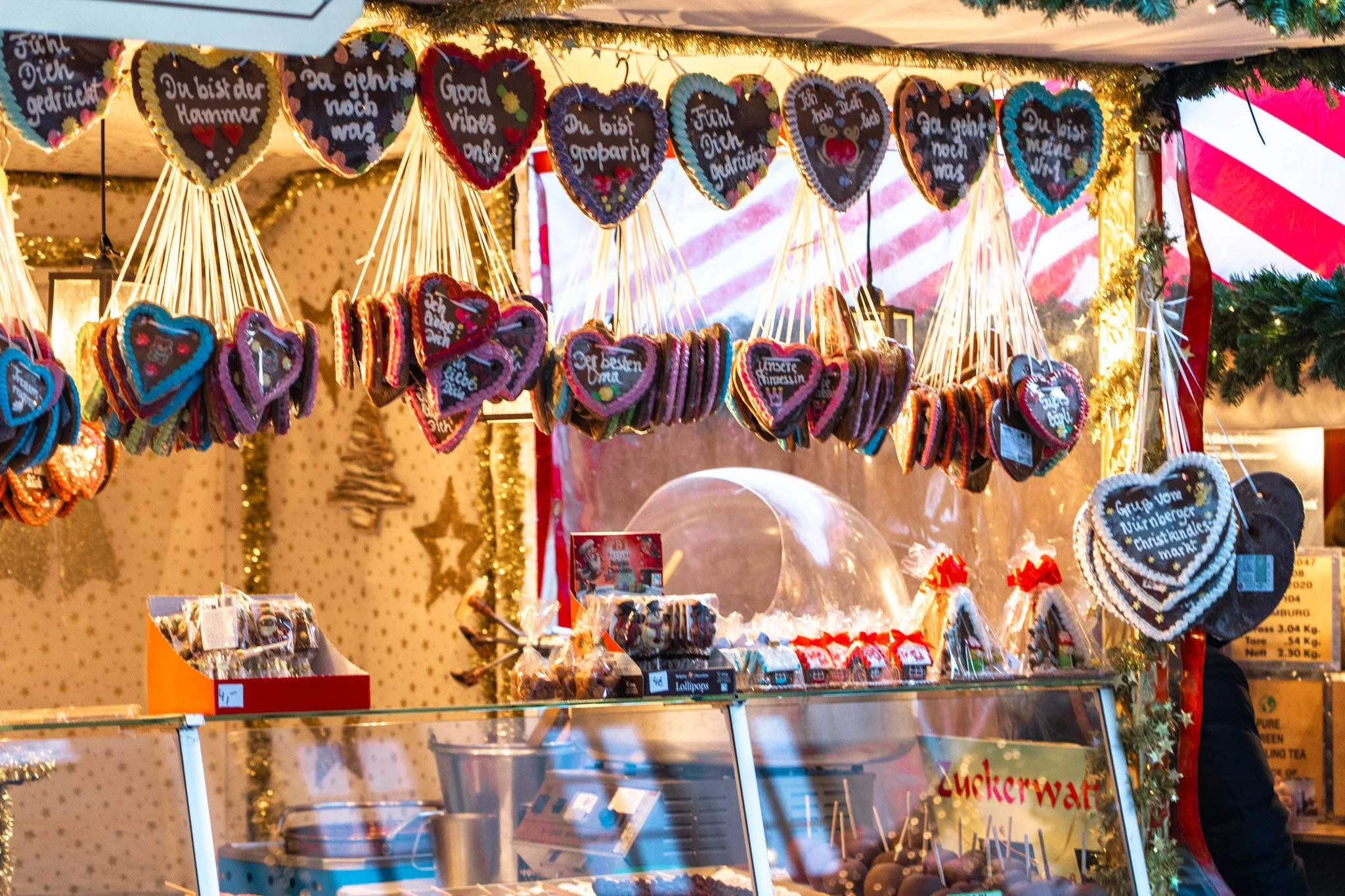
Nuremberg Gingerbread (Lebkuchen) – Nuremberg is famous for its Lebkuchen, a spiced gingerbread that comes in various forms, from plain to chocolate-covered and decorated. The "Elisenlebkuchen" is a premium variety known for its high nut content. Look for the "Original Nürnberger Lebkuchen" seal to ensure you're buying authentic Nuremberg gingerbread!
Feuerzangenbowle – a delicious, specifically German take on mulled wine, which literally translates to fire tongs punch. They torch and melt sugar over the giant bowl of mulled wine, add a few extra touches such as an orange liqueur or rum, and serve it piping hot.
What to Buy at the Nuremberg Christmas Markets
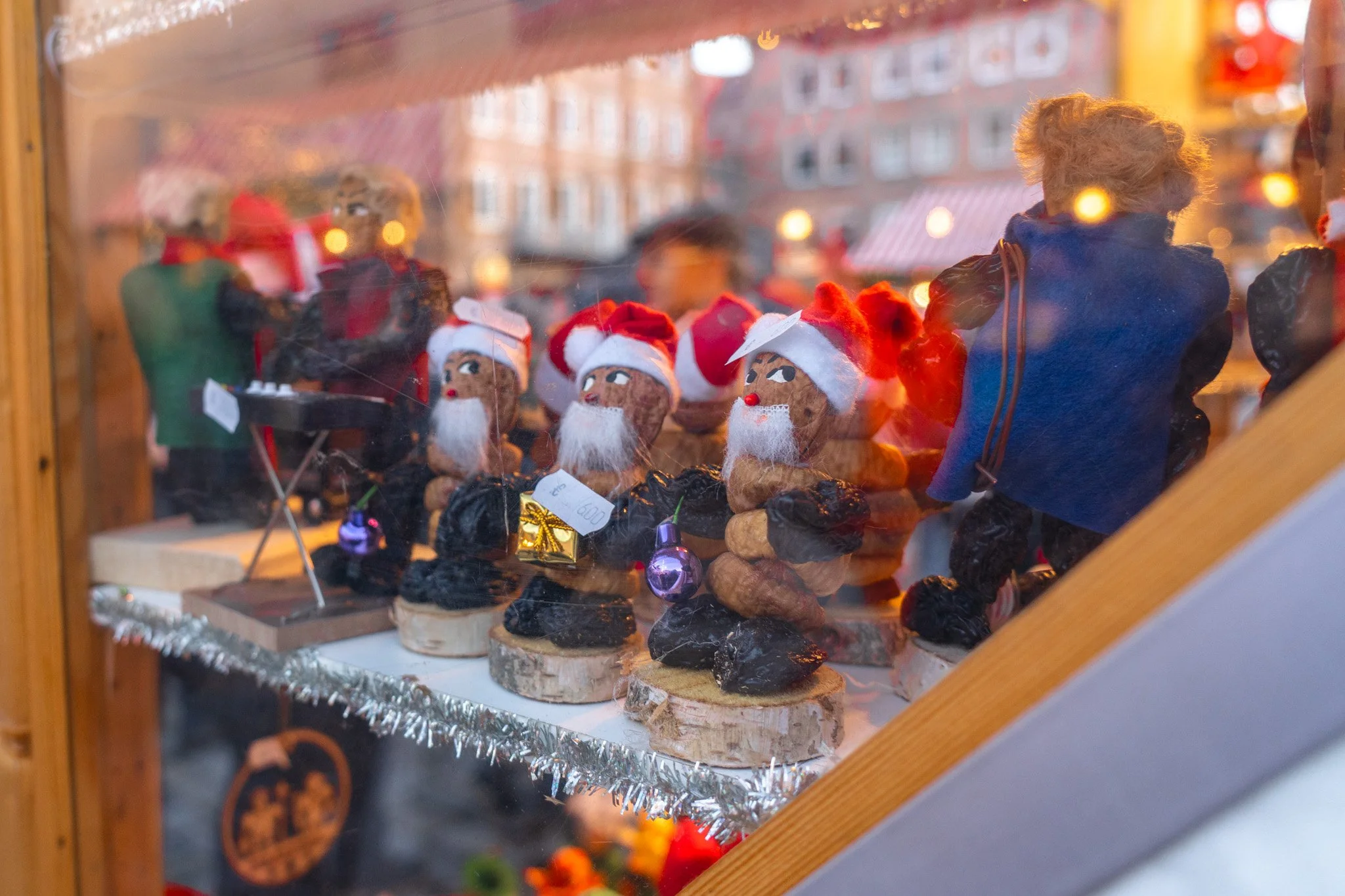
Nuremberg Christkindlesmarkt Prune Men (Zwetschgenmännle) – These whimsical figures made from dried prunes, nuts, and raisins are a traditional Nuremberg specialty. They come in various shapes and sizes, representing different professions and characters.
Rauschgoldengel (Gold Foil Angels) – These delicate golden angels, made from thin brass foil, are a symbol of the Nuremberg Christmas Market. They are often displayed on Christmas trees and windows.
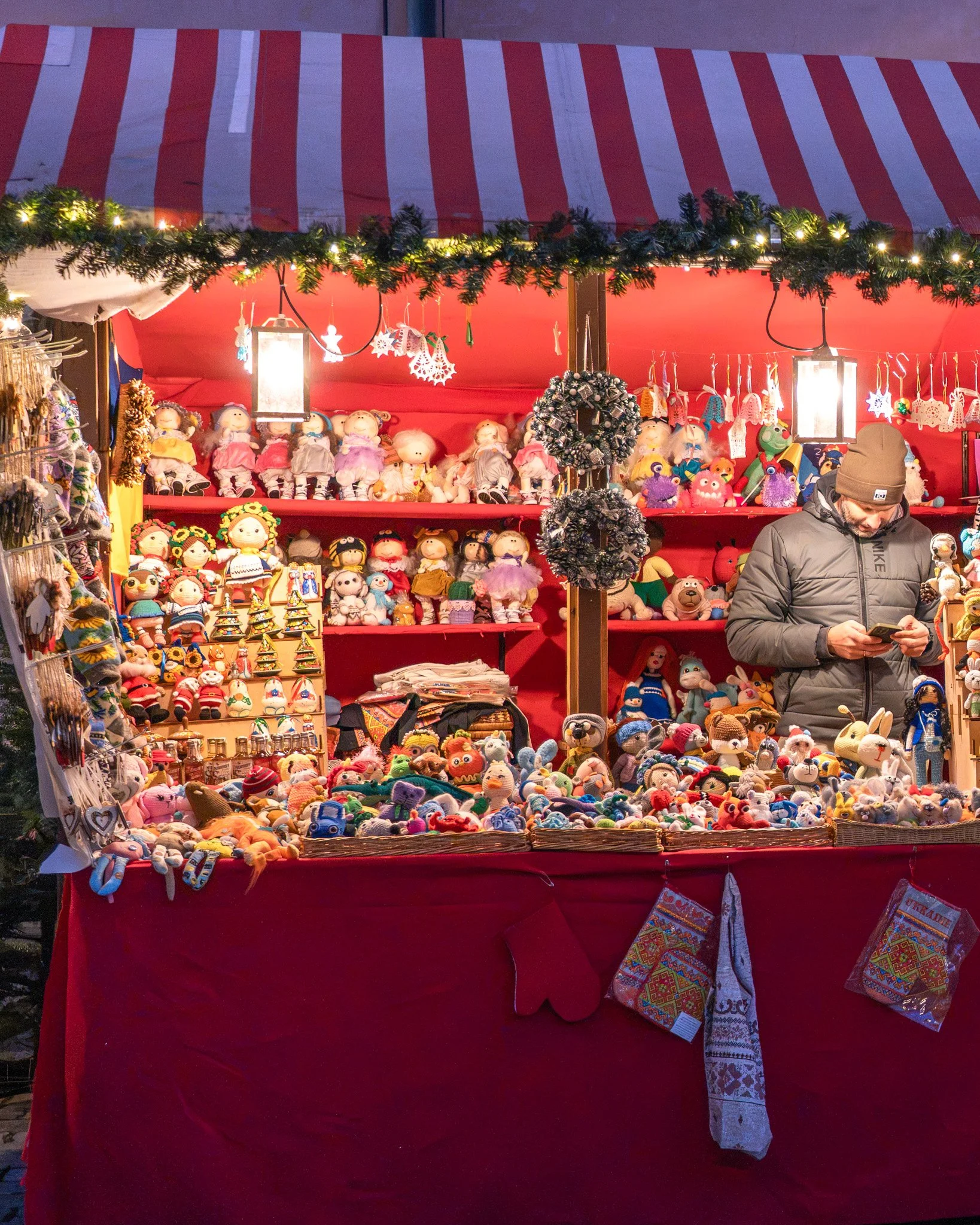
Christmas Ornaments – The market offers a vast selection of handcrafted Christmas ornaments, including glass baubles, wooden carvings, and straw stars.
Handmade Wooden Toys and Crafts – Explore the stalls for beautifully crafted wooden toys, nutcrackers, and other traditional German crafts.
What Else to See in Nuremberg
If you are planning a trip to Nuremberg for the Christmas markets, don't miss the chance to explore more of the city’s deep historical and cultural layers:
Imperial Castle of Nuremberg (Kaiserburg): This is the crown jewel of the city’s skyline. While the castle gardens are a lovely stroll, we highly recommend heading up to the Sinwell Tower for the best wintry view of the Old Town rooftops. Inside the museum, you can see the imperial double chapel and the "Deep Well," which is a fascinating look into medieval engineering. It is an essential stop for understanding Nuremberg’s status as a former imperial city.
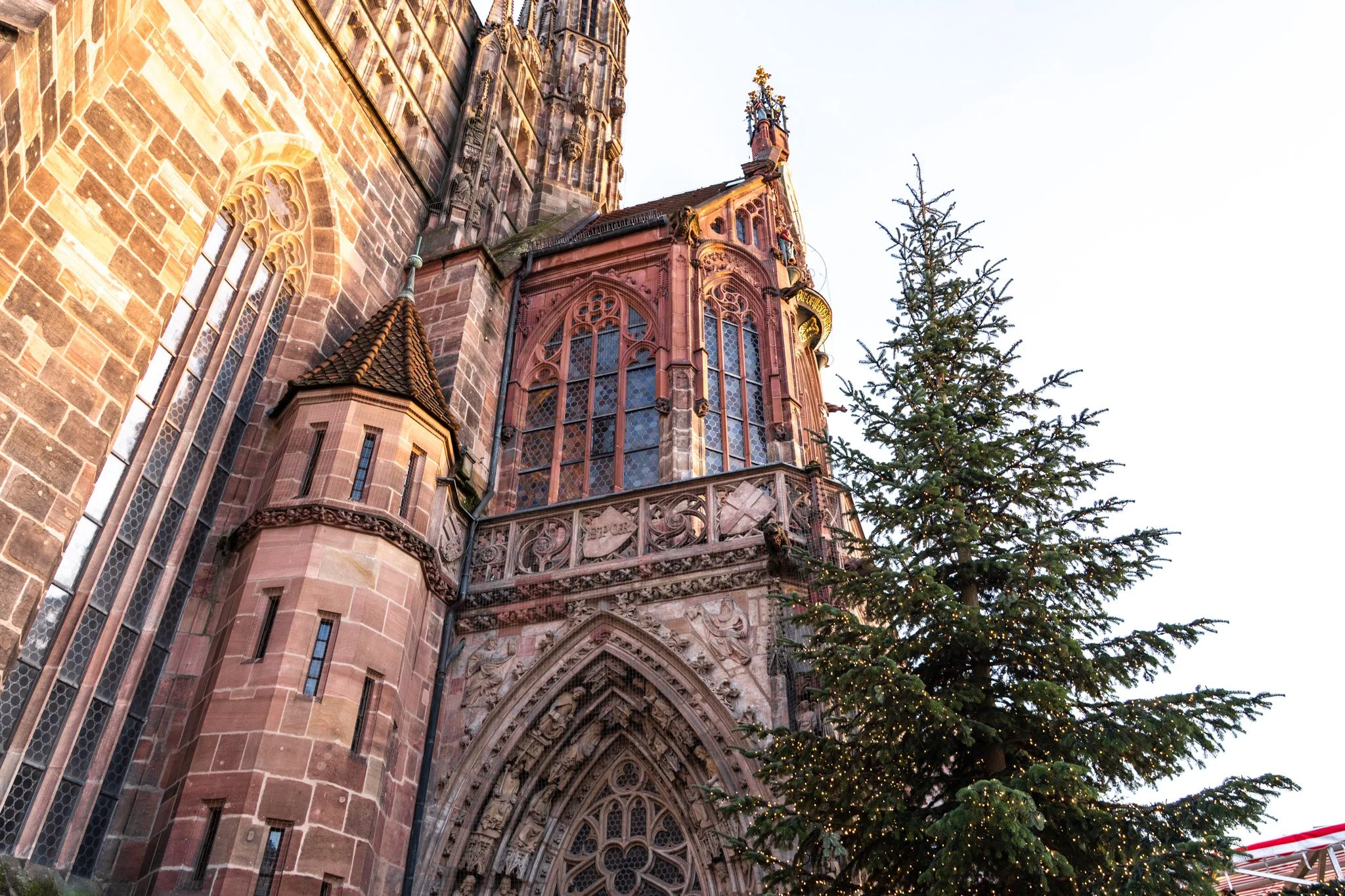
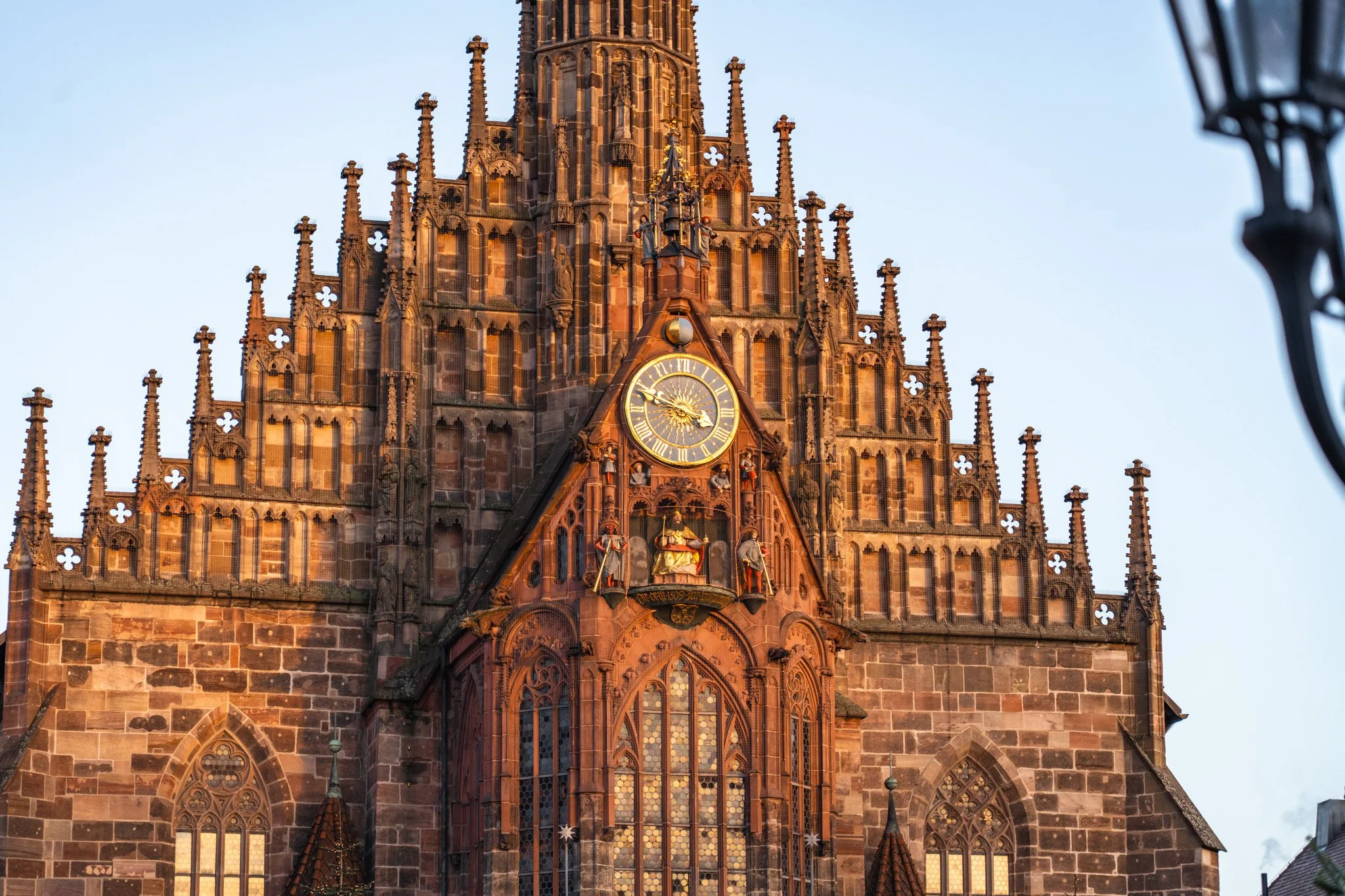
St. Lorenz Church and Frauenkirche Nuremberg: You will likely pass these several times while wandering the markets, but it is worth stepping inside. St. Lorenz is a Gothic masterpiece with a stunning rose window and a massive pipe organ that sounds incredible during holiday services. Over at the Frauenkirche in the main market square, try to be there at noon to see the "Männleinlaufen." This is the mechanical clock where figures of the seven electors circle the Holy Roman Emperor.
Handwerkerhof (Craftsmen’s Courtyard): Tucked just inside the city walls near the main train station, this little medieval-style village is incredibly charming. It is full of small workshops where you can see artisans making glass, pottery, and jewelry. It is also one of the best places to grab a plate of the famous Nuremberg sausages (Drei im Weggla) in a rustic, half-timbered setting.
Memorium Nuremberg Trials: For a shift in perspective, take a short U-Bahn ride to the Palace of Justice. You can visit Courtroom 600, where the Nuremberg Trials took place after WWII. The museum offers a sobering, vital look at the birth of international law. It is a powerful experience that adds a layer of modern historical significance to your visit.