Planning a trip to the German Christmas markets is usually at the top of every holiday bucket list, and for good reason! There is nothing quite like the smell of gingerbread and mulled wine in a medieval town square. But while the markets are magical, the logistics of getting between them can be a little overwhelming if you aren't prepared for the reality of German winter travel.
We’ve spent years navigating Germany during the holidays, and we’ve learned that a successful trip comes down to knowing how the systems actually work. From the quirks of the national rail system and the "hidden" rules of Sunday closures to the best way to handle your cash and mugs, there is a lot of practical info you need before you land. We’re breaking down the essential logistics of German Christmas market travel so you can spend less time stressed on a train platform and more time enjoying the glühwein and Christmas lights.
Traveling to German Christmas Markets by Train
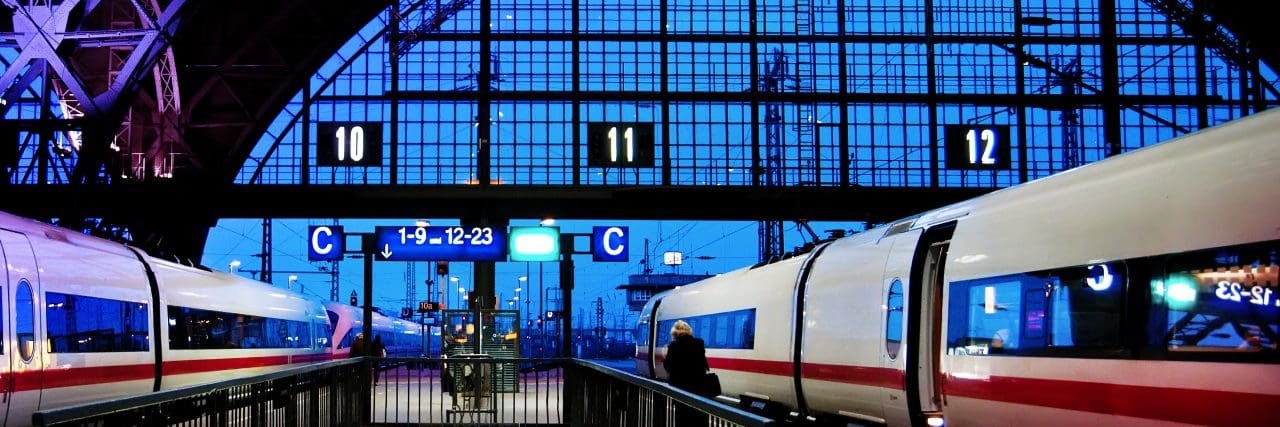
Most people arrive in Germany expecting the trains to run like a Swiss watch. While that’s the reputation, the reality in December is a bit more… adventurous. We’ve found German trains to be some of the most unreliable in terms of schedule during the winter months. Strikes are always possible and winter weather can slow time frames down. Be sure to check out our blog on what to do if a train strike affects your trip so you have a plan A, B, and C!
Between winter weather and the occasional strike, you need to know how the system actually works so you don't end up stranded on a snowy platform. All trains in Germany are run by Deutsche Bahn (you’ll see it called DB everywhere). Think of it as the national system. There are different types of trains you’ll see when you’re looking at the big departure boards.
The "Fast" White Trains (ICE) are the sleek, high-speed trains that connect major cities like Munich, Frankfurt, and Cologne. If you are going a long distance, this is what you want. Always pay a few extra euros for a seat reservation in December! These trains get packed with people headed to the markets, and standing in the aisle for four hours is a quick way to lose your holiday spirit.
The "Slow" Red Trains (RE and RB) are regional trains. They stop at the smaller towns and villages. Just hop on with your ticket and find a seat! The S-Bahn trains are basically local commuter trains that run within a city and out to the nearby suburbs.
Before you go, if you’re just traveling throughout Germany, be sure to download the DB Navigator app. This is your German lifeline. It’s the official app for the trains. It tells you which platform your train is on, if it’s running late, and—most importantly—if it’s been canceled. If a strike or a snowstorm happens, the "Alternative Routes" feature in this app is how you’ll find your way home.
Renting a Car to see German Christmas Markets
We usually tell people to stick to the trains because parking in a medieval German town during a Christmas market is a nightmare. However, if your heart is set on visiting tiny villages and you want freedom and flexibility, you’ll need wheels.
For rental car companies, stick with names you know like Enterprise or Sixt. They have the best presence in Germany and their staff usually speak great English. In Germany, if the roads are icy, you are legally required to have winter tires. The rental company should provide these, but always double-check your paperwork before you drive off the lot.
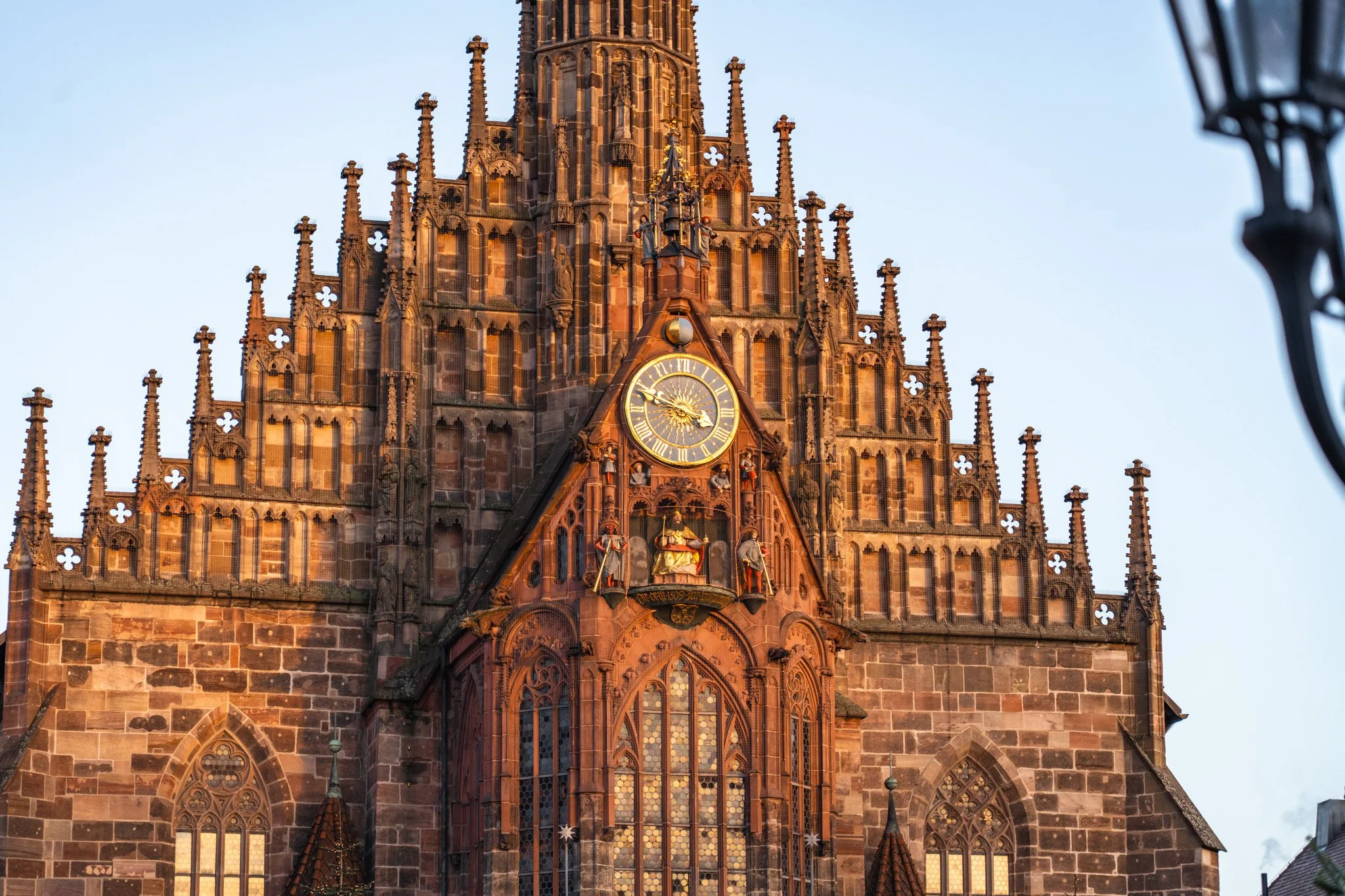
If you drive to a city like Nuremberg, do not try to drive to the city center. Look for signs for "P+R." You park in a big lot on the edge of town and take a 10-minute tram ride straight to the market. It saves you money and a massive headache.
Germany’s Major Flight Hubs
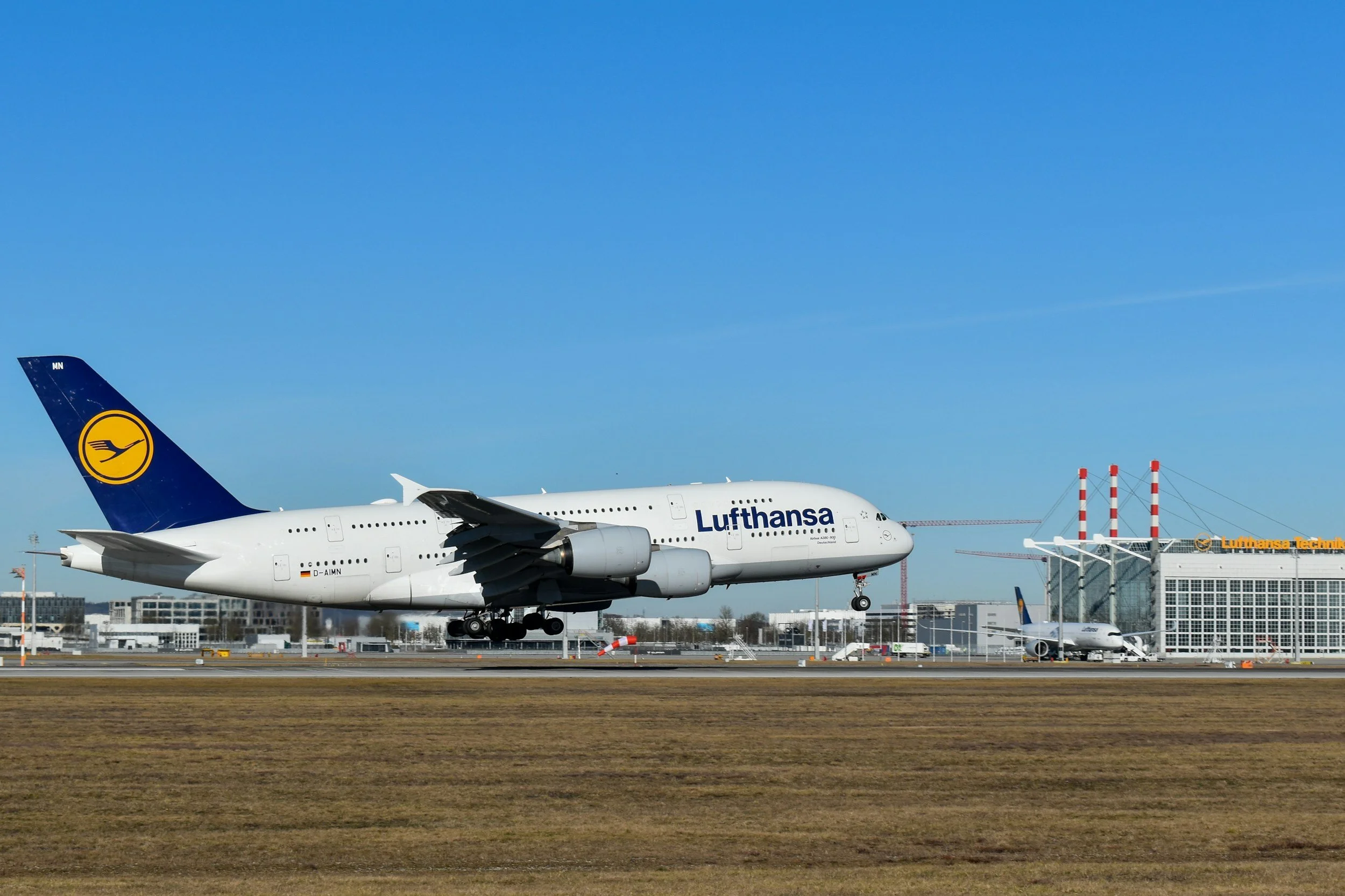
If you’re flying to Germany from anywhere outside of Europe, you’ll likely see three main airport options. Which one you choose depends entirely on which markets are at the top of your list.
Frankfurt (FRA): This is the largest airport in the country and usually where you’ll find the best deals on direct flights. It’s centrally located, making it the perfect jumping-off point if you want to head north to Cologne, Nuremberg, south toward the Black Forest, or even to Strasbourg.
Munich (MUC): If your heart is set on the classic Bavarian markets like Nuremberg or Rothenburg ob der Tauber, fly here. It’s a beautiful, well-organized airport with a direct train line into the city center.Munich is a great hub to fly into to visit Regensburg, Salzburg, and Nuremberg.
Berlin Brandenburg (BER): This is the main hub for the capital. Berlin has over 60 different markets, so if you want to stay in one city and see it all, this is your best bet. Berlin is also a great hub to fly into to visit Dresden, Leipzig, and Erfurt.
Luggage Lockers in Germany
If you’re traveling between cities and want to stop at a market for a few hours without dragging your suitcases through the slushy cobblestones, look for the Schließfächer (luggage lockers) at the train station. Almost every main station has them. You’ll need a few Euros to cover the cost to store them away for a few hours, but it’s the potentially best money you’ll spend all day.
Train Apps for Trips Outside of Germany
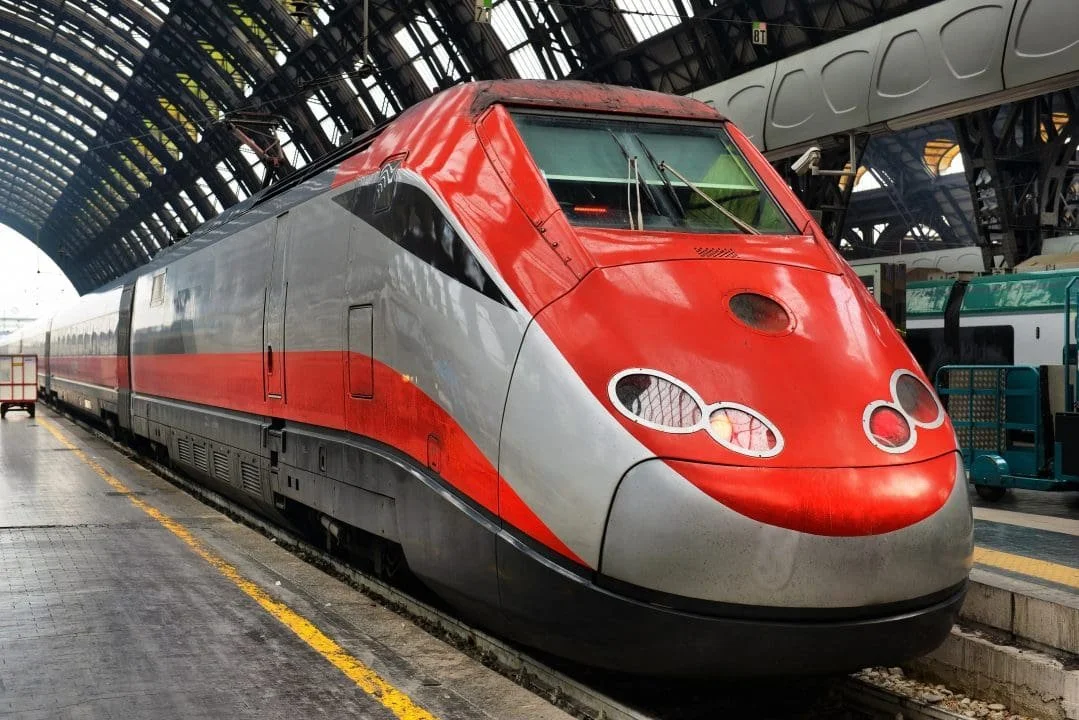
If you’re traveling outside of Germany, we also recommend downloading the Omio or Trainline apps. They are our go-to train apps for multi-country travel. We’ve made a complete list of apps you need before you go on your Christmas markets trip!
Nuremberg, Germany
Closures in Germany
In Germany, Sunday is legally protected as a day of rest (you’ll hear locals call it Ruhetag). This means that almost all retail stores, including grocery stores, bakeries, and pharmacies, are closed on Sundays. If you are in a pinch on a Sunday, your best bet is to head to the main train station (Hauptbahnhof) or the airport, as those shops are usually allowed to stay open. Otherwise, Sundays are the perfect time to join the locals for a long walk or an afternoon at the markets.
December 24th (Christmas Eve) is the "big" day for German families. Most Christmas markets and shops will close early, usually by 2:00 PM. Make sure you have your snacks and essentials bought by noon! Since December 25th & 26th (Christmas Day and Boxing Day) are both public holidays, almost all shops and most markets will be closed. And because December 27th is a Sunday, shops will remain closed. If you are traveling during this window, you can see for these four days in a row that regular shopping isn't an option. We recommend booking your dinner reservations for these dates weeks (or even months) in advance, as restaurants that do stay open will fill up fast.
If you’re arriving after Christmas Day and still want that market fix, don't worry! While many traditional markets end on the 23rd, larger cities like Berlin, Hamburg, and Speyer often have markets that stay open through New Year’s. For a full list of which cities keep the lights on the longest, take a look at our guide to the opening dates of the most popular German Christmas market destinations.
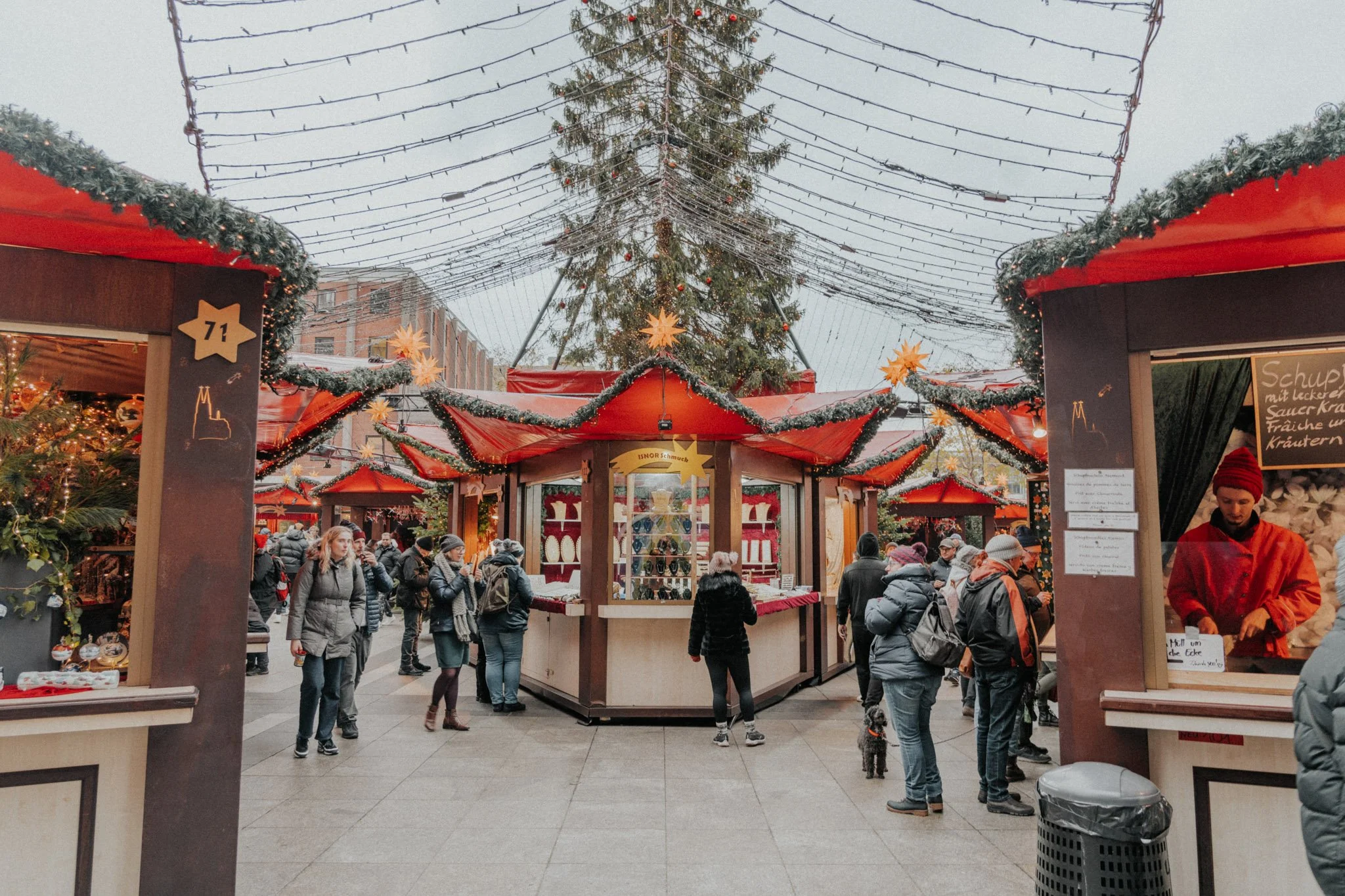
Cologne, Germany
Navigating the German Language
German is the national language. We found most people we encountered spoke excellent English. If you encounter any language barrier, this can always be quickly remedied using Google Translate. While you definitely don’t need to know German to enjoy Nuremberg, here are a few words that are helpful to know while exploring during Christmas:
Hallo – pronounced Hah-Low – means hello
Danke – pronounced Dahn-Keh – means thanks/thank you
Glühwein – pronounced Gloo-Vine – means mulled wine
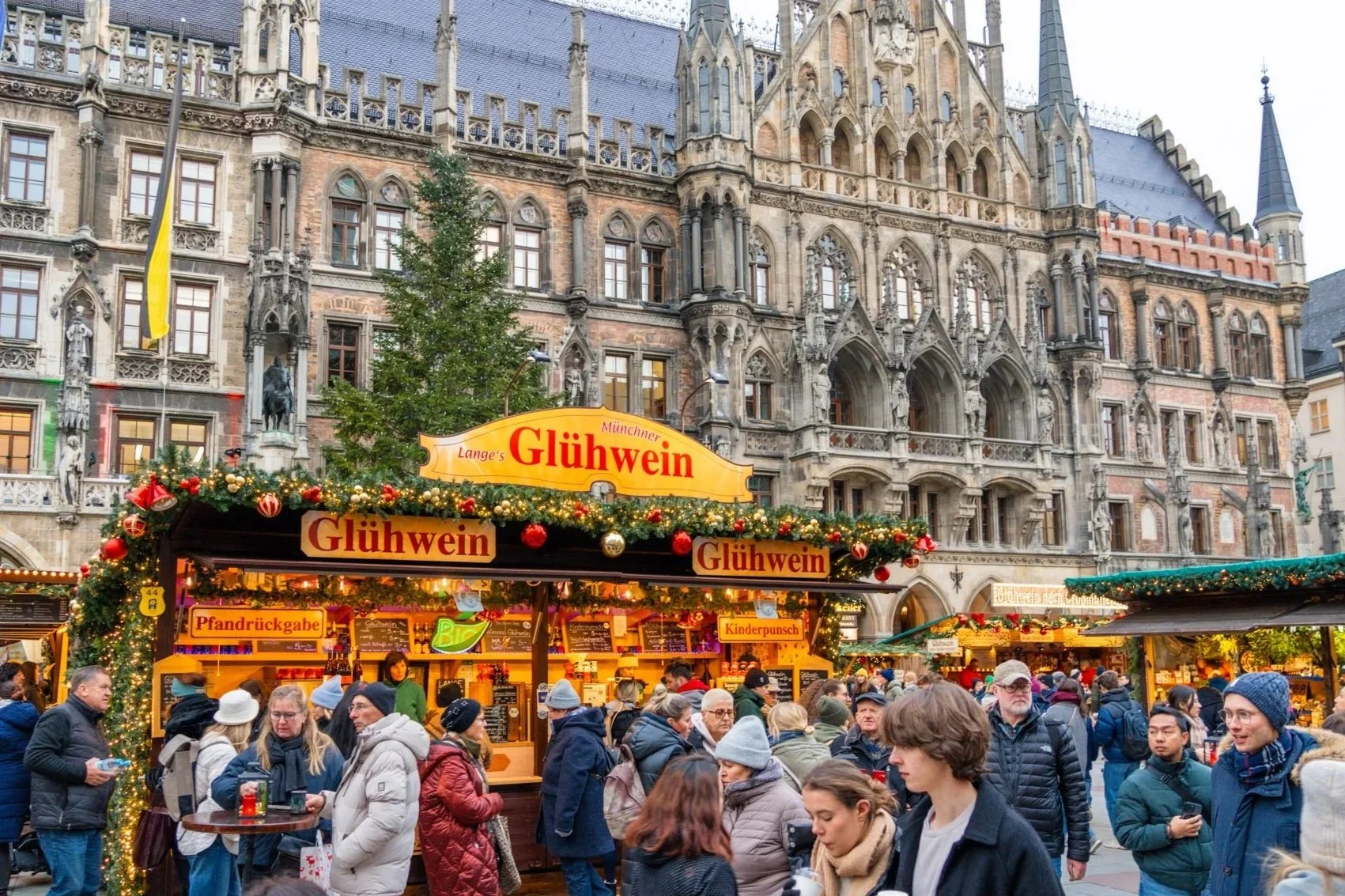
Munich, Germany
Markets & Money
You’ll need Euros when you visit Germany. If you’re wondering if you should bring cash or card to the Christmas markets, the answer is yes – both! Some vendors take cards, but you’ll often need cash for smaller purchases.
Before you go, you need to know how a “deposit,” called “pfand” works at German Christmas markets. When you want to buy a drink, you’ll approach a stall that says the drink is 4 euros (for example). However, it will typically cost an additional 5-6 euros when it’s time to pay. This essentially covers the cost of the mug. If you’d like to take the mug home as a souvenir, congrats! It’s yours. If you’d like to return it to the stall, hand it back to them and say you’re returning it, then they’ll give you a 5-6 euro deposit back!
If you hear a rumor that “it’s illegal to keep the cup,” we’ve written a blog putting that old misunderstanding to rest. You can read more about that here and keep your Christmas market souvenir in peace!
Safely using German ATMs
If you’re wandering through a market and realize you need a few more Euros for that cup of cocoa or hand-carved ornament, you don’t want to just stick your card into the first machine you see. There are plenty of "independent" ATMs that will hit you with massive fees and terrible exchange rates. To stay safe and keep your fees low, look for these major national bank brands. They actually form an alliance called the Cash Group, and their ATMs are everywhere.
Deutsche Bank is the big one. If you’re a Bank of America customer, you can often use their ATMs with reduced or waived fees because they are part of the Global ATM Alliance. Commerzbank usually has very sleek, modern branches. They are the second-largest private bank in the country. Postbanks are often attached to or inside Deutsche Post (the post office) locations. They are reliable and extremely common in smaller towns. HypoVereinsbank (HVB) is all over, especially if you are spending time in Munich or elsewhere in Bavaria.
There’s also the "Local" giants like Sparkasse and Volksbanken und Raiffeisenbanken. For the Sparkasse, you will see the bright red "S" logo in almost every single German village. While technically a network of local savings banks rather than one single national brand, they are incredibly safe and have the largest ATM network in the country. Look for the orange and blue "V" and "R" logo to find the Volksbanken und Raiffeisenbanken ATMs. Like the Sparkasse, these are cooperative banks. They are very traditional and very safe.
Whenever possible, use the ATMs located inside the bank's glass lobby rather than the ones on the street. Most German banks let you swipe your card to enter the lobby even after the bank itself is closed. It’s safer and gives you a bit of privacy.
We always give the card reader a firm tug before inserting our card. If anything feels loose or looks like it was glued on, walk away. Skimmers are rare but they do happen. And if the machine asks if you want to be charged in "US Dollars" or "Euros," always choose Euros. Let your bank back home handle the conversion; the ATM’s "convenience" conversion is almost always a rip-off.
If you see an ATM that isn't attached to a specific bank branch and just says "ATM," "Cash," or "Euronet," just keep walking! These are independent machines. They aren't "unsafe" in terms of theft, but they are "unsafe" for your wallet because they charge much higher fees than the national banks listed above.
How much cash do you need at German Christmas Markets?
It’s best to assume about $20 per meal for markets in Germany. Hot drinks typically cost between 4-9 euros with an additional average 4-6 euros deposit for mugs. Bratwursts of most kinds cost between 5-12 euros, depending on the type and location. Sweet treats and desserts, on average, range between 4 and 12 euros.
If you’re looking to buy a more precious and pricier souvenir, you’ll be glad to have your card on hand, so you’re not limited by your small bills. Always make sure to ask the vendor before ordering or deciding to purchase anything which payment method they will take.
Even if your German language skills are poor and your English is limited, this question can be easily communicated by holding up your credit card and asking, “do you take card?” They will quickly answer with either hand gestures or a verbal yes or no.
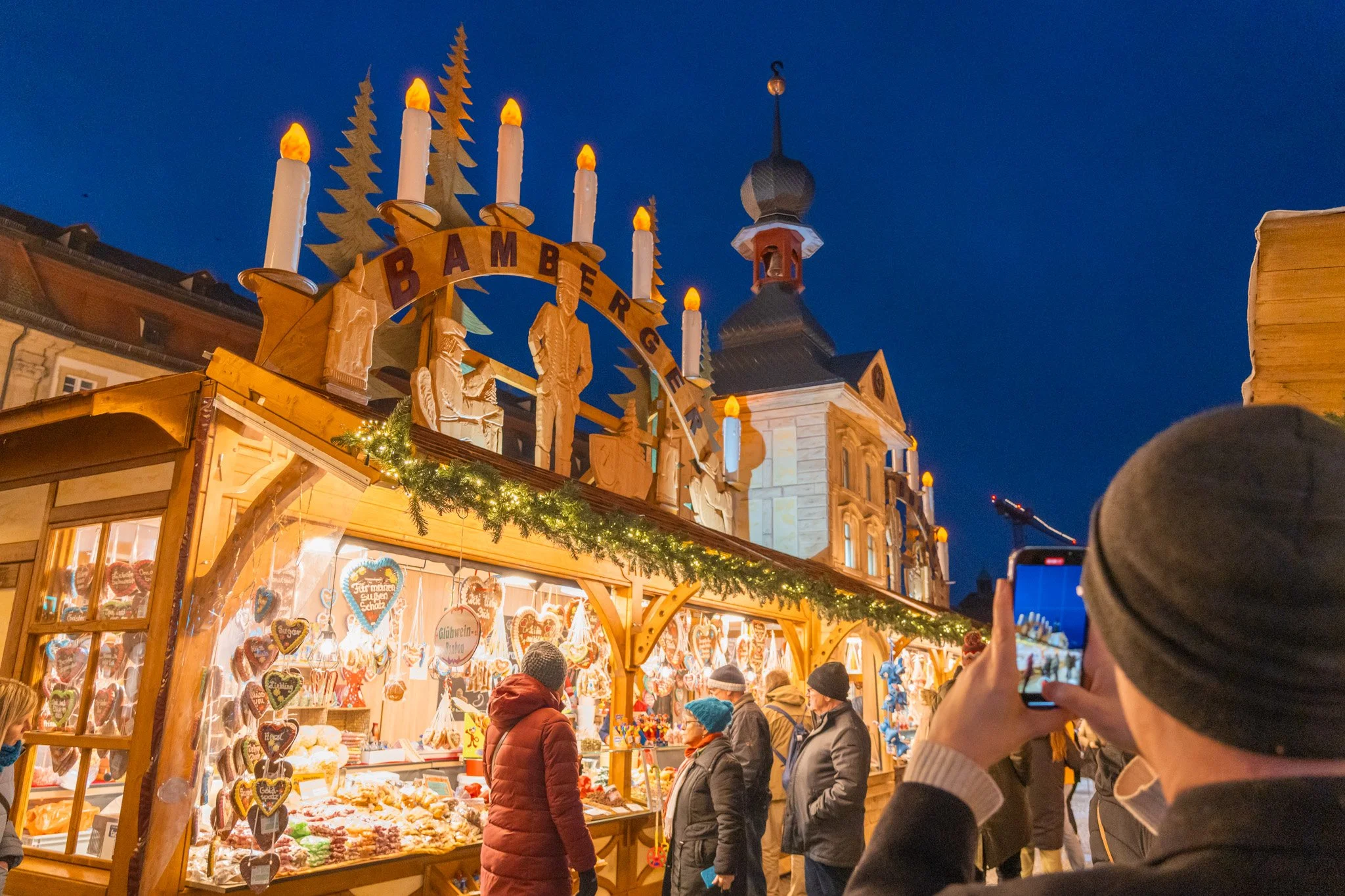
Bamberg, Germany
Weather During Christmas Market Season
Weather across Germany varies greatly year to year and region to region! We’ve been when it’s in the upper 40sº(f), and we’ve been in Germany when there are blizzards that shut down transportation. It’s important to keep an eye on weather trends closer to the time of your trip. It’s better to be over prepared than under prepared!
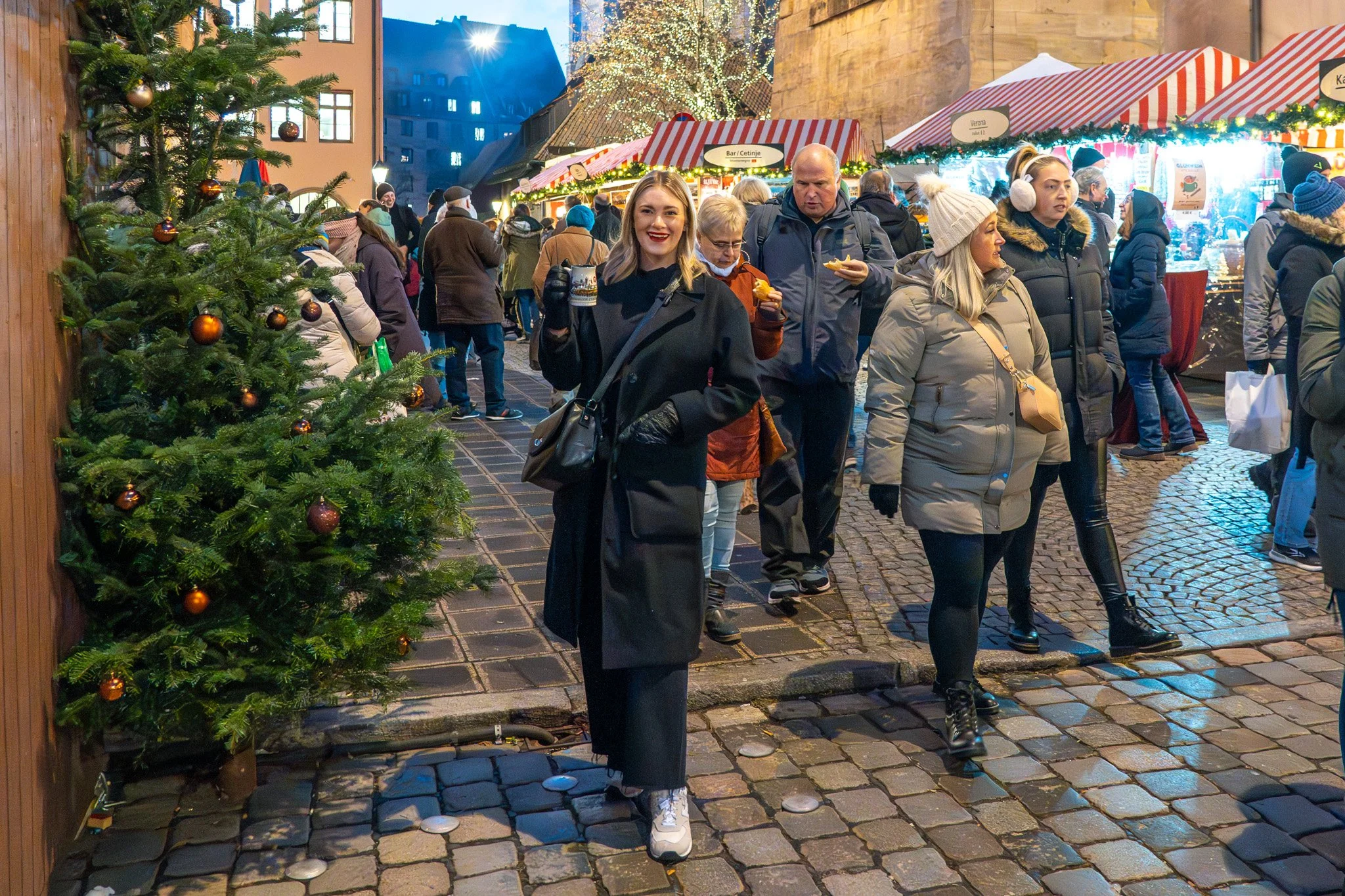
Kait in Nuremberg, Germany on a chilly, but not snowy day in late November.
What to Wear To German Christmas Markets
What to wear depends on the weather, but as a whole, it’s best to plan to wear a wool base layer, a sweater, pants, wool socks, a good coat, gloves, a scarf, and comfy shoes. We find that more people wear puffer coats than wool coats, but we think it’s all a matter of personal preference. Seating is limited at German Christmas markets, so prepare to be on your feet for much of the day. You’ll do plenty of walking so wear comfortable, water resistant or water proof shoes!
Here’s our Christmas market packing list to help you know what to pack.