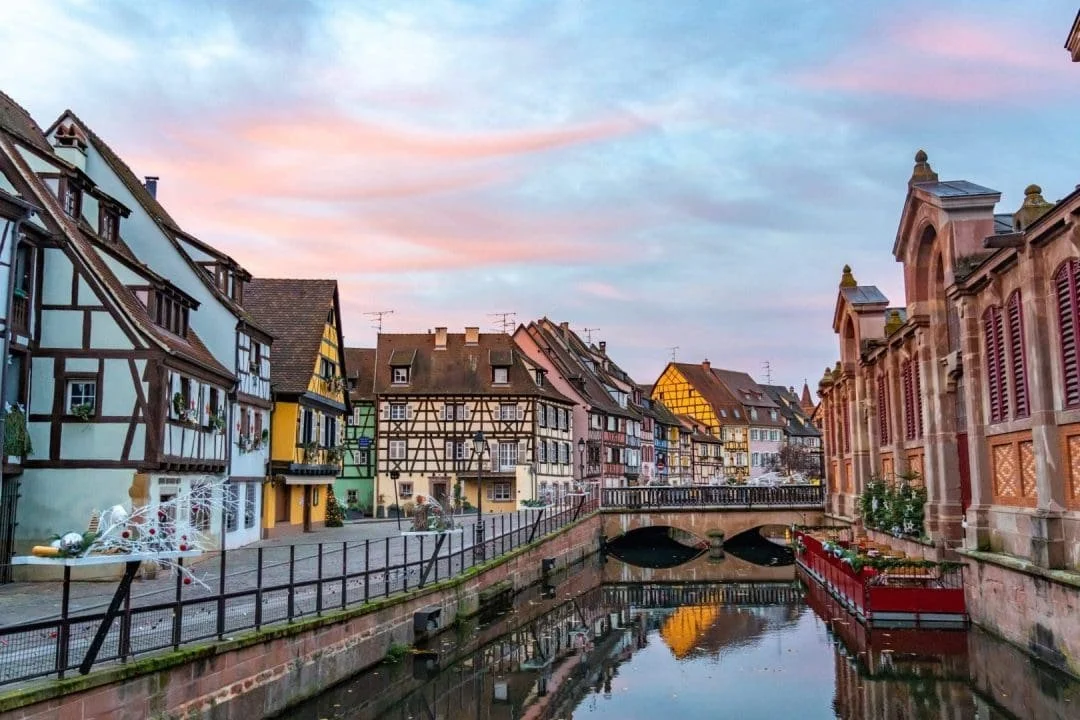
Colmar's Christmas Markets transform this charming town into a festive wonderland, with twinkling lights, the aroma of mulled wine, and children caroling in boats along picturesque canals. These markets offer everything from regional crafts to a standout gourmet food market with delicious Alsatian specialties. Come for the enchanting atmosphere, stay for the tarte flambée and local wines. Keep reading to discover all our insider tips for making the most of your visit to one of France's most magical Christmas destinations!
(This post contains affiliate links. We may earn a commission from your purchase(s) at no cost to you, but every little bit helps us keep sharing the magic and logistics of visiting Europe. Thanks!)
Rapid-Fire FAQ'S about Colmar's Christmas Markets
Should I use a card or cash? Mostly cash. Find an ATM and withdraw euros in advance. (Read more about this later in the blog.)
What are the hours of the Christmas Markets? Colmar's markets are open 11 am-8 pm daily during the Christmas season. Smaller nearby cities are typically only open on weekends. (More on this later in the blog.)
Can you walk from one Christmas Market to the next? Yes! It's easy and highly encouraged.
Do I need to eat before I come? No! Christmas markets are basically a food crawl.
What should I wear? Check the weather before, but typically a sweater, pants, a good jacket, and comfy shoes will do just fine. There are very few places to sit, so you'll be on your feet a lot.
How to Get to Colmar for Christmas Markets
By Air:
If you're traveling within Europe, Strasbourg Airport (SXB) or EuroAirport Basel-Mulhouse-Freiburg (BSL) are your most convenient options. Strasbourg is about 73 kilometers (45 miles) north of Colmar, while EuroAirport is approximately 60 kilometers (37 miles) south. From Strasbourg Airport, you can take a shuttle to Strasbourg train station, then catch a direct train to Colmar (30-minute journey). From EuroAirport, shuttle buses connect to Basel SBB station, where you can take a train to Colmar (approximately 45 minutes).
For those arriving from outside Europe, major international hubs like Paris Charles de Gaulle Airport (CDG), Zurich Airport (ZRH), or Frankfurt Airport (FRA) are excellent options. Paris CDG is approximately 480 kilometers (300 miles) west of Colmar. High-speed TGV trains connect CDG to Colmar with a change in Strasbourg, taking about 3 hours total. Zurich (ZRH) is approximately 150 kilometers (93 miles) southeast of Colmar, with Swiss Federal Railways (SBB) trains connecting Zurich Airport to Colmar in about 2 hours, often requiring a change in Basel. Frankfurt (FRA) is approximately 250 kilometers (155 miles) northeast of Colmar, with train connections taking about 3 hours with a change in Strasbourg.
By Train:
Colmar's train station is centrally located and well-connected to the French and European rail network. High-speed TGV trains provide fast and comfortable travel from Paris (approximately 2.5 hours). Colmar is just 30 minutes by train from Strasbourg, making it an easy day trip or add-on to your Alsace region itinerary.
Direct regional trains also connect Colmar to nearby Alsatian towns like Mulhouse (20 minutes) and to cities across the border in Germany and Switzerland such as Freiburg (1 hour) and Basel (45 minutes). These convenient connections make it easy to explore multiple Christmas markets in the region.
Book train tickets in advance, especially during the Christmas market season, to get the best rates! French trains generally run on schedule, but because France does love a good strike, we've found they can be unreliable during the winter months. Strikes are always possible around the holidays, and winter weather can slow time frames down. Be sure to check SNCF (French National Railway Company) for any service disruptions before your journey! Also check out our blog on what to do if a train strike affects your trip so you have a plan A, B, and C!

Navigating the Language
French is the national language. We found most people we encountered spoke excellent English. If you encounter a language barrier, you can quickly fix it with Google Translate. While you definitely don’t need to know French to enjoy Colmar, here are a few words that are helpful to know while exploring during Christmas:
Bonjour/ Bonsoir - pronounced bohn-joor / bohn-swah - means hello / good evening
Merci - pronounced mare-see - means thanks/thank you
Vin Chaud - pronounced vahn showd - means mulled wine
Highlights of Colmar at Christmas
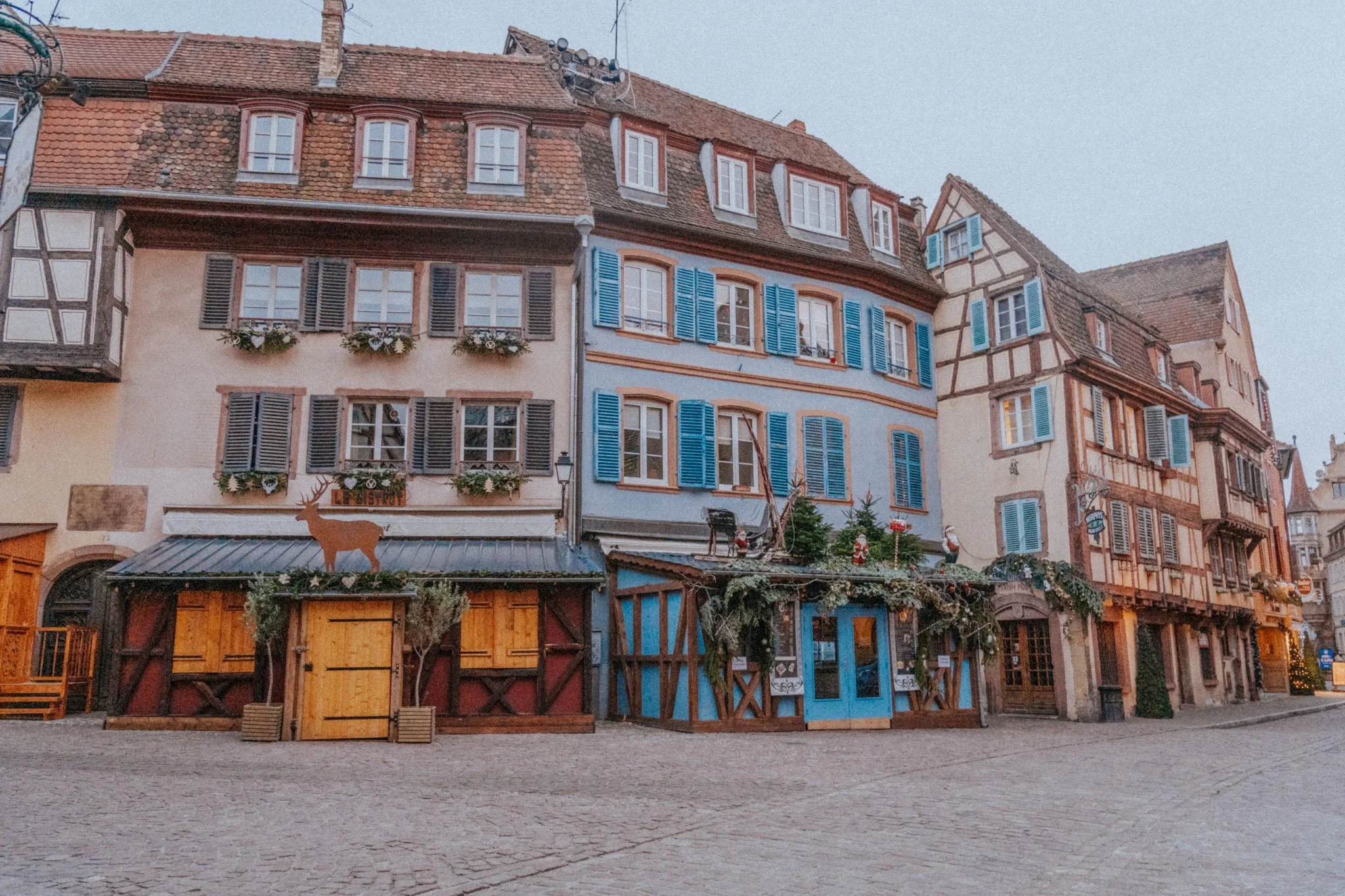
The multiple markets are small but take over the town, turning the whole community into a sort of Christmas village.
The architecture of the city can't be beaten. It feels like a German/French crossover and has such a charming feel.
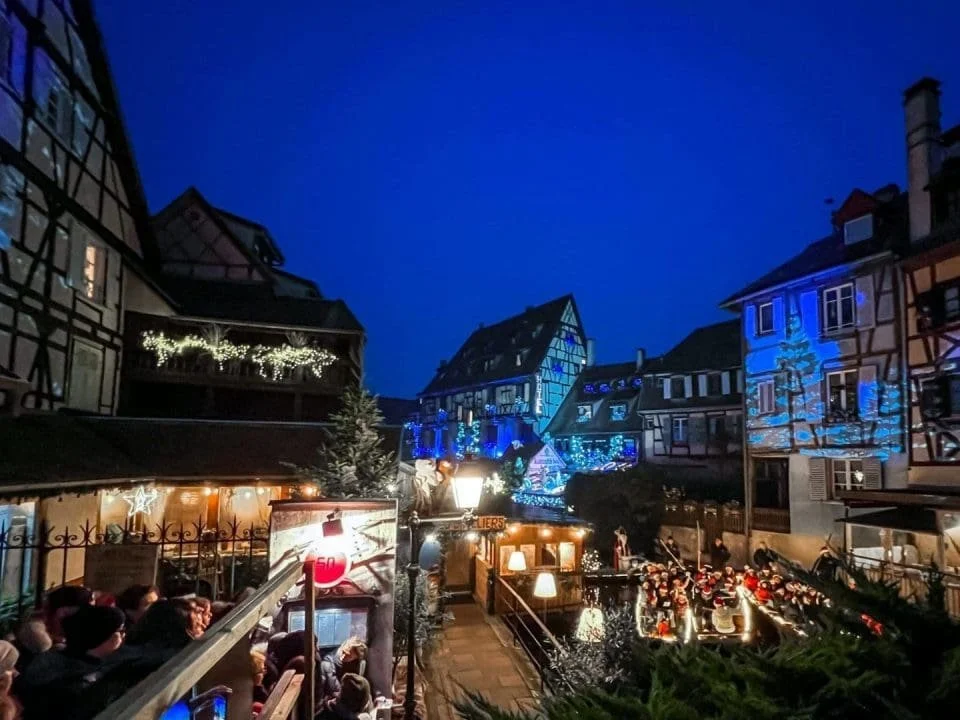
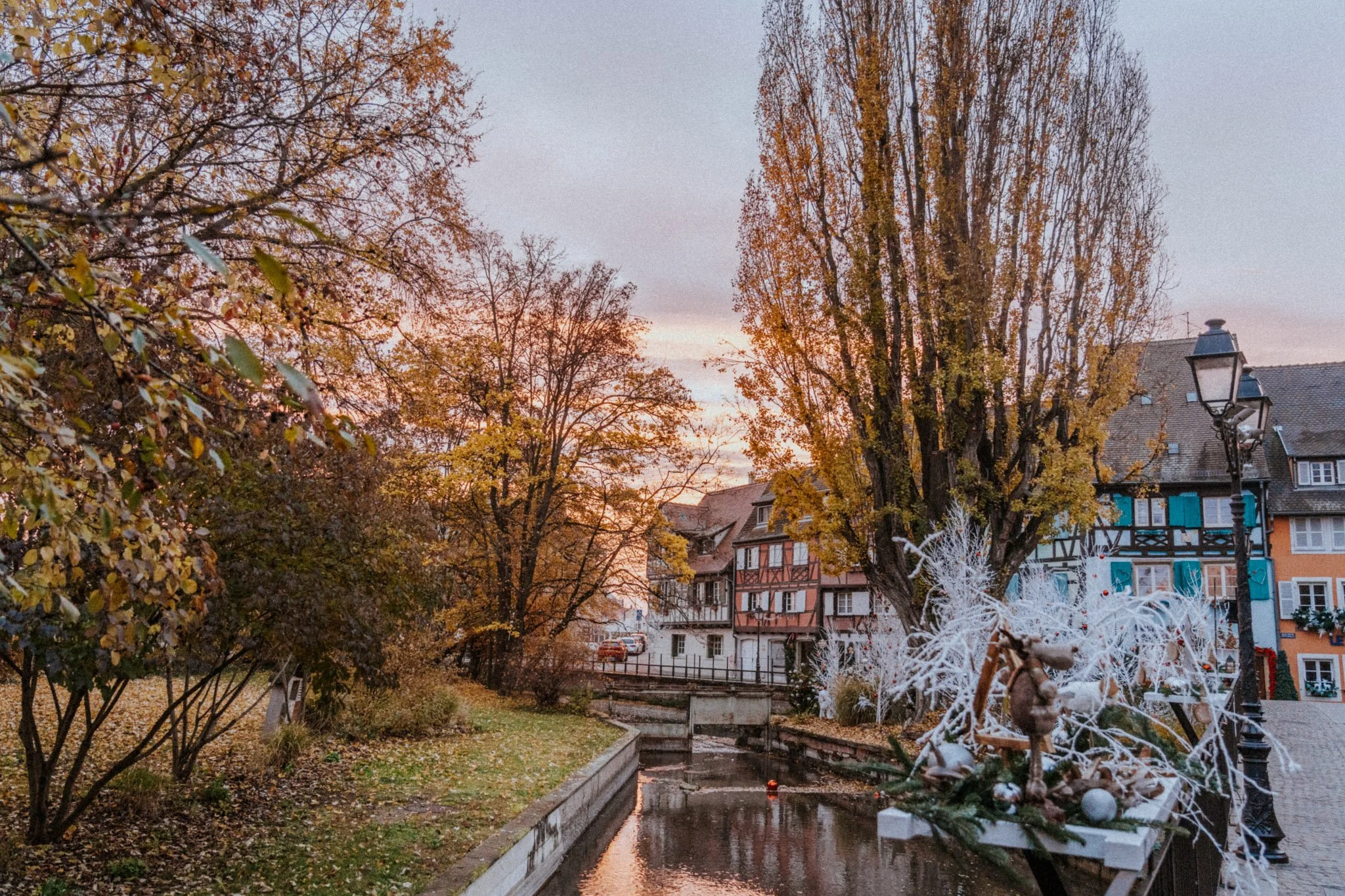
On Wednesday and Saturday evenings at 5:00 pm, head to Petite Venice Canals to watch local kiddos sweetly caroling on boats along the canal. It's as darling as it is impressive. Click here for the official link with more info!
The gourmet market is amazing! We've never seen a Christmas market quite like this one. Entirely dedicated to food, this Christmas market serves gourmet dishes that are a welcome change from the typical sausage, hot dog, or fried market foods. We ate here three times over two days.
Only a mere few European Christmas market locations can boast their own local wine regions like Colmar's own Alsace region can! Not only was white or red mulled wine offered, but multiple stalls also offered bottles or cups of delicious local wine.
During the day, the town is full of colorful pastel buildings. At night, lights brighten the city walls, churches, and buildings with a mix of intricate light projections and colorful can lighting.
Colmar Christmas Market Locations
In our opinion, Colmar might be less about the number of individual markets and more about the city itself. Being a smaller town, the markets take over the older parts of the city. They technically have six Christmas markets, but since most are so close, they kind of all run together. A few feel distinctly different, such as the Gourmet Market, which is entirely full of food, and the Children's Market, which hosts multiple mechanical rides, but most connect smoothly throughout the city. But instead of counting markets to make sure you stop at each one, ditch the map, wander for a few hours, and enjoy the views along the way.
Colmar's Children's Christmas Market in Little Venice: Not a lot to see or do if you’re not traveling with children, but it’s still in a very scenic part of Little Venice! Located on the Place des Six Montagnes Noires.
Joan of Arc Square Christmas Market: Located at Joan of Arc Square, this small market has many authentic products from the region.
Gourmet Market: Rue de la Montagne Verte - highly recommended for lunch or dinner!
Place des Dominicains: About 60 wooden chalets
Old Customs House Christmas Market: About 50 chalets set up around the Schwendi Fountain
Colmar's Artisans' Christmas Market: Just steps away from the Christmas market on Old Customs Square, you'll find Colmar's only indoor Christmas market in the Koïfhus building.

Colmar Christmas Market Opening Dates & Times
The Colmar Christmas markets will run from November 23 through December 29, 2026. The Christmas markets will be open from 11:00 am - 7:00 pm Monday-Thursday and 11:00 am - 8:00 pm Friday-Sunday.
Visiting on a weekday will be far less crowded than on the weekends. You can go on the weekend, but because the alleyways are often compact, expect Disney World-level crowds on Christmas Day. (Hint - think of sardines in a can.) Crowds were better on a Sunday evening than on a Saturday afternoon. However, crowds were still pretty heavy and bottlenecked in some areas.
Check this site to get exact dates for the many markets in Colmar!
Money Matters at the Colmar Markets
In France, you'll need euros when you visit. If you're wondering if you should bring cash or a card to the Christmas markets, the answer is yes - both! Some vendors take cards, but you'll almost always need cash for smaller purchases (less than $20).
Market "deposits"
Before you go, you need to know how "deposits" work at Colmar's Christmas Markets. When you want to buy mulled wine (vin chaud), you'll approach a stall that says the drink is 5 euros (for example). However, it will typically cost an additional 5-6 euros when it's time to pay. This essentially covers the cost of the cup/mug. If you'd like to take the mug home as a souvenir, congrats! It's yours. If you'd like to return it to the stall, hand it back and say you're returning it; they'll give you a few euros back as a deposit!
How much cash do you need?
It's best to assume about $15-20 per meal for markets in France. Hot drinks typically cost between 5-8 euros, with an additional average 5 euro deposit for mugs. Dishes such as tarte flambe cost around 9-10 euros. Hot dogs of most kinds cost between 5-10 euros, depending on the type. Sweet treats and desserts, on average, range between 4 and 12 euros.
If you're looking to buy a more expensive souvenir, you'll be glad to have your card on hand so you're not limited by small bills. Always ask the vendor before ordering or buying anything which payment method they take. (Even if your German language skills are poor and your English is limited, you can easily ask by holding up your credit card and asking, "Do you take card?" They will quickly answer with either hand gestures or a verbal yes or no.)
Foods & Drinks to Try in Colmar
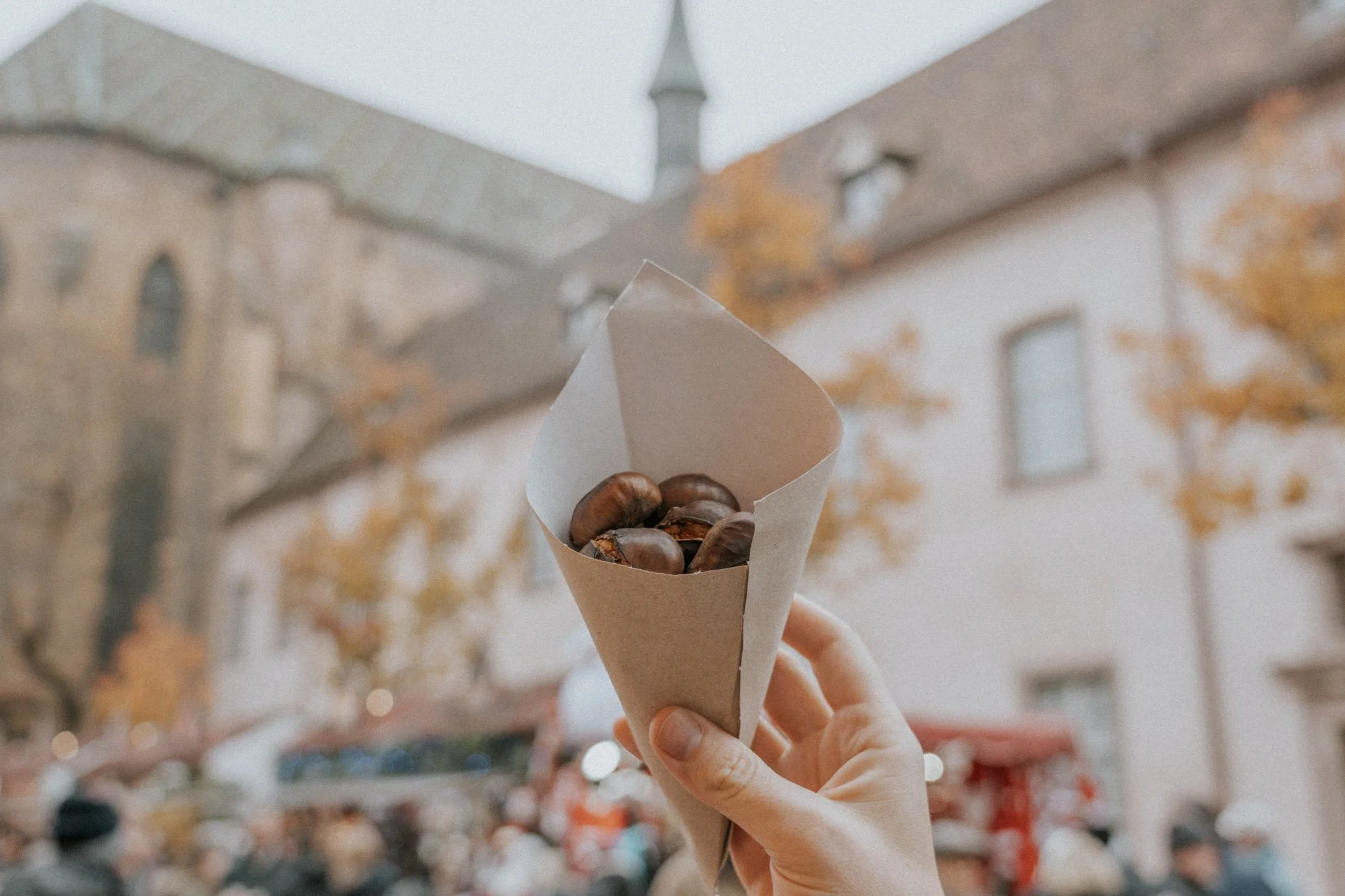
Tarte Flambée - imagine a flat, savory crepe with a creamy sauce, ham, and onions. It's a local specialty!
Alsace wine - we mentioned earlier that this area boasts its own wine region, and it does not disappoint! Our favorite local wine was the pinot blanc.
Crêpes - can't leave France without trying one of these favorite French desserts made right before your eyes at a market stall!
Foie gras - in case you're a little more adventurous, the Gourmet Market offered this, and we found it to be absolutely delicious...even though it's duck liver. Trust us! The French know their flavors.
How to Get Around Colmar
Get your walking shoes on! The only ideal way to navigate the city is on foot. You could rent a bike, but why not take the opportunity to stroll around town and visit the sites? Much of the city is blocked off to cars during Christmas to ensure the markets are safe for pedestrians.
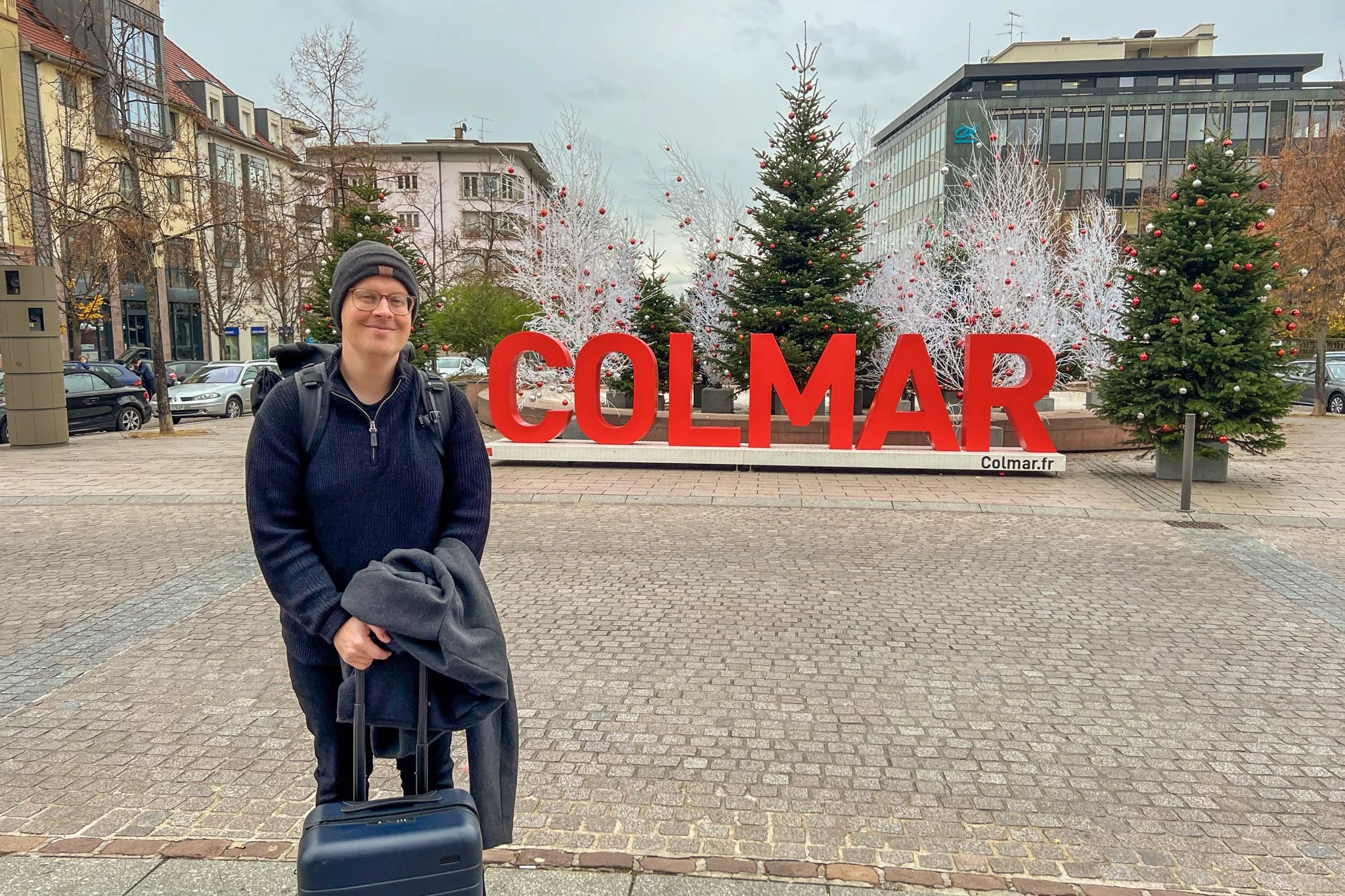
The central train station in Colmar is about a 5-15 minute walk from just about everywhere in the city. It's a doable walk, even with small suitcases!
If you drive to Colmar, you can park on the city perimeter. This website has all listed parking lots in Colmar. Keep it close for all listed parking lots in case one fills up, so you can go to the next! Once you park, walk into town from the car park. Colmar does not have Uber. Occasionally you might be able to flag a taxi if needed, but thankfully Colmar is very walkable.
Where to Stay in Colmar
The key to booking a great place in Colmar for Christmas markets is booking early! Like, really early. As in, before easter is best if possible level early. This cute, quaint town gets massively crowded, and it’s very popular — for good reason! To help you choose the best places to stay in Colmar for the Christmas market season, check out our top recs here!