There’s nothing more magical than strolling through Europe’s Christmas markets! The lights twinkle, the Glühwein steams, and every square feels like a holiday card come to life. But planning a Christmas market trip? That part can feel overwhelming. When do the markets open? How do you know which ones are worth it? What should you pack?
To help, we turned to the real experts: past travelers. We polled our Europe Christmas Markets Facebook group, which is home to thousands of travelers who’ve been there, done that, and collected more Glühwein mugs than they can count. Their advice became the foundation for this guide.
Here are 35 frequently asked Christmas market questions, answered by hundreds of people who’ve navigated stalls, crowds, weather, and the logistics of visiting Christmas markets across Europe.
(This post may contain affiliate links. We may earn a commission from your purchase(s) at no cost to you, but every little bit helps us keep sharing the magic and logistics of visiting Europe. Thanks!)
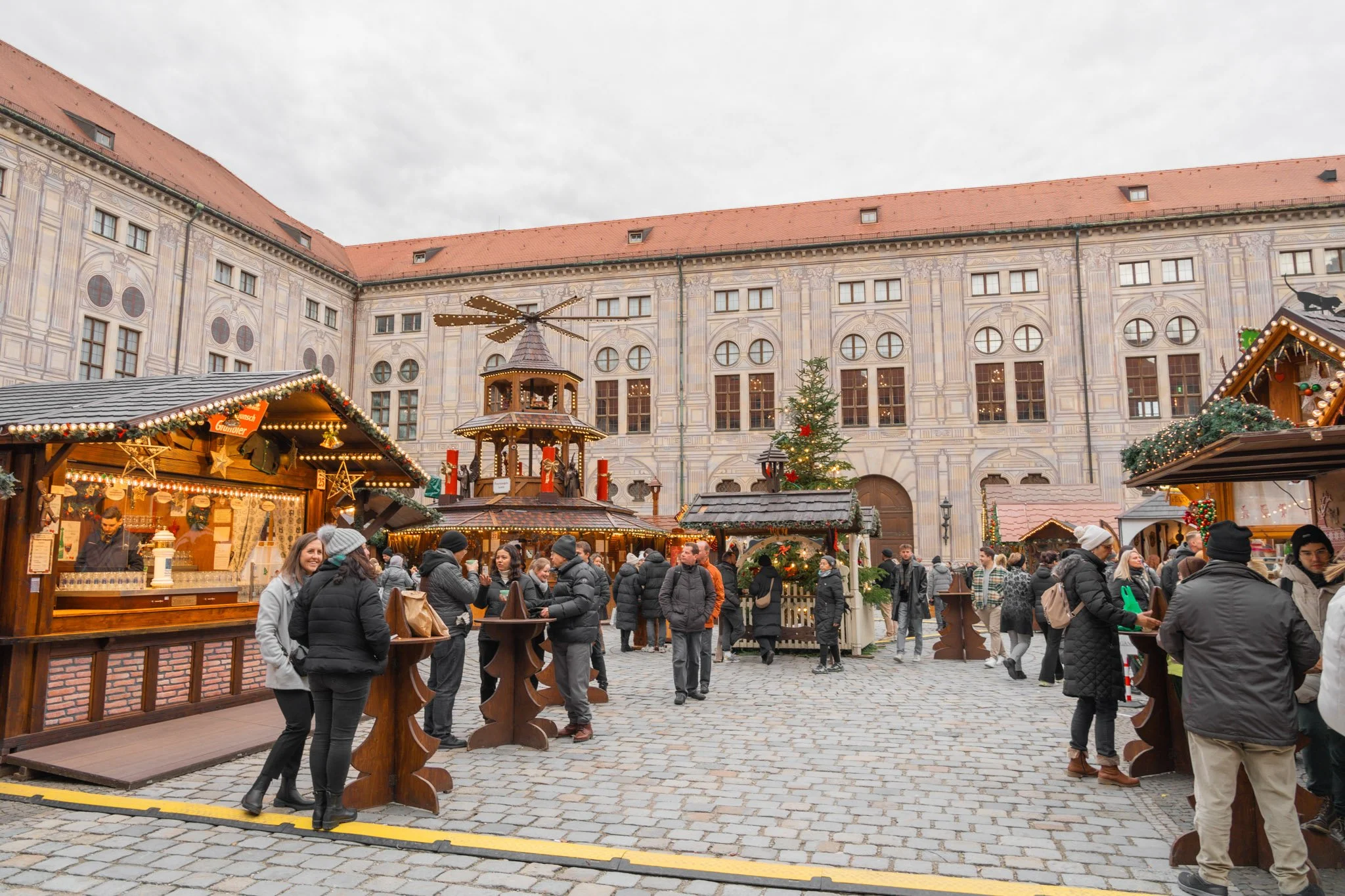
How to Plan a Christmas Market Trip
1. How do I choose which Christmas markets to visit?
Many travelers in our group suggested choosing one region or country to focus on, like Bavaria, Alsace, or Austria, rather than bouncing across Europe. That way, you can visit multiple markets without losing whole days to train travel.
Some travelers recommended picking one “big name” market, such as Vienna, Cologne, or Nuremberg, then filling in your itinerary with smaller nearby towns. Others pointed out that your interests should guide you too: shoppers often favored Nuremberg, Germany, for its variety of handmade goods, while food lovers raved about Colmar, France.
It also depends on when you can visit! But more on timing later.
2. Which is better, small-town markets or big city markets?
Travelers in our group are split.
Some prefer the big-city markets for their scale and energy! In many large cities, you can find dozens of stalls set against iconic backdrops like Vienna’s City Hall or Cologne’s Dom Cathedral, with plenty of restaurants and attractions to round out a trip.
Others say the small towns feel more magical, with handcrafted souvenirs, friendlier vendors, and fewer crowds. Many people recommend combining both: use a big city as your base, then add a day trip or overnight in a nearby town to experience the contrast.
3. Should I book a Christmas market tour, cruise, or plan it myself?
Some travelers in our group like the convenience of river cruises and organized tours so they don’t have to worry about logistics, and everything runs on schedule.
Others say planning your own trip offers better flexibility and value. They point out that with trains and regional flights, it’s easy to build your own itinerary and spend more time at the markets that interest you most. We always plan our own trips, but we also love the planning process. You can check out a few of our itineraries on our Christmas Markets page!
A few people recommend a hybrid approach: book a cruise or tour for your first trip if you’re nervous about planning, then go independently once you know what to expect. Or book a Christmas market river cruise, but plan to arrive a couple of days early or depart a few days late to explore on your own before or after your guided cruise.
4. How far in advance do I need to plan my trip?
As soon as you can! Accommodation in some smaller, very popular destinations sells out nearly a year in advance.
Colmar, France, is the top destination that comes to mind when it comes to places that sell out quickly and need to be planned for well in advance. In addition, affordable accommodation in larger, popular destinations like Strasbourg and Dresden, especially on December weekends, sells out quickly.
Since future Christmas market travelers come from all over the world, there is no single right answer for booking flights, but 3–9 months in advance is generally recommended.
Many past travelers say they start planning even earlier if they want special experiences, Christmas market river cruises, and unique accommodations.
5. Are Christmas markets better during the day or at night?
Both times have their perks! During the day, stalls are easier to browse, and markets tend to be less crowded, which is great for shopping. Many markets open between 10 a.m. and 12 p.m.
At night, the lights transform the squares into something magical, and the atmosphere is special, but often crowded. In general, most markets close around 9 or 10 p.m., though a few larger cities keep food and drink stalls open later. Always check local schedules before you go, since hours vary by city and even by day of the week.
Many people (us included) suggest visiting your favorite market twice (once in daylight, once after dark) to get the full experience! While daylight hours vary greatly by destination, the average sunset time in central Europe is about 4 p.m., so dusk might come sooner than you think!
Women’s Christmas Market Packing List
Different Christmas market destinations at different times require different packing necessities! From "warm” to “warmer” to “warmest,” here are all the essentials you’ll want to have for your trip!
6. When are Christmas markets the most crowded?
All across Europe, evenings and weekends at Christmas markets are the busiest, especially in larger cities.
Crowds peak during opening weekends and the days right before Christmas. Weekday mornings are usually the calmest time to go if you want to wander more freely and get better photos with fewer people.
7. Do Christmas markets stay open on Christmas Eve and Christmas Day?
Most markets close by the afternoon of December 24 and remain closed on December 25.
If you’ll be in Europe over the holiday, plan festive meals at select open restaurants, or grab groceries to cook for yourself at your short-term rental if you’re staying at one.
For things to do, it’s recommended to spend the day outdoors sightseeing and enjoying church services instead of market hopping on Christmas Eve and Christmas Day.
8. How much time should I spend at each Christmas market destination?
Smaller markets can often be enjoyed in one to two hours, while major ones like Vienna, Munich, or Nuremberg may take a day or more if you want to eat, shop, and soak in the atmosphere.
In bigger cities where markets are close together, like Munich or Strasbourg, you can see multiple markets in one day. Travelers in our group often plan to see two or three in a day, breaking up the visits with café stops or sightseeing. But many also warn against overdoing it. The walking, the cold, and a couple of mugs of mulled wine can make market-hopping surprisingly tiring.
If you’re short on time away like we often are, you can technically see and do an entire city’s worth of markets in one day and then move on to the next destination, but you’ll miss out on exploring and enjoying all the city has to offer. If you can, spend at least two nights in each destination to have a full day to explore other attractions and take tours. We always find unique tours, tickets, and attractions on GetYourGuide, Tiqets, and Airbnb Experiences.
Check official city tourism websites and their event calendars once they’re updated, typically in the fall. They’re a great resource for last-minute finds, like choirs performing in churches or local parades that aren’t widely advertised online.
9. When do they announce Christmas market dates?
No one official date applies to all markets. There are literally thousands of Christmas markets across Europe, and every destination and often many markets are on their own schedule.
For many destinations, tourism bureaus often share official dates in late spring or summer, though some cities wait until early fall. As a general rule, markets open in late November and close by December 24, with only a few extending into the days after Christmas. If you follow the Christian calendar, you might recognize this time as Advent.
We check dates across Europe relentlessly year-round, and we can confidently say there’s no rhyme or reason to when market dates are shared. While we’d all love to plan far in advance, we often rely on historical data from past markets until dates are officially released slowly but surely.
10. When is the best time of year to go to Europe’s Christmas markets?
The real answer is whenever you can! Come if you can! We know you’ll love it. But for the practical answers from past travelers?
Our group recommends early December most. Virtually all the markets are open, especially on weekends. (Some markets are only on the weekend!)
Some people also enjoy late November to catch opening days, while others prefer mid-December to be fully immersed in the holiday spirit, even if that means dealing with bigger crowds.
We always try to go for the opening days because they’re often full of fun parades, concerts, and festivities. However, to time trips with opening days, we have to delay booking travel until the official dates are announced, rather than planning to visit anytime in mid-December.

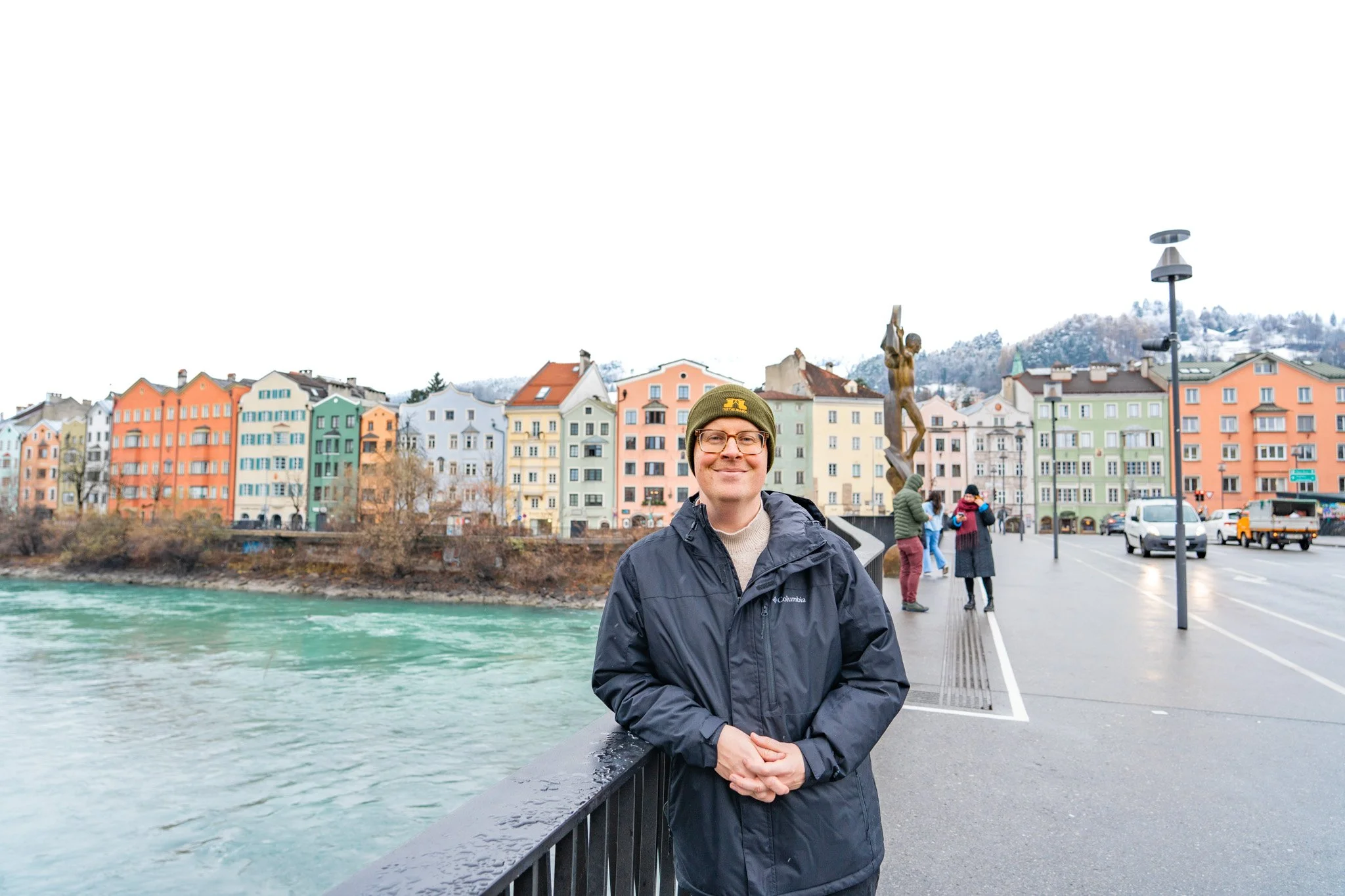
Innsbruck, Austria
What to Pack and Wear
11. What are the must-have essentials for a Christmas market trip?
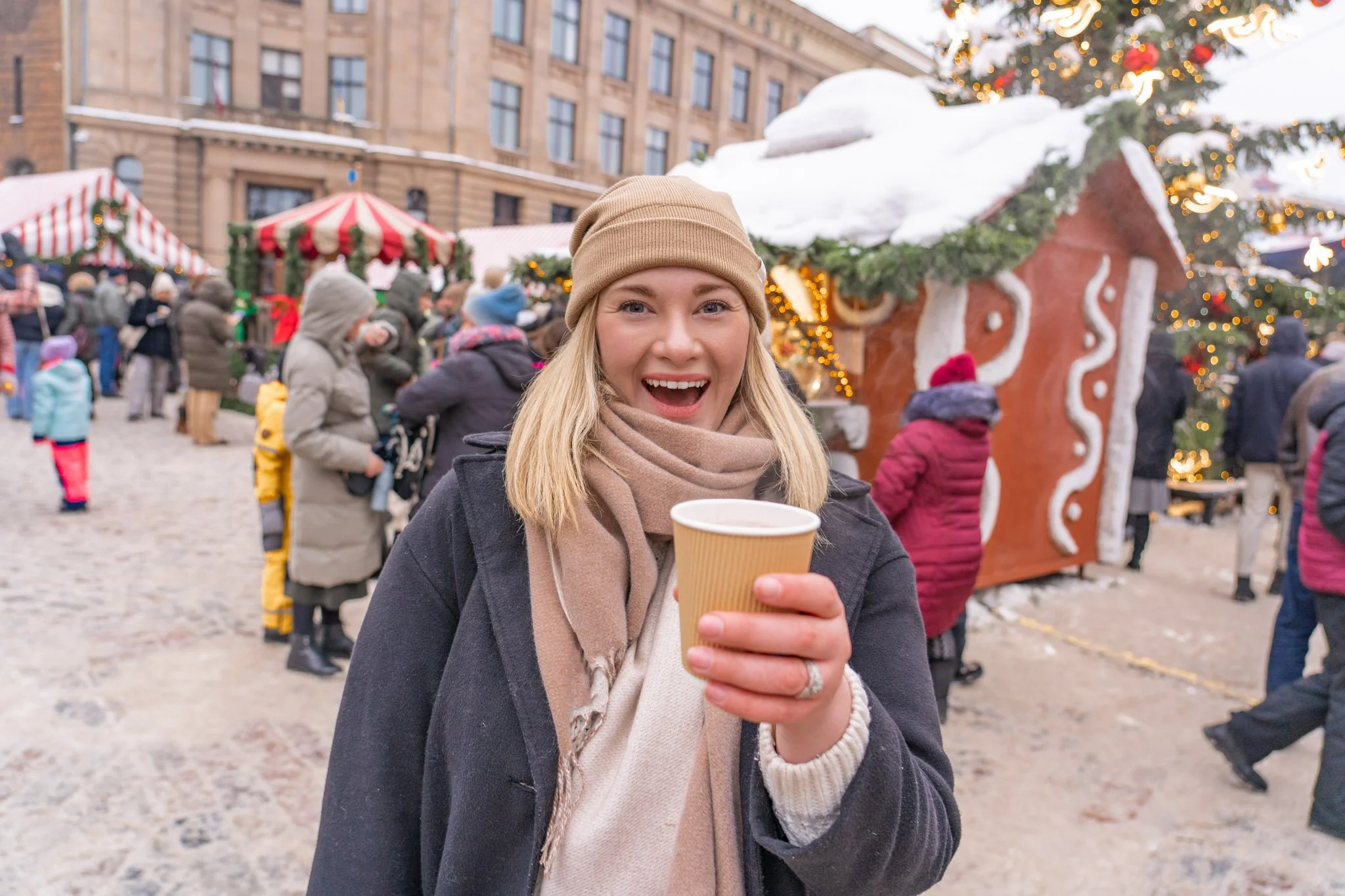
Travelers in our group almost always mention using a crossbody bag under your jacket to deter pickpockets, plus a canvas tote to hold the treasures you find at the markets! Basics in your crossbody bag should include a credit card, cash, coins for restrooms, and your passport. (More on this in FAQ 29.)
It’s always a good idea to wear or bring extra layers like gloves or a hat. Even if temperatures aren’t freezing, the chill settles in when you’re outside for hours. Some travelers recommend touchscreen gloves for snapping photos, while others swear by wool scarves for warmth and style. One member pointed out that hats matter less in milder cities like Basel, but become essential if you’re headed somewhere colder, like Riga or Tallinn.
Markets stay open in almost all weather, and group members say rain can even thin the crowds. That said, umbrellas are a hot topic in the Facebook group: some recommend them, while others strongly oppose them and suggest a poncho, waterproof coat, and shoes instead. Keep in mind that holding an umbrella with one hand makes it difficult to do anything like eat or take photos. They also take up a lot of space, often annoying other market-goers, but sometimes they’re just what you need in the moment. We bought an umbrella when it was raining in Strasbourg, and though it was annoying, we didn’t regret having one in the relentless rain.
Cold drains your phone battery, so everyone recommends bringing a portable power bank to keep phones charged as you go.
A few people mentioned bringing a thermos to keep your market drinks warmer for longer. We tried this last year, and it definitely worked at those markets that offered paper cups instead of mugs!
One true “if-you-know-you-know” pro move? Packing travel tissues and hand sanitizer, since public restrooms often run out of both.
To bring souvenirs back home, you’ll definitely want a packable duffle!
12. What kind of coat is best for Christmas markets?
This is up to personal preference, but most previous market-goers recommend a puffer coat because it’s lightweight, warm, and water-resistant, which is perfect for long hours outside. They also make great make-do pillows on planes and trains!
Others prefer wool coats for style and layering flexibility. A few members suggest a compromise: a wool coat for city days and destinations when you’ll be indoors more, and a puffer for colder or rainier destinations.
While we personally love the look of a wool coat and often bring one or two on each trip, we hate how much they absorb the smell of the city and markets. The coats pick up the smell of rain, cigarette smoke, food, and the contained firepits at the markets. Our coats always need to be thoroughly dry cleaned when we get home.
13. What kind of boots or shoes are best for Christmas markets?
Our group agrees on one thing: comfort comes first. Most travelers recommend waterproof boots or sturdy walking shoes (sneakers/trainers/tennis shoes or whatever you call them!) with good traction for cobblestones and potential snow.
Some favor insulated boots for warmth, while others say layering with thick socks in regular leather boots works fine. A few caution against heeled boots! They might look chic, but they’re tough on uneven ground after a few hours.
Whichever shoe you choose, make sure it’s at least water-resistant, and try to find fully waterproof shoes if possible. No one wants wet, frozen feet!
14. How cold is it at Christmas markets?
Temperatures vary widely by region. You might see 50sºF/10sºC in Paris or 40ºF/5ºC in Bamberg, Germany, while places like Helsinki, Finland and Vilnius, Lithuania can dip well below freezing.
Several group members warn that the damp air can make it feel colder than the numbers suggest. The best advice repeated over and over: layer up, because you’ll be moving between chilly outdoor markets and overheated indoor restaurants.
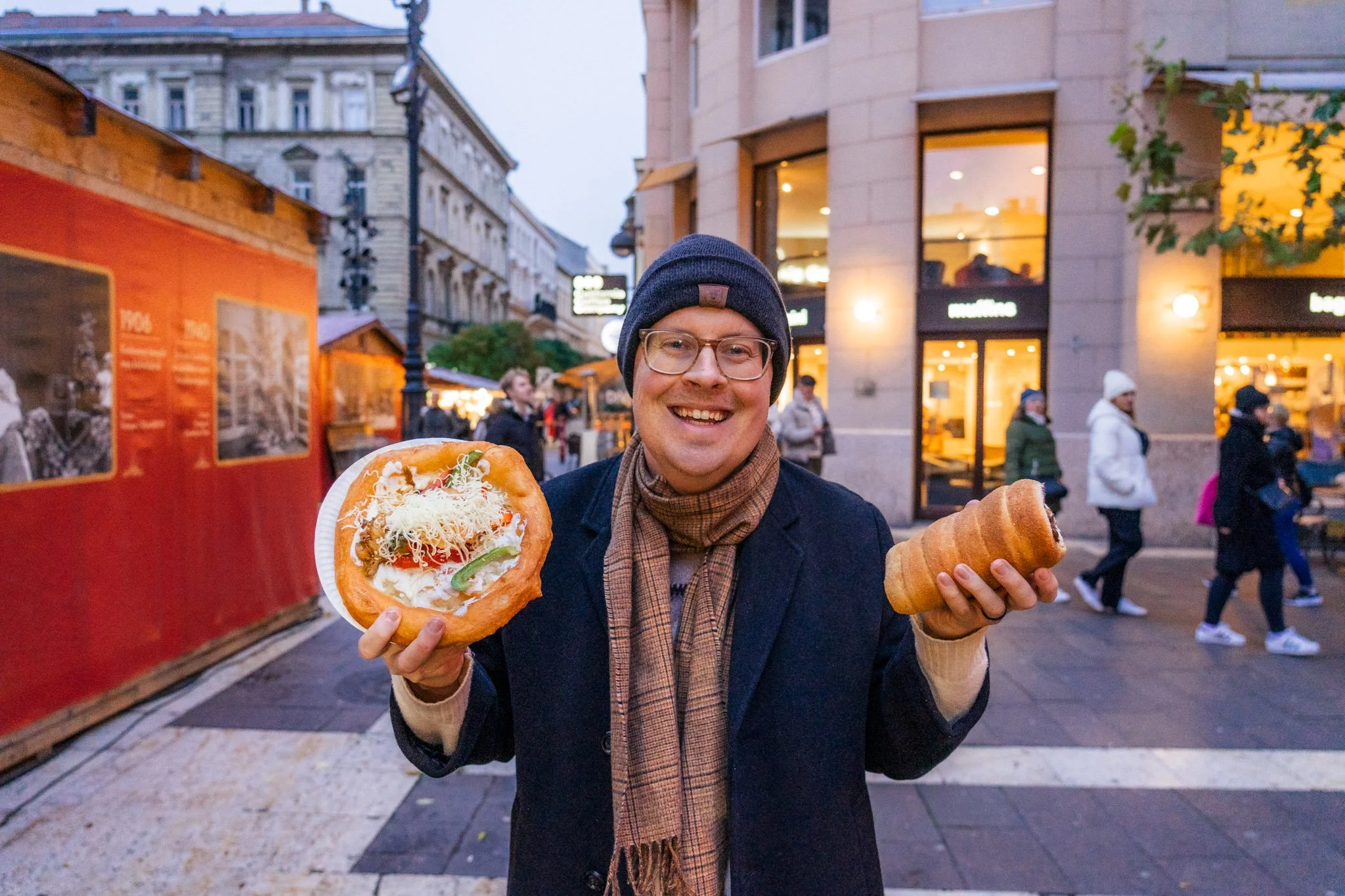
Eating and Drinking at the Markets
15. What is there to eat at Christmas markets?
Food is one of the markets' highlights! Classic German markets serve sausages, pretzels, and roasted nuts, while places like Alsace are known for spiced cookies and cheesy tarte flambées.
Vegetarian options vary by market. Travelers in our group note that potato pancakes, pretzels, roasted chestnuts, and sweets are easy finds. Vegan options tend to be limited, but you can find them in larger markets in major cities like Zurich, Switzerland, and Berlin, Germany.
Overall, you won’t go hungry! Every market has regional specialties worth trying!
16. Do I need to plan sit-down meals, or do people mostly eat at the markets?
Most travelers say they eat primarily at the markets, since the food is hearty and affordable. Some people recommend skipping breakfast so you can snack your way through the stalls, while others plan a sit-down lunch and then graze on sweets and drinks later.
A few group members recommend booking one or two nice restaurant meals to break things up, especially if you’ll be in a city for several nights. Some travelers also note that restaurant reservations fill quickly in December, so plan ahead if there’s somewhere you don’t want to miss!
17. What is Glühwein, and why does everyone rave about it?
Glühwein is hot mulled wine, spiced with cinnamon, cloves, and other spices. Each destination has its own unique blend of wintry spices that make the mulled wine special.
It’s called Glühwein in German-speaking countries, Vin Chaud in French-speaking countries, gløgg in Scandinavian countries, and a few other terms across Europe. Whatever you call it, it’s the drink most associated with European Christmas markets! It’s the perfect way to warm up after hours outside, and it tastes like Christmas in a cup.
Some travelers prefer the red version, while others look for the less common white Glühwein. Many booths also offer options to further spike your mulled wine with extra liquor if you’d like to make it stronger or mix up the flavor.
Men’s Christmas Market Packing List
Different Christmas market destinations at different times require different packing necessities! From "warm” to “warmer” to “warmest,” here are all the essentials you’ll want to have for your trip!
18. What’s Feuerzangenbowle, and how is it different from Glühwein?
It’s a relatively common German drink found at many markets across the country. Feuerzangenbowle starts with mulled wine, but then a sugarloaf soaked in rum is set on fire and drips into the drink.
It’s stronger and sweeter than Glühwein, and some warn that one cup can be more than enough! It’s not at every market, so several travelers recommend trying it if you spot a stand.
19. What are the most popular drinks at Christmas markets besides mulled wine?
Mulled wine is the star, but our group points out plenty of other options. Of course, Christmas markets also offer non-alcoholic options! You can find hot chocolate nearly everywhere, as can non-alcoholic Kinderpunsch or other non-alcoholic spiced punch drinks.
Beer is common in German markets, while hot cider and boozy hot chocolate are favorites elsewhere. A few select market destinations like Regensburg, Germany, and Strasbourg offer sparkling wine, and a few places like Basel, Switzerland, offer bottles and glasses of local wines. Some travelers say they make it a tradition to sample something different in every city!
Shopping and Souvenirs
20. What are the best things to buy at Christmas markets?
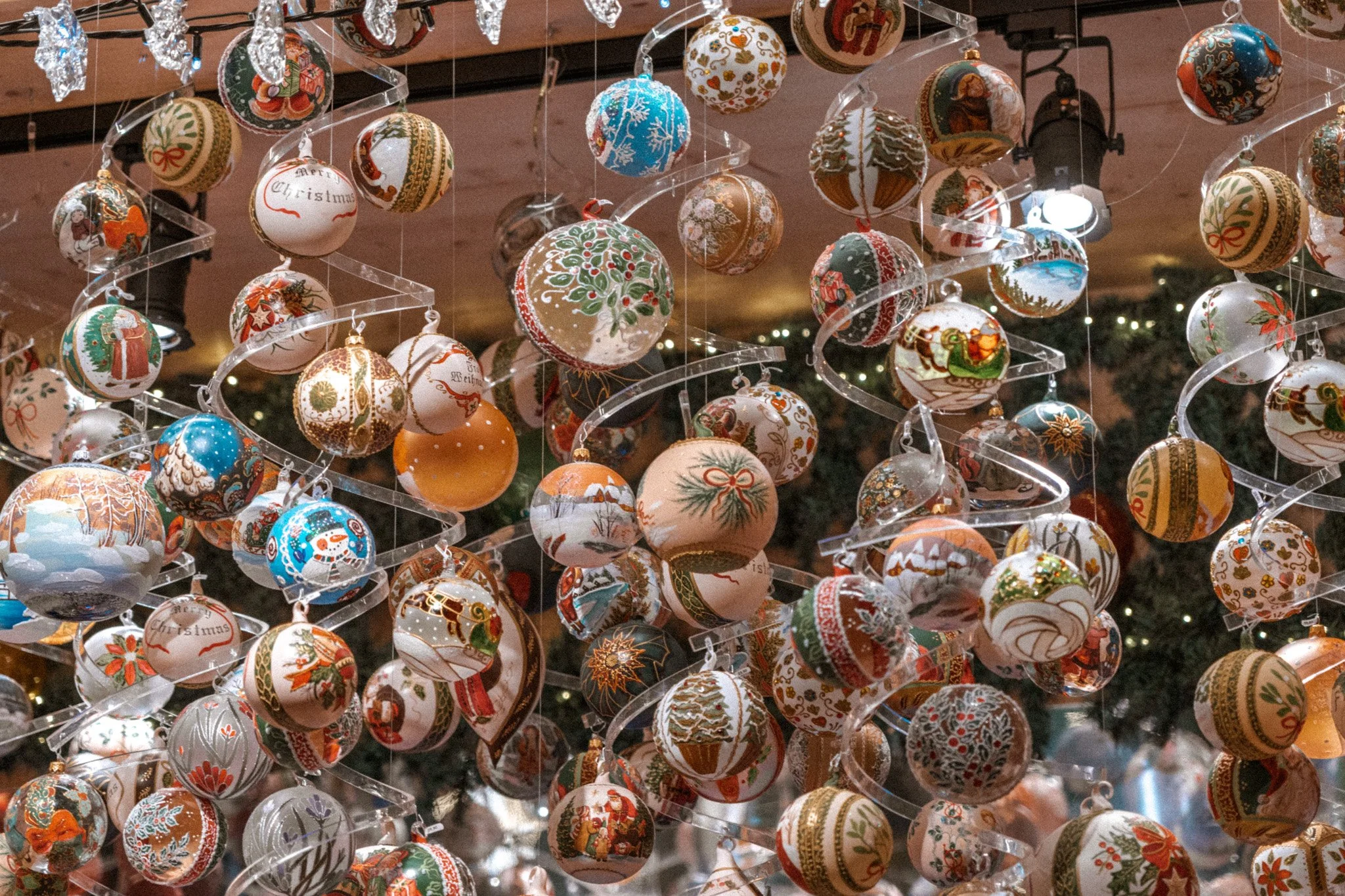
Travelers in our group say the most meaningful finds are the ones tied to local culture, such as hand-carved ornaments, regional foods, or artisan crafts.
In Germany, it’s nutcrackers and wooden pyramids; in France, it’s pottery and linens; in Scandinavia, wool sweaters are common. Some members mention that it’s easy to get carried away, so they suggest budgeting both money and luggage space for those irresistible extras! (more on that in FAQ 24.)
21. How can I tell if souvenirs are authentic or mass-produced?
This is a common concern. Many travelers recommend asking the stall owner to explain how the item was made or seeing if they have multiple versions in different colors and patterns. Large amounts of the same item in slightly different variations can often signal that something isn’t handmade.
Some members also say that smaller markets tend to have more authentic goods, while the largest city markets often mix artisan stalls with commercial stands. Many recommended checking the back or bottom of a product to make sure it doesn’t say "Made in China" if that’s a concern for you.
22. What’s the big deal about the mugs? Should I collect mugs from every market?
The short answer: mugs are a tradition. You pay a deposit when you order a drink, and you can either return the mug for your money back or keep it as a souvenir.
Some travelers collect one from every market, while others only save their favorites. Group members point out that designs change each year, so collecting can become addictive if you’re not careful. It’s fair to say that for most group members, those mugs become the most collected souvenirs!
23. How do I safely pack fragile ornaments and souvenirs?
Many travelers recommend carrying a few sheets of bubble wrap or using socks and scarves to cushion delicate items. One group member said to use the sticky side of a travel lint roller that you might already pack instead of taking up space with tape. Genius!
Others mention saving paper from the market itself, since some stands wrap purchases in paper if you ask. We always pack fragile items in our used wool socks or extra hats and scarves and put them inside the shoes in our suitcase. We haven’t lost an item to travel breakage yet!
If you’re flying, our group suggests putting fragile ornaments in your carry-on instead of checked luggage. You know to be more gentle with your bag than the luggage handlers!
24. What can I do with my extra shopping?
If your bag is full, our group says you have options: ship items home (though this can be pricey), buy a packable duffle bag, or wear bulkier items like sweaters and coats on your travel days.
One member mentioned that they always bring “an extra suitcase for souvenirs,” meaning they check their carry-on bag in their suitcase on the way over so they have an extra for all their holiday shopping when they return home!
Other group members insist they only shop for what they can carry or leave a little bit extra room in their suitcase to fill with treasures throughout their market hopping.
Money, Safety, & Practicalities
25. What’s the toilet situation like at Christmas markets?
Our group says to expect a mix! Some markets have clean, free public restrooms, while others charge a small fee (usually 50 cents to €1).
Travelers recommend keeping a few coins handy and carrying tissues, since supplies sometimes run out. One member joked, “It’s not glamorous, but it’s part of the experience.”
26. Do I need cash at Christmas markets, or can I use cards?
Travelers agree that cash is still king at many stalls. Larger city markets may take cards, but smaller towns and food vendors often don’t. Most group members recommend carrying both: a card for big expenses and enough euros in cash for snacks, drinks, and small purchases.
The consensus on how much cash is needed can be summed up as “enough for the day, but not too much.” Travelers typically budget around €20–€50 per person per day for food, drinks, and small souvenirs. Several people warn against carrying large amounts of cash. It’s better to withdraw as needed from ATMs in the city center rather than at the market itself.
27. Are Christmas markets expensive?
It depends on your habits. Entry to most markets is free, and food and drinks usually cost between €3 and €18. Souvenirs vary widely, with handmade ornaments being affordable but larger crafts costing much more. Many members point out that markets are cheaper than restaurants for meals but more expensive if you shop heavily.
28. Do I need to carry my passport with me?
As international visitors, it is technically required in most, if not all, European countries to carry your original passport on your person. This does not include copies — it must be the real thing. Police can legally ask you to provide identification at any time. This is very rare. We've only experienced this once in Naples, Italy. That said, you will have to pay a major fine if you’re caught without it.
29. How do I keep my money and belongings safe from pickpockets?
Pickpocketing can happen in crowded areas, and group members stress being cautious without being paranoid. Many recommend crossbody bags that zip closed or money belts under coats. Others say they never had a problem, but still keep wallets and phones in front pockets, not backpacks.
Our advice? At minimum, while navigating the cities and markets, pretend you don’t have back pockets and don’t put anything important in your jacket pockets. Keep your cross-body bag strap under your coat and zipped closed while you’re out and about. Keep your wits about you, and don’t get so heavy on the mulled wine that you let your guard down!
30. Is it safe to travel between markets at night?
Yes, according to most travelers. Markets often stay lively well into the evening. That said, group members suggest using common sense: stick to well-lit areas, use official taxis or rideshares if you feel uncomfortable, and avoid wandering quiet backstreets late at night when walking back to your accommodations or between markets.
Our number one tip to travelers to Europe is to be wise over polite. This is especially a note to passersby, not so much to those who work at Christmas markets. For random strangers, no one trying to get your attention has to know you speak English. Just because someone calls out to you doesn’t mean you don’t owe anyone a response, a signature, a glance, a smile, or anything. It’s especially important to remember that while exploring France, you need to ignore anyone who insists you dropped something, asks you to buy something, or asks you to sign a petition. It might sound harsh, but it will keep you safer from pickpockets and opportunists.

Getting Around
31. What’s the best way to get between Christmas market cities?
Many group members say trains are the easiest and most reliable option. This is our favorite way, too! High-speed routes like Paris–Strasbourg or Munich–Nuremberg make day trips possible, and regional trains connect smaller towns. Though dozens of train companies, thousands of routes, and many ways to buy tickets exist, we always use Omio or Trainline to buy and track our tickets.
Some travelers suggest renting a car for maximum flexibility in rural areas, though parking near markets can be tricky. A few also recommend river cruises if you want a more guided experience that handles the logistics!
32. How much walking should I expect at Christmas markets?
A lot! Travelers note that markets are usually set up in city squares and pedestrian streets, which means you’ll be on your feet for hours. Comfortable shoes are a must. Many people say they walk 10,000–20,000 steps in a day without even realizing it because they’re so busy exploring.
33. Can I visit multiple Christmas markets in one day?
Yes, especially in cities like Vienna, Munich, or Cologne, where multiple markets are clustered close together. Travelers say it’s common to visit several in one day by walking or taking short metro rides between them. But group members caution against overdoing it: “If you try to cram in too many, they all blur together. Take your time and enjoy.”
34. Are day trips to smaller towns worth it?
Many travelers say yes, especially if you’re based in a big city. Towns like Colmar, Rothenburg ob der Tauber, or Bruges offer a completely different atmosphere from larger capitals. Members highlight that these towns often feel more festive and less commercialized. But others add that you should balance it with your time. Long travel days can cut into the joy if your schedule is already packed. Many prefer a day trip when possible rather than moving suitcases and hotels over and over again.
35. Are Christmas markets accessible for strollers or wheelchairs?
Accessibility varies from city to city. Group members note that most major markets are set up in central squares with flat entry points, but cobblestones, uneven ground, and crowds can make navigation tricky.
Smaller markets often have narrow aisles that get congested in the evenings. Several travelers recommend visiting in the mornings when markets are less crowded, sticking to bigger cities with more accessible layouts, and checking whether trams or metros have elevators before you go. Many parents also say compact strollers are easier than wide ones.