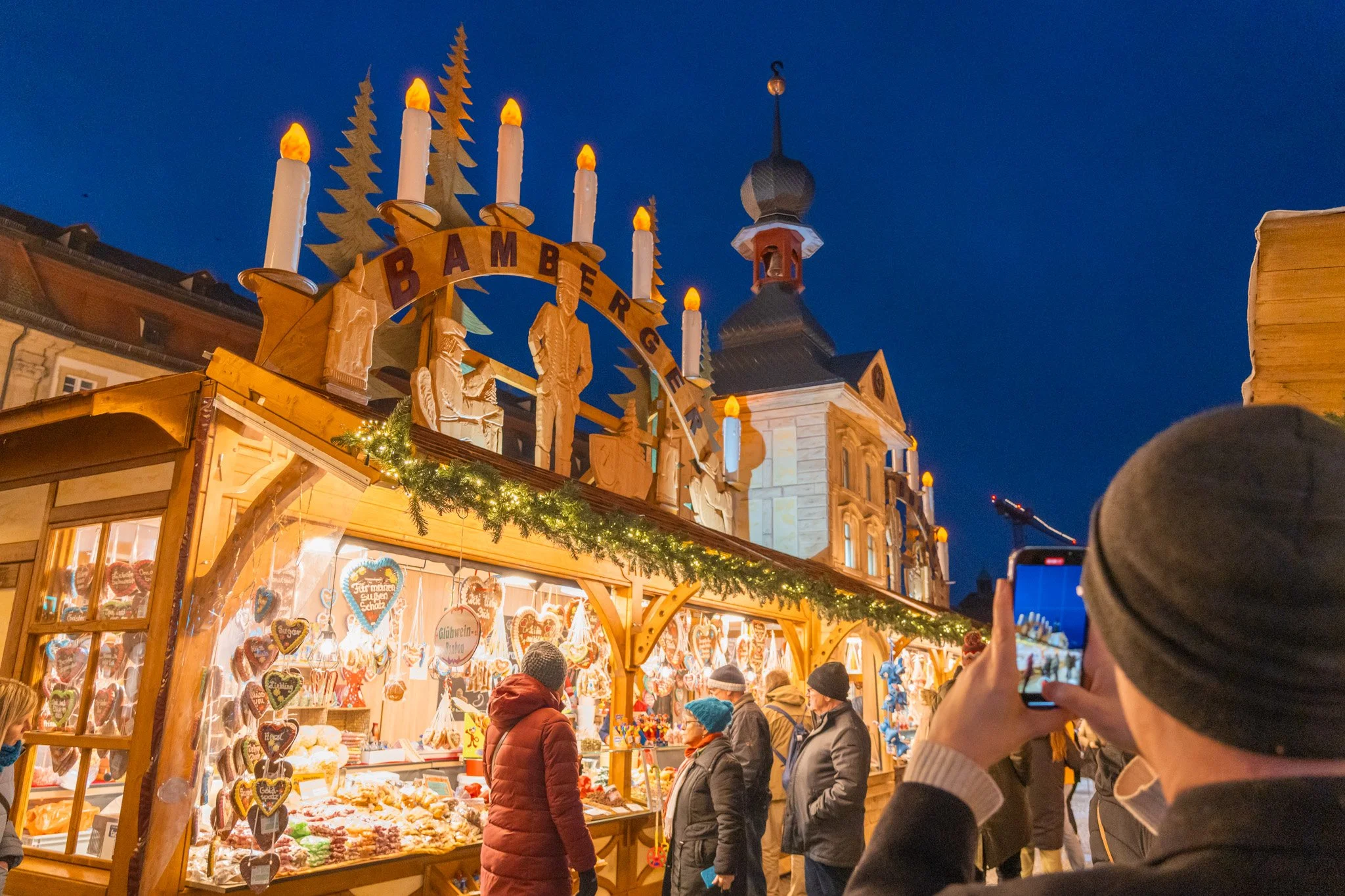
Visiting Bavaria? Bamberg, Germany, deserves a spot on your Christmas market itinerary — especially if you're already visiting Nuremberg, Würzburg, or Munich. Its UNESCO-protected old town is packed with timber-framed charm, cobblestone lanes, and river views that feel straight out of a fairy tale. And while there’s just one main market here, it’s a cozy, traditional one that captures everything magical about small-town Christmas in Germany.
We visited Bamberg during Christmas market season and found it to be low-key, beautiful, and delightfully festive, which is perfect for travelers who like things a little slower and more scenic.
(This post contains affiliate links. We may earn a commission from your purchase(s) at no cost to you, but every little bit helps us keep sharing the magic and logistics of visiting Europe. Thanks!)
Rapid‑Fire FAQ’s About Bamberg Christmas Market
Card or cash? Bring both. Cards are accepted more often than you’d expect, but you’ll definitely need cash for snacks and smaller purchases.
Is it walkable? Yes! Bamberg is super easy to explore on foot.
How big is the market? Small and central. Just one main location, but packed with festive food, drinks, and traditional goods.
Eat before? No need. The market has plenty of food, and it’s all delicious.
Worth visiting on a day trip? Absolutely. It’s especially good as a quieter stop between bigger cities.
When Is the Bamberg Christmas Market Open?
Bamberg’s 2026 run is from November 24 to December 23, 2026. Bamberg’s Christmas market is open daily, with extended hours on weekends. From Monday to Thursday, stalls typically run from 9:30 a.m. to 8 p.m., staying open until 9 p.m. on Fridays and Saturdays. Sundays start later, at 11 a.m., but still wrap up around 8 p.m.
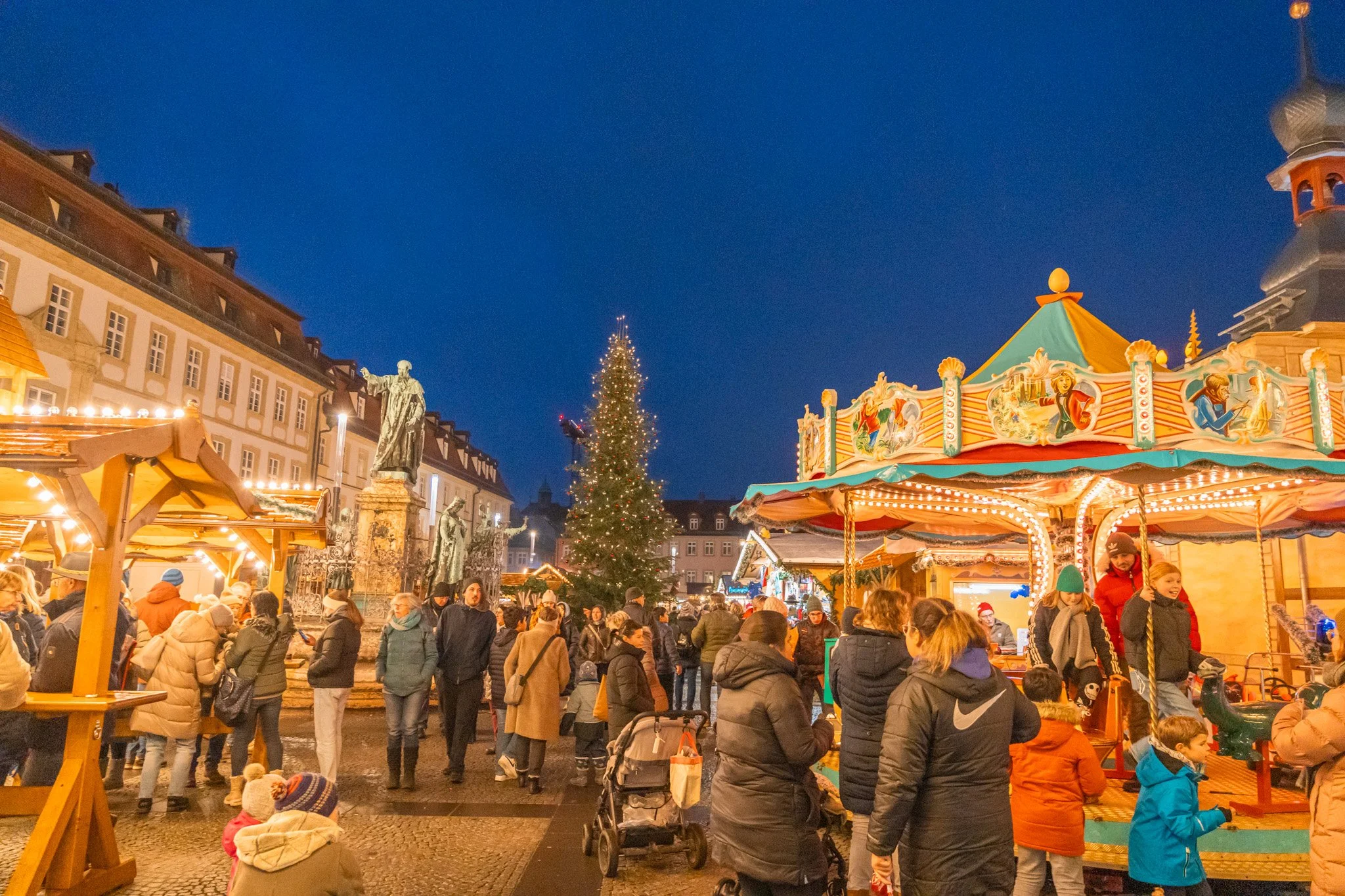
We loved being there at twilight when the lights came on, the mulled wine was hot, and the square filled with that soft winter glow. The market doesn’t open super early in the season, so plan for December if you want full ambiance and all stalls open.

Where is the Bamberg Christmas Market?
Maximiliansplatz (Main Christmas Market)
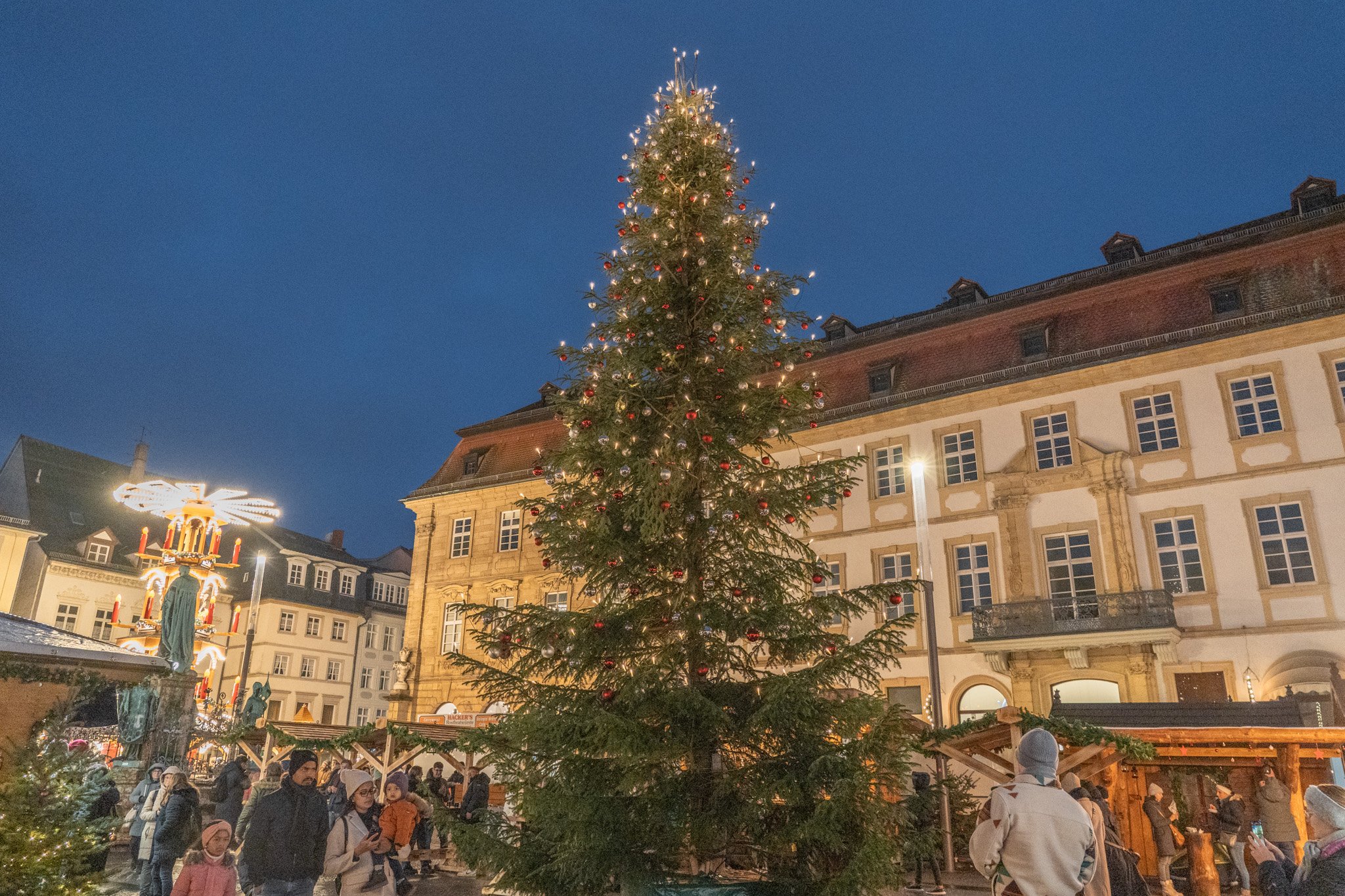
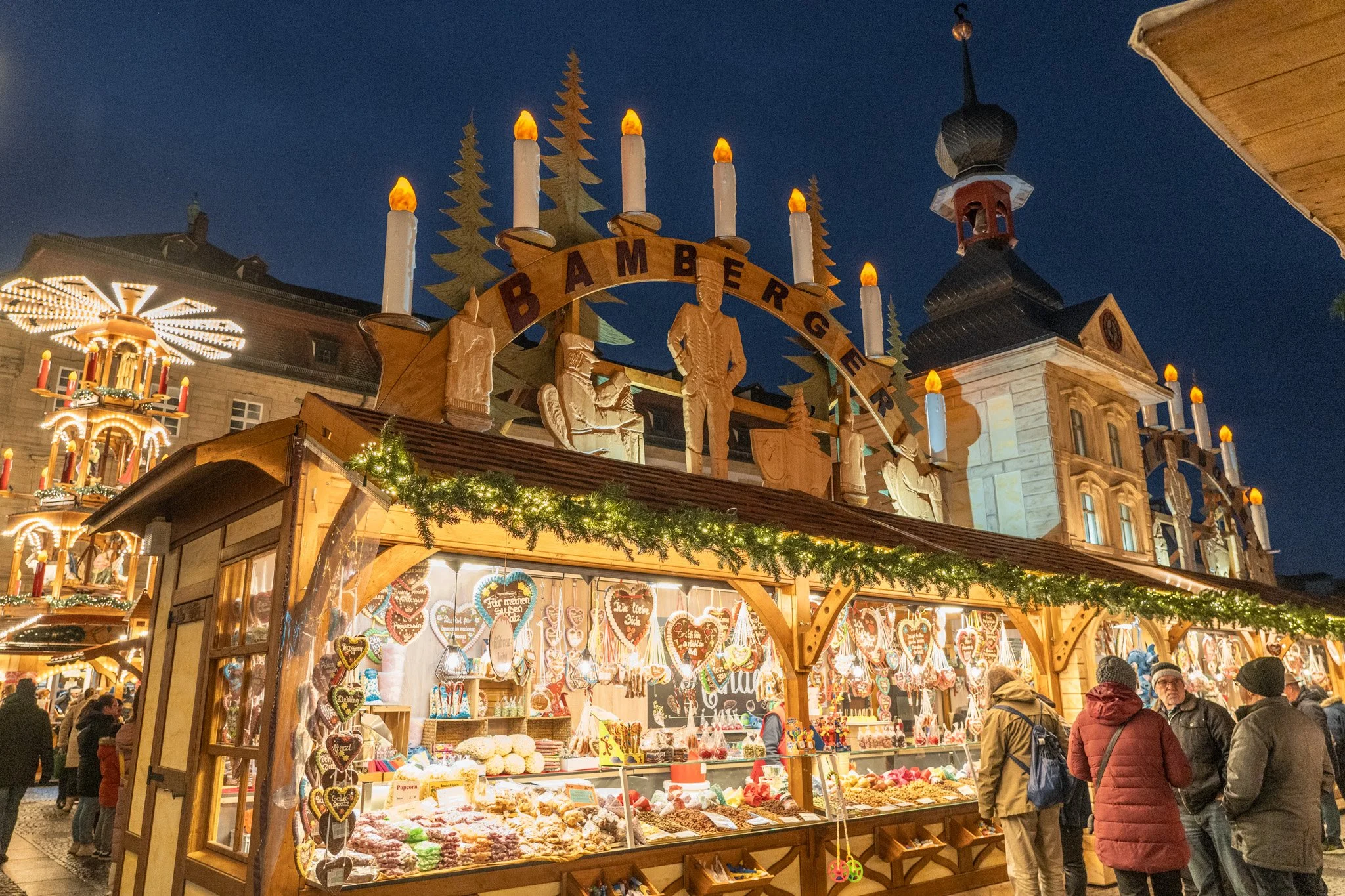
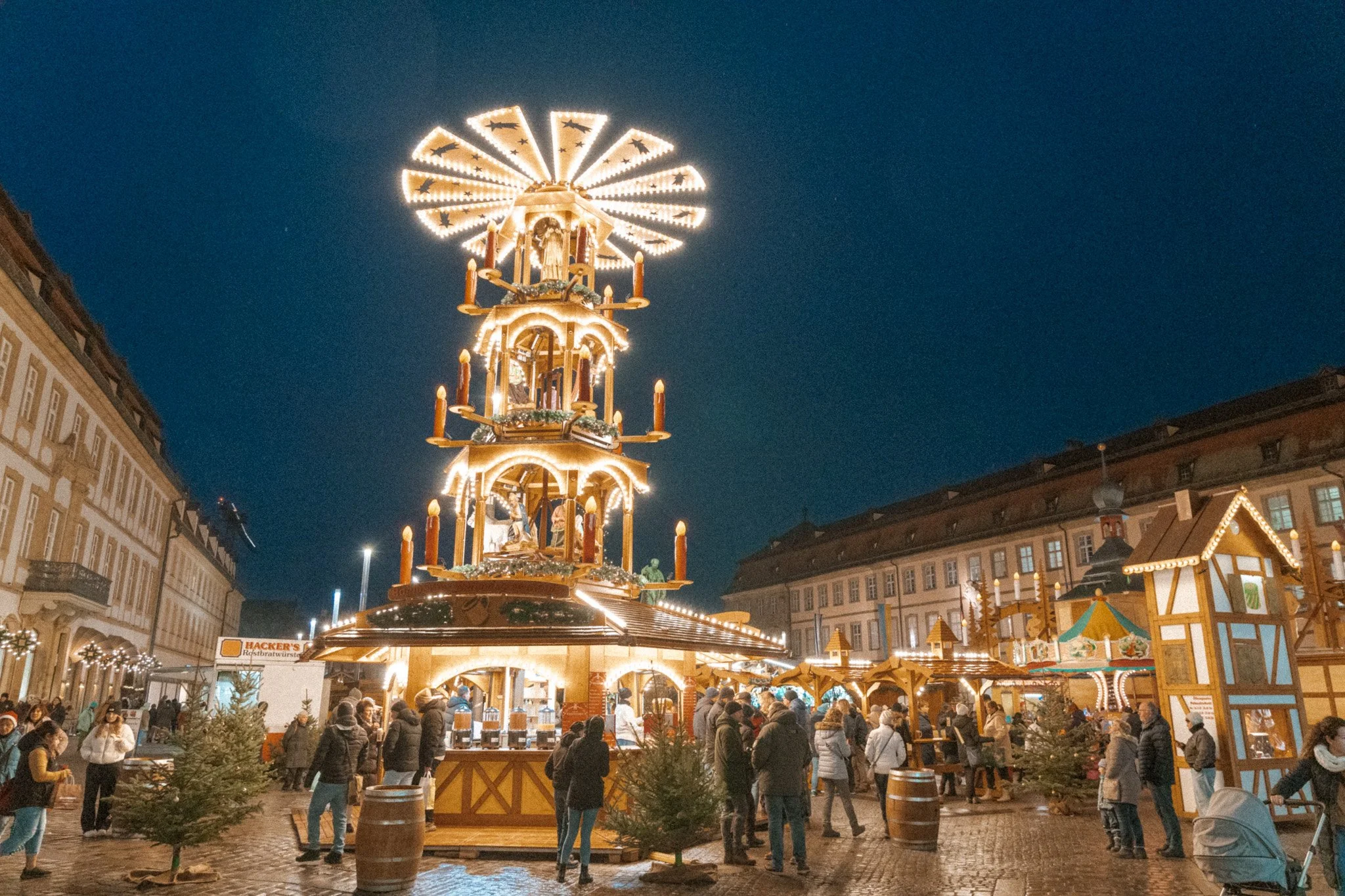
This is the heart of it all. Maximiliansplatz transforms into a charming little village of wooden huts, selling everything from hand‑carved ornaments and beeswax candles to gingerbread hearts and cozy winter scarves. A large nativity scene anchors the square, surrounded by twinkling lights and the scent of roasted almonds and bratwurst.
What makes Bamberg’s market special is its authentic, local feel. It’s not trying to be flashy. It’s grounded, traditional, and steeped in Franconian warmth. You’ll hear church bells in the background and catch the scent of Glühwein from a block away. And because it’s less overrun with tourists than other cities, you’ll have time to chat with vendors and linger over a snack.
If you’re collecting Christmas mugs, Bamberg’s market mug is a cute addition to your stash, and yes, it comes with a returnable deposit.
How to Get Around Bamberg
Bamberg’s city center is compact, pedestrian-friendly, and walkable. You’ll want to spend your time in the Altstadt (Old Town), where everything is within a 10–15-minute walk. Take the train if you can. Parking in Bamberg’s historic center is limited and expensive, and you won’t need a car once you're in town.
Getting there:
From Nuremberg: Direct train, about 1 hour
From Munich: About 2 hours by train
From Würzburg: About 1.5 hours by train

Food and Drinks to Try at the Market
Food is one of the best parts of any Christmas market—and Bamberg’s is no exception. While it’s a smaller market, the flavors are full-sized and full of Franconian flair.
Must‑tries:
Glühwein: The classic warm mulled wine, served in a festive mug.
Fränkische Bratwurst: Regional pork sausage that’s spiced, smoky, and grilled over an open flame.
Lebkuchen: Soft gingerbread cookies. Look for heart-shaped ones hanging from stalls.
Gebrannte Mandeln: Sugar-roasted almonds that smell as good as they taste.
Bamberger Hörnla: A local croissant-shaped pastry, sometimes sweet, sometimes savory.
What Else to See in Bamberg at Christmas
Even with just one market, Bamberg has plenty to do during the Christmas season. The entire old town feels festive and cozy, with plenty of cultural and scenic stops to round out your visit.
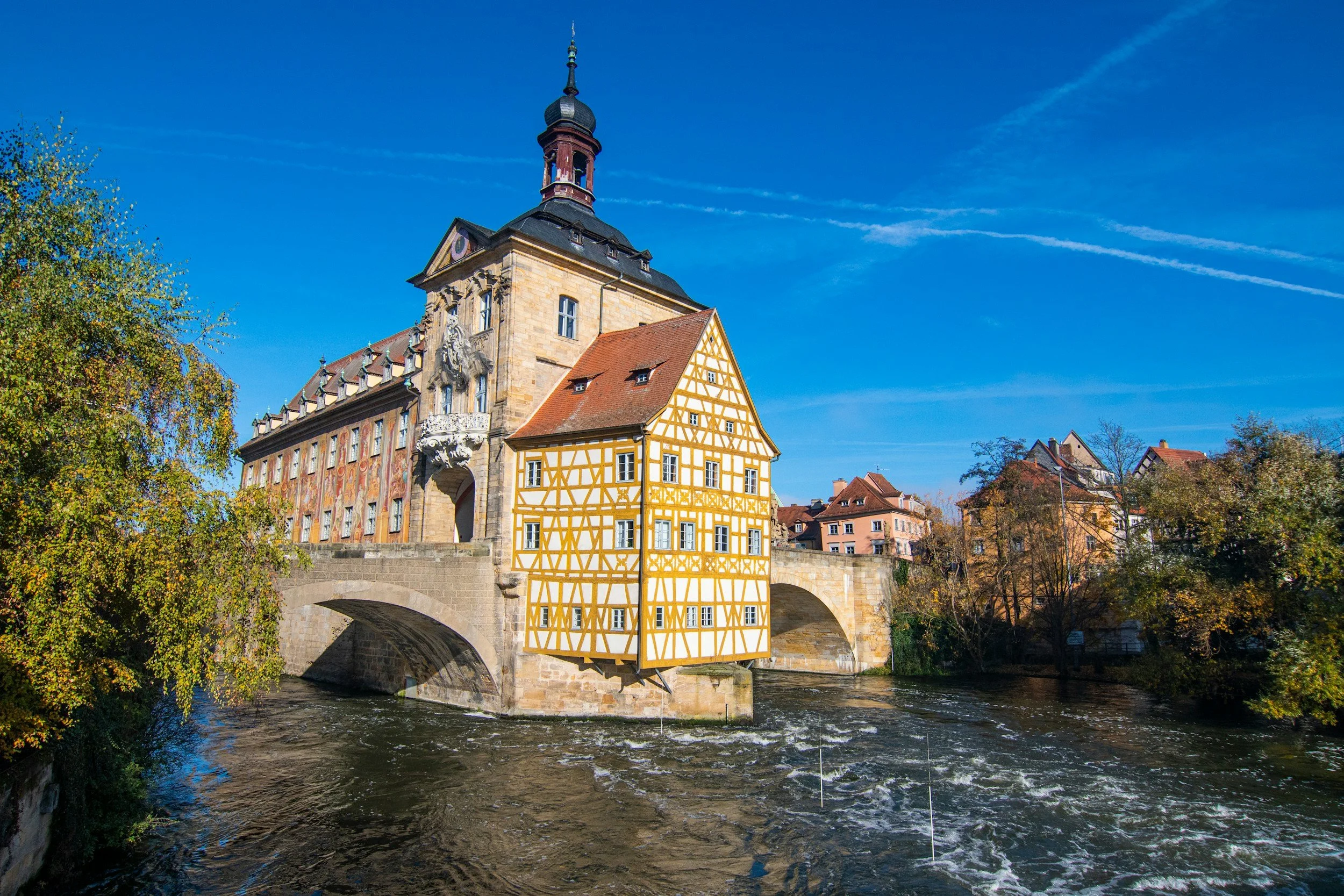
Altes Rathaus (Old Town Hall) - Set on a tiny island in the middle of the river, this half‑timbered gem is one of Germany's most photogenic buildings.
Bamberg Cathedral & Alte Hofhaltung - A stunning Romanesque cathedral with an imperial past. Just next door, you’ll find the Old Court with medieval architecture and panoramic city views.
Nightwatchman Tour - A theatrical, history-filled walking tour led by a costumed “nightwatchman.” It’s fun, informative, and full of medieval lore.
Krippenweg (Nativity Trail) - More than 30 nativity scenes are placed around Bamberg’s old town each Advent season, ranging from traditional to modern interpretations. It’s a peaceful way to experience the city’s spiritual side and stretch your legs between Glühwein stops.
Nativity Museum - This hidden gem houses one of Germany’s largest collections of nativity displays. It’s quiet, reflective, and beautifully curated.
Café break - Bamberg is full of warm, inviting coffee shops. Look for seasonal cakes and hot chocolate if you're not up for more Glühwein. Local pastry to try: Bamberger Hörnla, or opt for a classic German apple strudel.