Merano, Italy
The markets in Northern Italy, specifically in the South Tyrol and Dolomites regions, offer a unique blend of Alpine charm and Italian flavor with a Tyrolean twist. We have wandered through many of these mountain towns and found that while they are smaller than the massive markets, they are often intimate and rooted in local tradition.
One unique thing that’s important to note before we get started is that this area of Italy primarily speaks German! Many also speak Italian and English, but you never really know which language you’ll be greeted with, so it’s best to come equipped to say “Hallo,” “Buongiorno,” and “Hello!” You’ll also find that nearly every destination has two names: one in Italian and one in German. Apple Maps and Google Maps tended to list the Italian names; locals tended to refer to the town’s German names; and the street signs and local posters displayed both names. You’ll see us go back and forth on the names, but we more often refer to the destinations by their Italian names.
This page contains affiliate links. If you use these links to purchase something, we may earn a micro-commission. Thanks, friends!
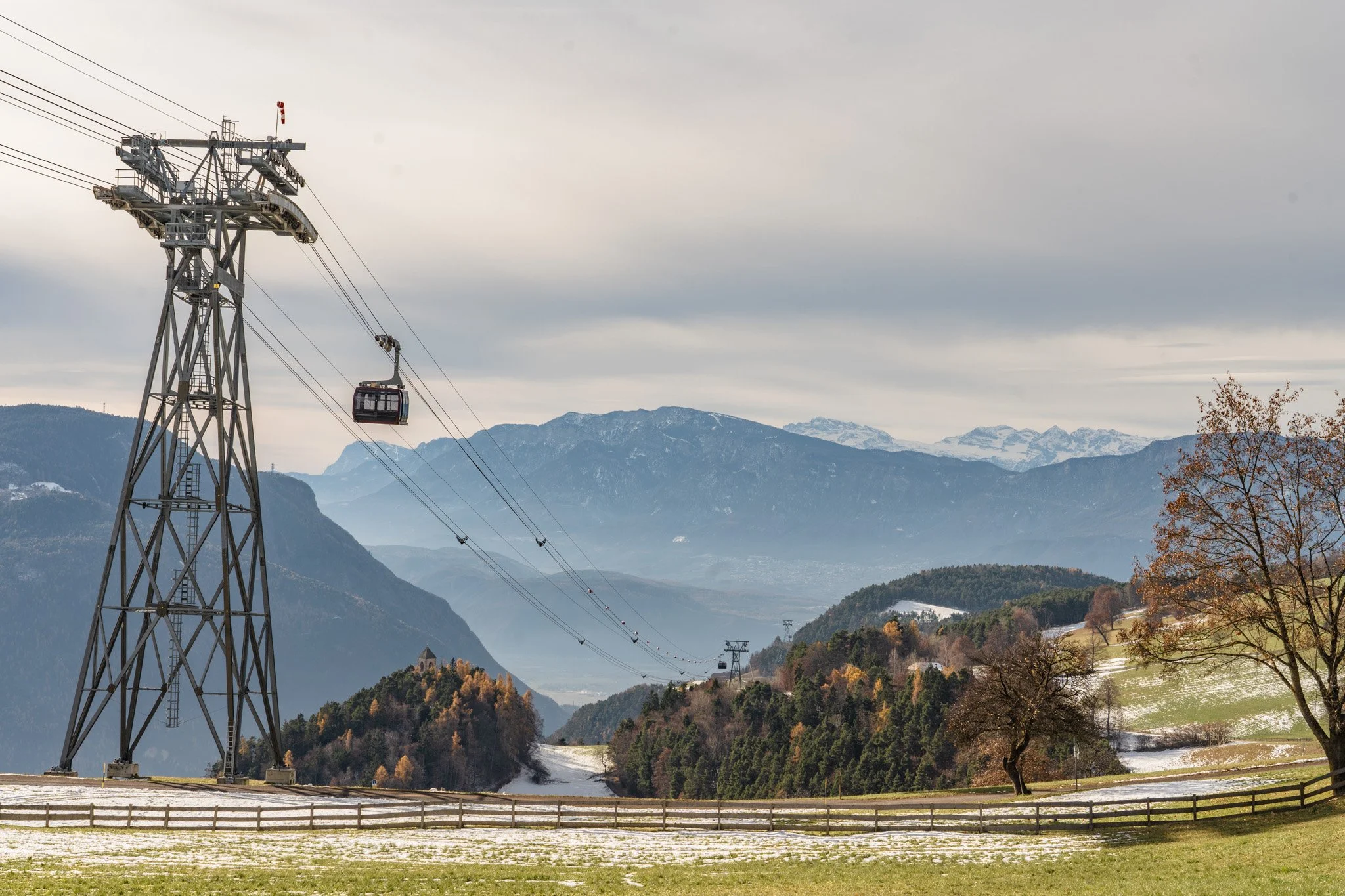
Oberbozen / Soprabolzano, Italy
How to Get to Northern Italy for the Christmas Markets
By Air:
The most convenient airport for reaching the heart of the Dolomites is Innsbruck (INN) in Austria, which is about an hour north of the border. Alternatively, you can fly into Verona (VRN), which is well-connected to the rail lines heading north into the mountains.
For international travelers coming from outside Europe, Venice (VCE), Milan (MXP), and Munich (MUC) are the best major hubs. From Milan and Venice, you will train from either direction to Verona, then up to Trento or Bolzano, and further from there. From Munich, you can take the train down to Bolzano. If you take this route, we recommend stopping in Innsbruck first!
By Train: The rail system in Northern Italy is excellent. The main line runs through the Adige Valley, stopping at major hubs like Trento and Bolzano. From these cities, regional trains and buses can take you deeper into the mountain valleys to smaller towns.
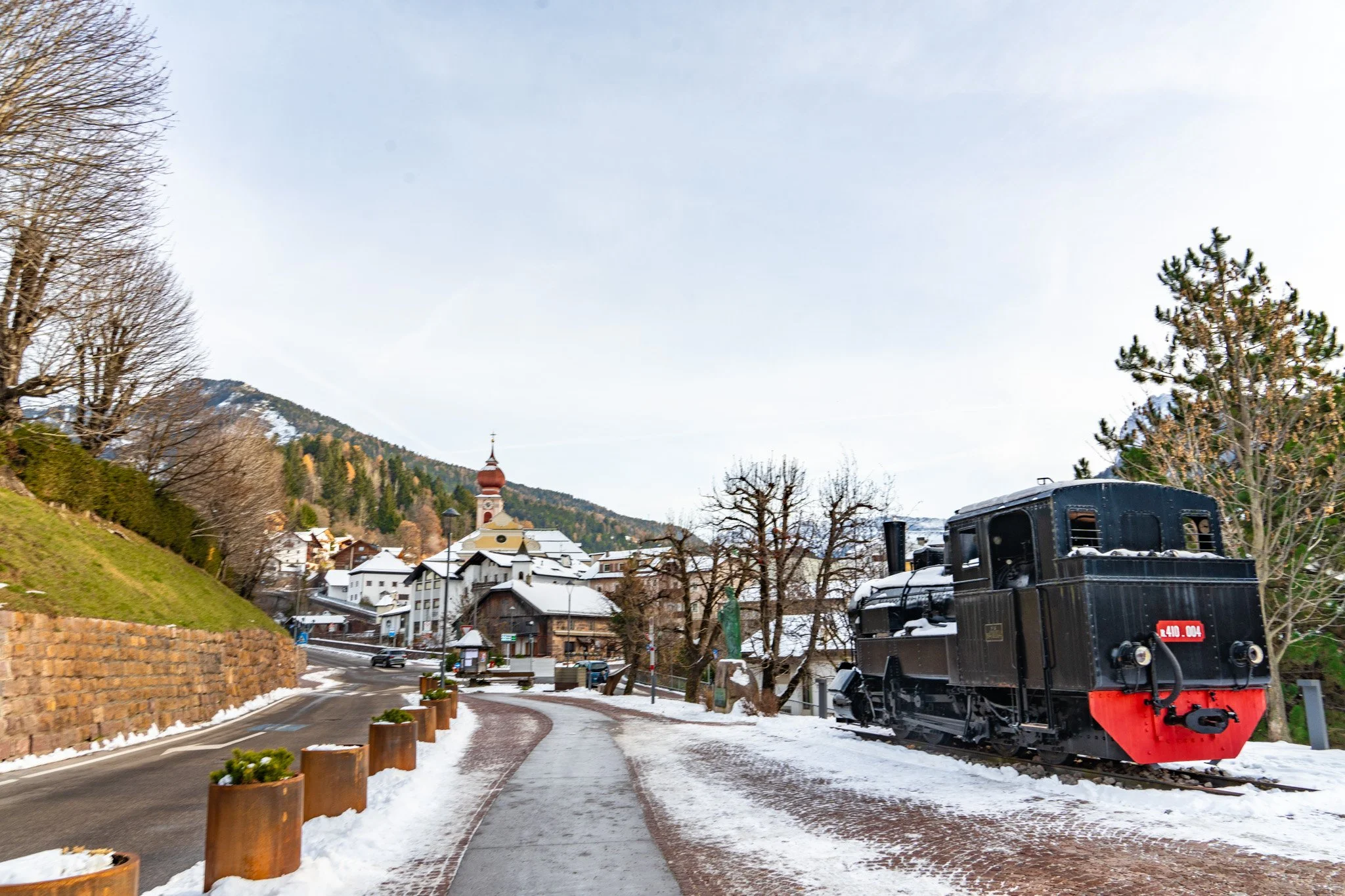
Ortisei / Urtijëi, Italy
How to Get Around Northern Italy in Early Winter
Once you are in the region, the best way to get around is by car. We rented a car in Bolzano and were very glad we did, so we could truly have as much freedom and flexibility as we wished without relying on bus schedules.
We rented with toRent and had a fantastic experience, and thought the price was very reasonable. Make sure to pay for winter tires with your rental, though! These winding mountain roads are well-maintained, but do see a lot of snow! Though we were concerned about parking, we did not struggle to find parking in any of the destinations or hotels.
If you really do not want to drive, you can use the local train and bus networks. Buses are more readily available to smaller towns, but the slightly larger destinations like Bolzano, Trento, Merano, Brixen, and Sterzing can all be reached from each other by train.
For some of the mountain markets, like Soprabolzano and the Rittner Horn area, you would normally take a cable car for the best views, though buses are available if the lifts are not running. And worst-case scenario, you can also request a (pricey) Uber in a pinch if you have patience! There is also a “Christmas train” that runs from Soprabolzano to two other small mountainside Christmas market destinations.
While most destinations in the Dolomites have only one market per city (with a few exceptions), in Trento, there is even a dedicated Christmas train that transports visitors between the different market locations in the city!
The Most Notable Christmas Markets of the Dolomites & South Tyrol
We have visited several markets in this region, ranging from tiny local hangouts to larger, more festive cities. These markets are less about "flash" and more about community. If you are looking for a massive, high-energy destination, these might feel a bit quiet. But if you want a trusted, authentic experience where you are often the only tourist among locals, this is the region for you.
Here is the breakdown of the most notable markets in Northern Italy!
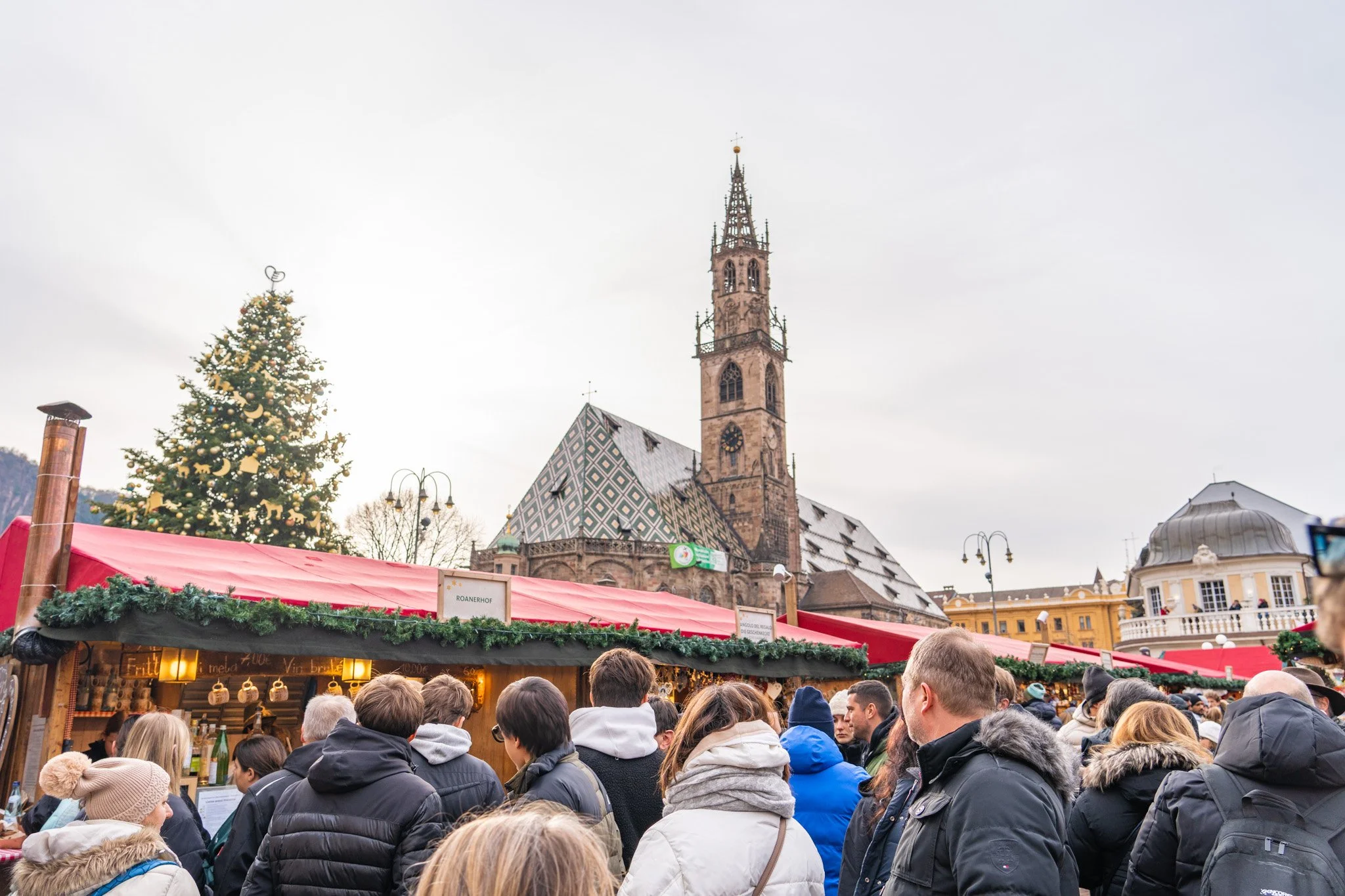
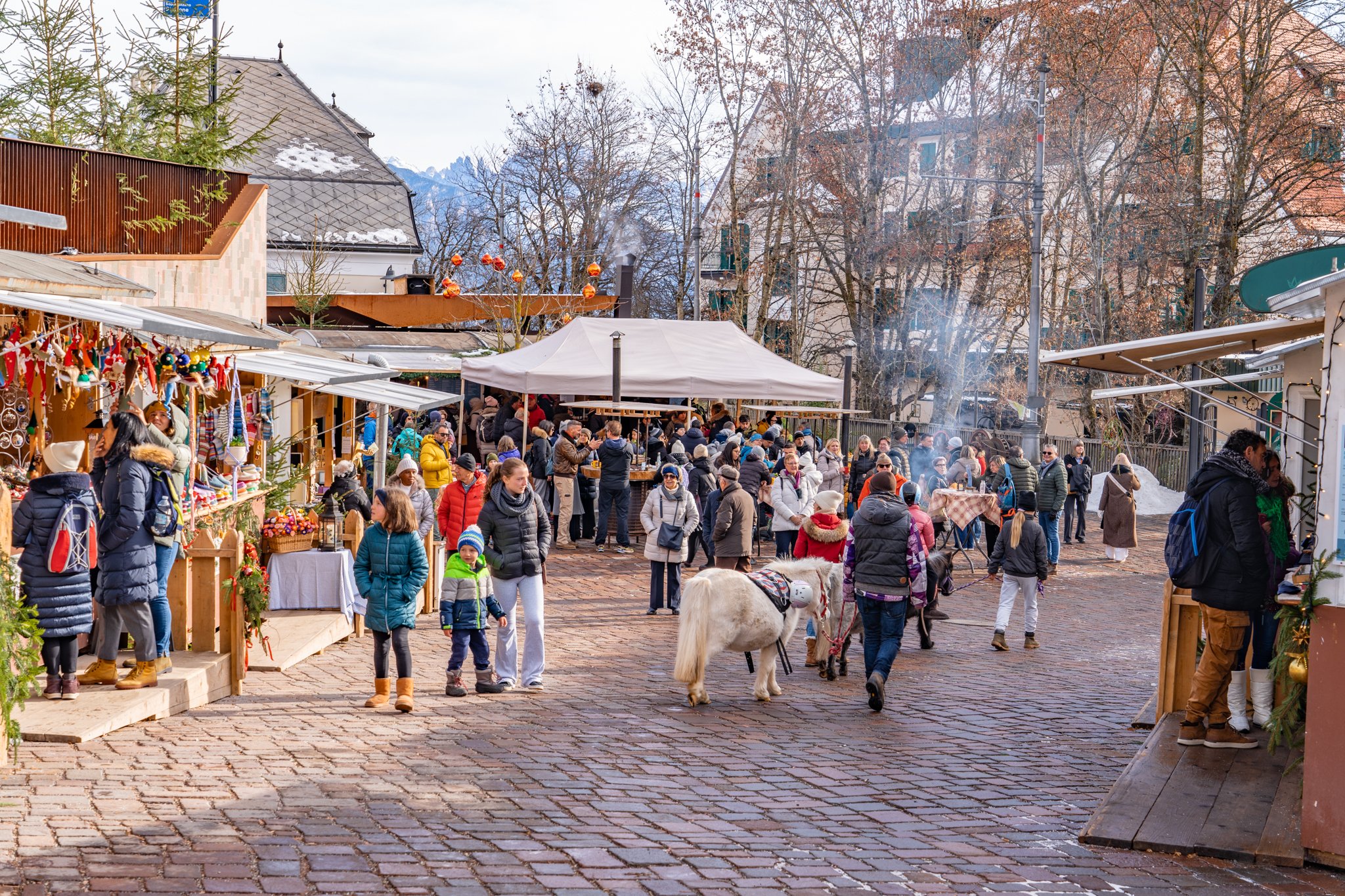
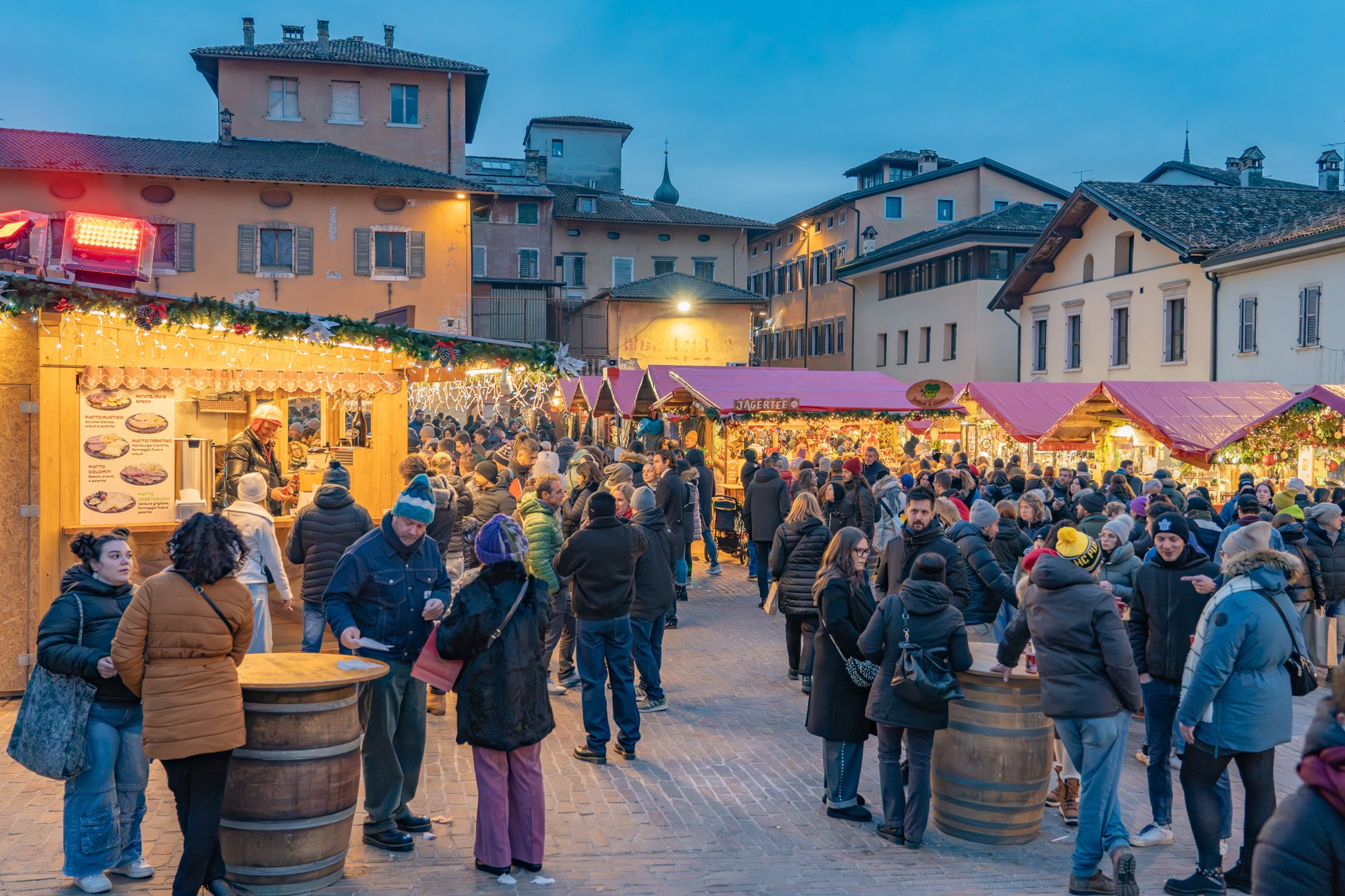
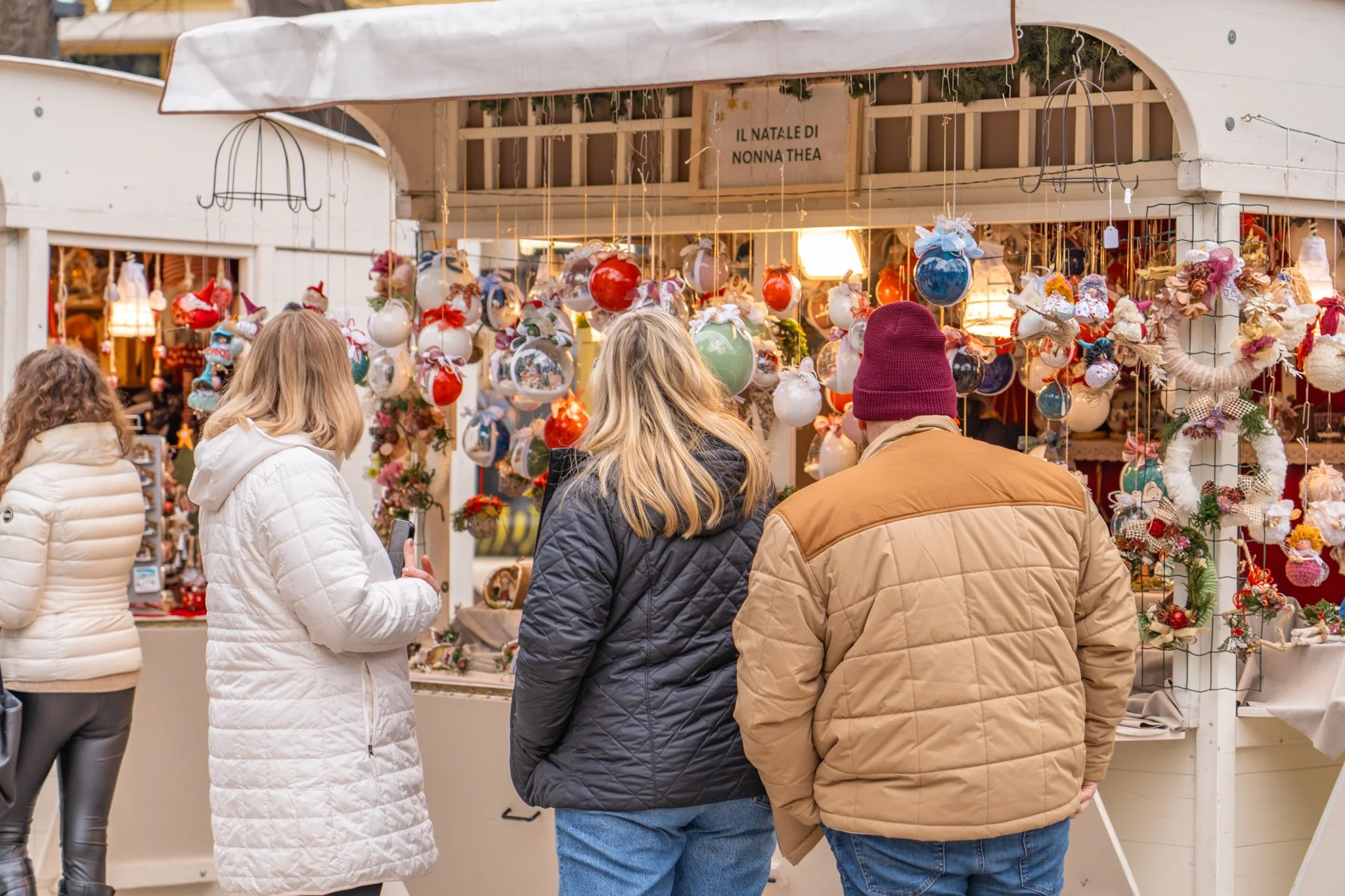
Bolzano (Bozen): This is a must-stop and one of the most well-regarded destinations in Italy. The main market is right by the train station and features a massive iconic tree set against the backdrop of the Cathedral.
Soprabolzano (Oberbozen): A small but scenic market reachable from Bolzano. It offers astounding mountain views, delicious food and drinks, handmade items, pony rides, and even alpacas!
Trento: This city has multiple displays and two main markets. The primary market at Piazza Fiera is unique because it is surrounded by illuminated city walls. There is also a dedicated children's market by the train station.
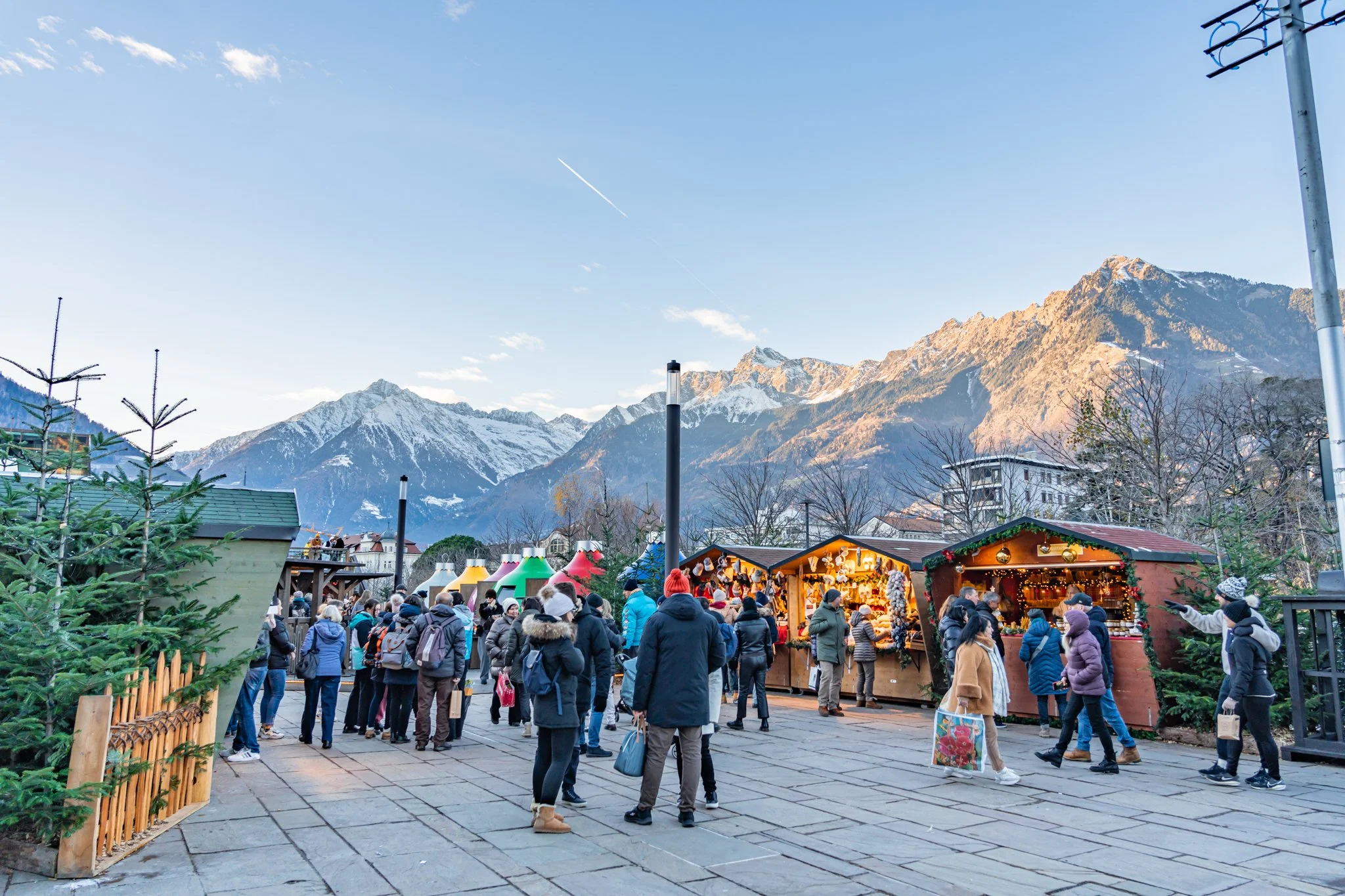
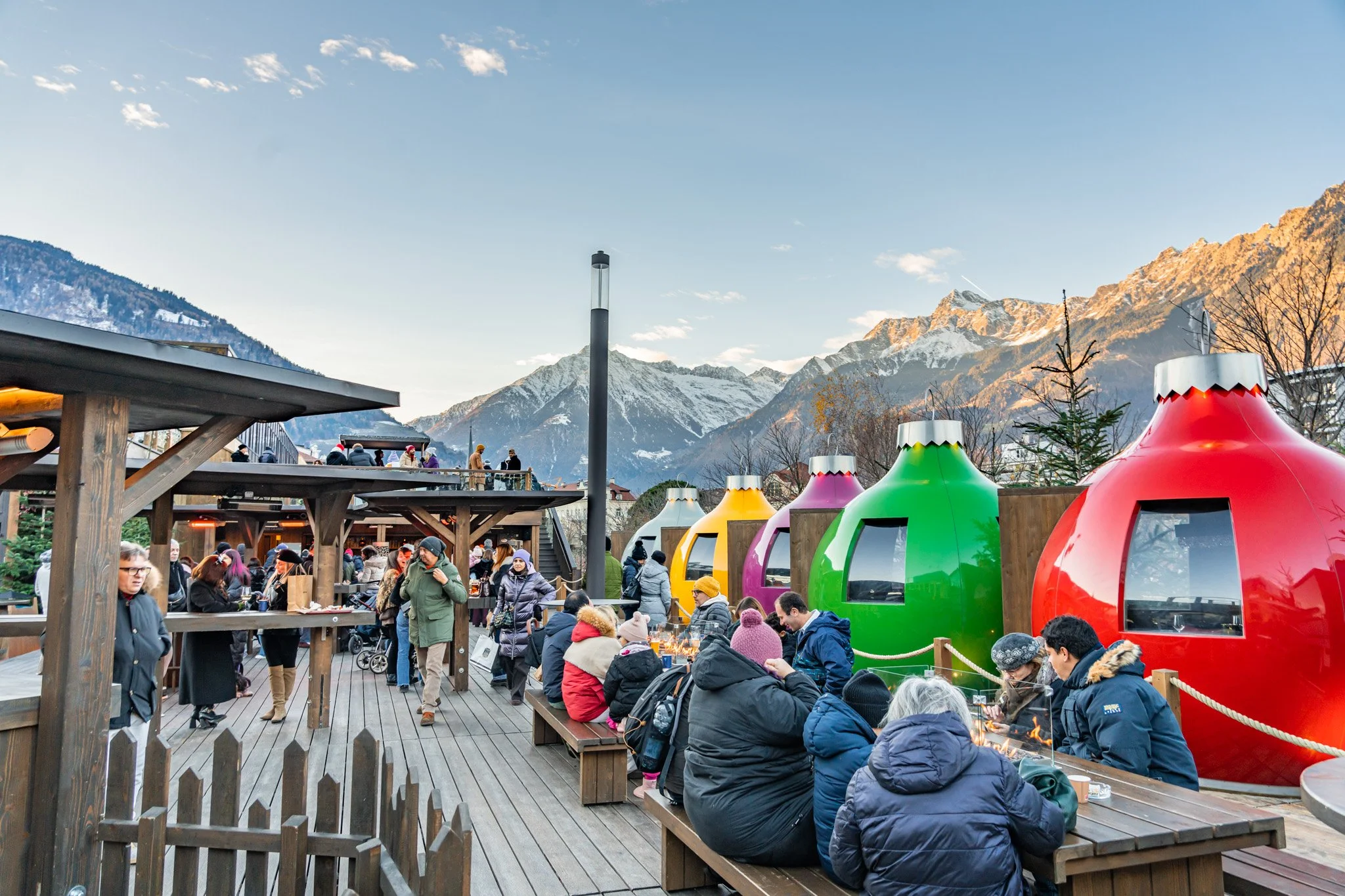
Merano (Meran): Located just west of Bolzano, Merano has a scenic market along the river. A standout feature here is the thermal spa area, where you can book ornament-shaped dining pods for a high-end meal.
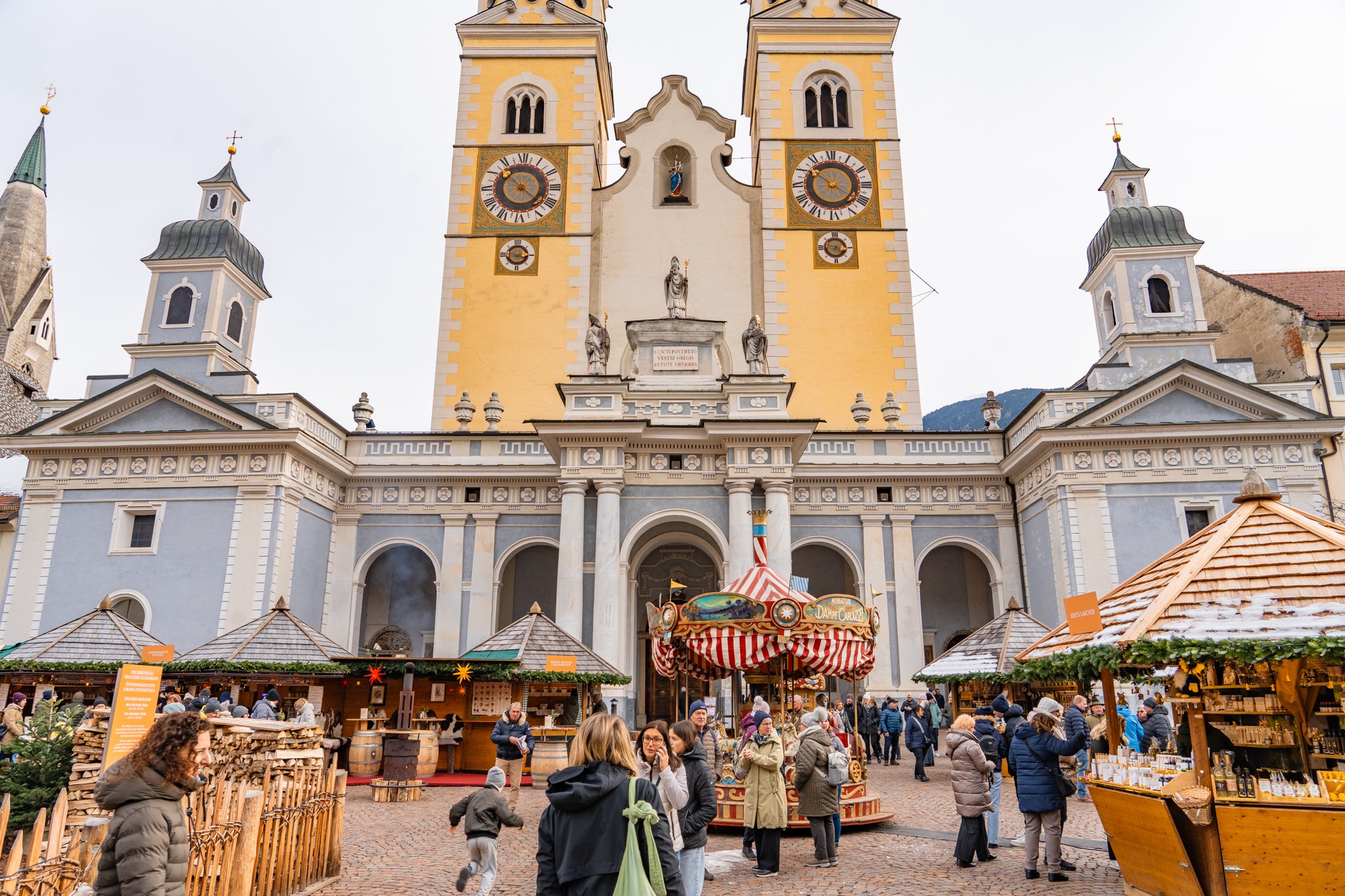
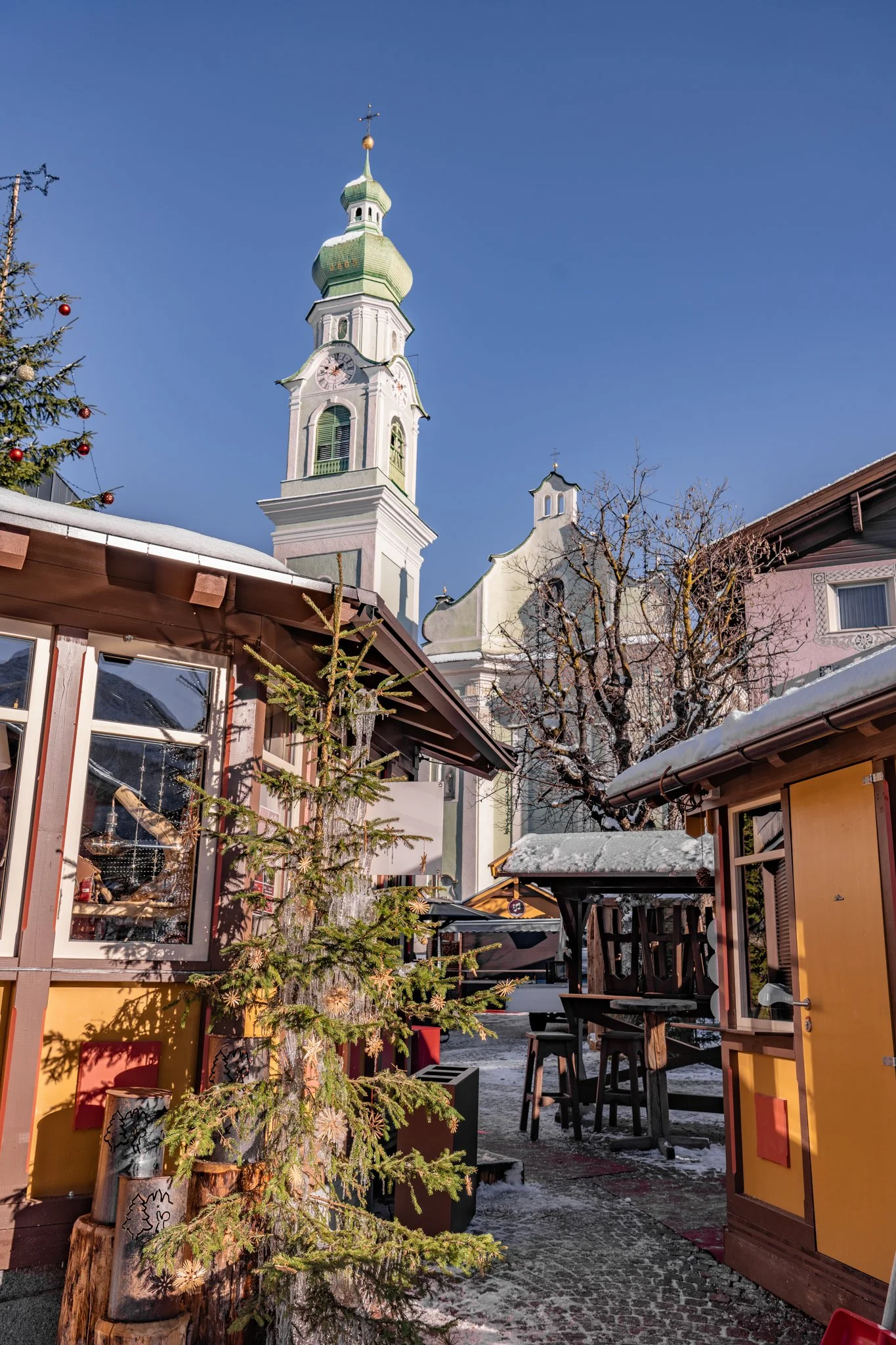
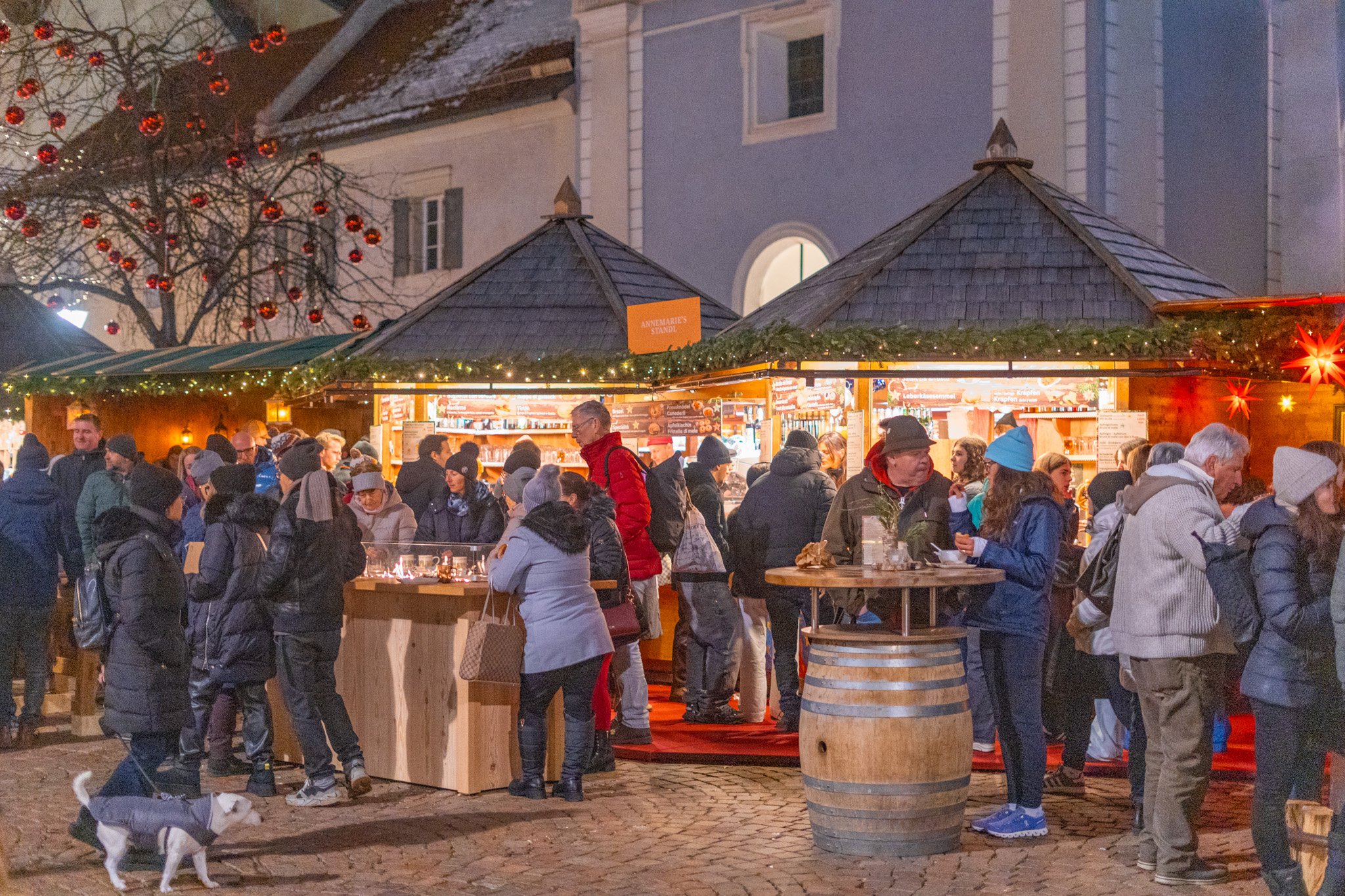
Bressanone (Brixen): This is a larger small-town market that feels very lively with locals. They also host an annual light show that requires a separate ticket but is very impressive.
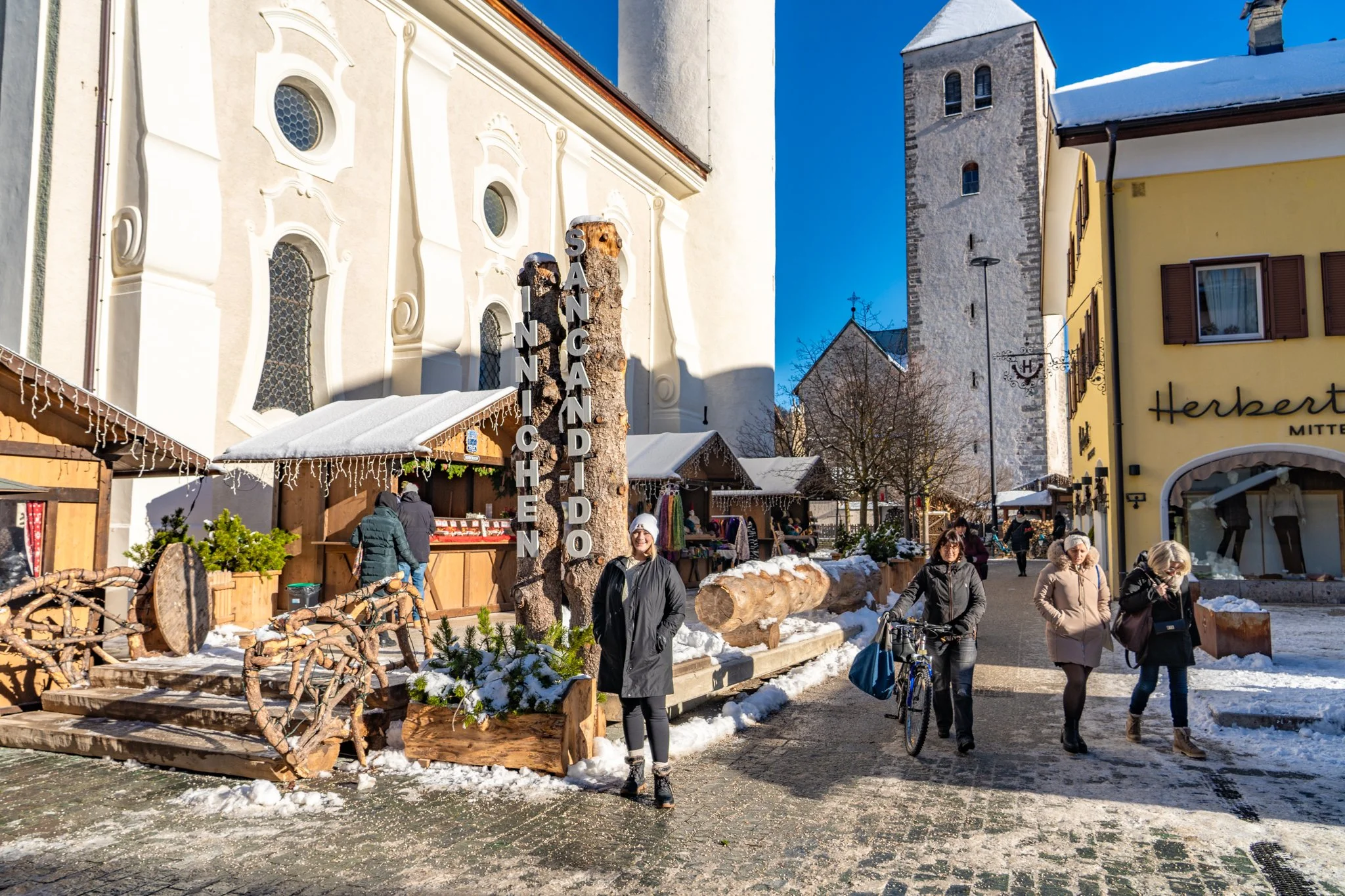
San Candido (Innichen): The setting here is idyllic, with wooden chalets and pastel-colored buildings positioned in front of the dramatic Dolomites. It is a smaller, cozy market with about 12 to 15 stalls.
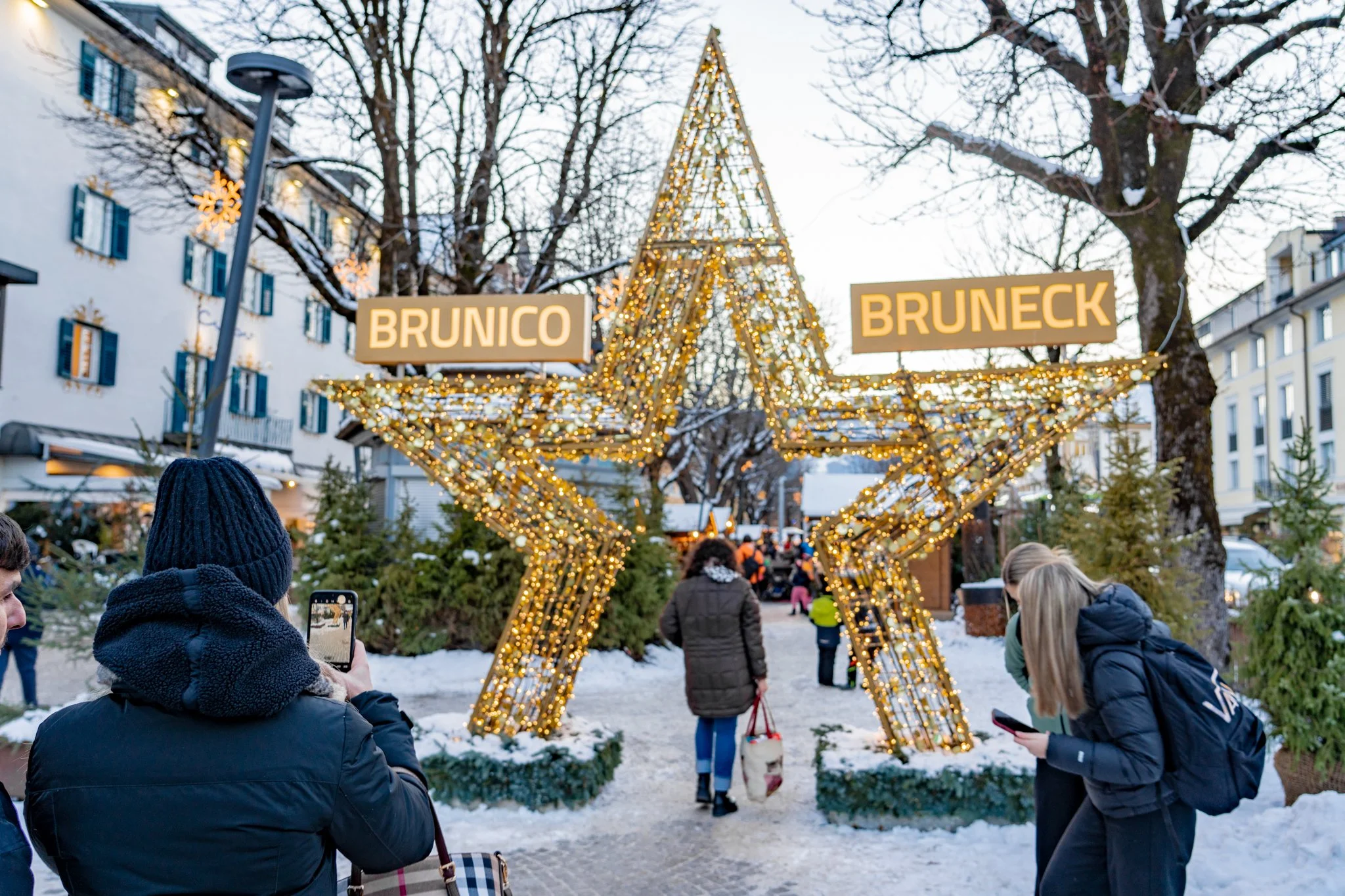
Brunico (Bruneck): This town features one central market and an indoor makers market that feels like a craft fair. It is a buzzing local hangout on the weekend with plenty of food and drink options.
Honorable mention to Dobbiaco (Toblach), which we did visit, but the market was still being set up when we arrived on what was supposed to be its first day open. Dobbiaco was a cute town with a quaint-looking market and would be worth a stop in between San Candido and Brunico if you’re already going that way.
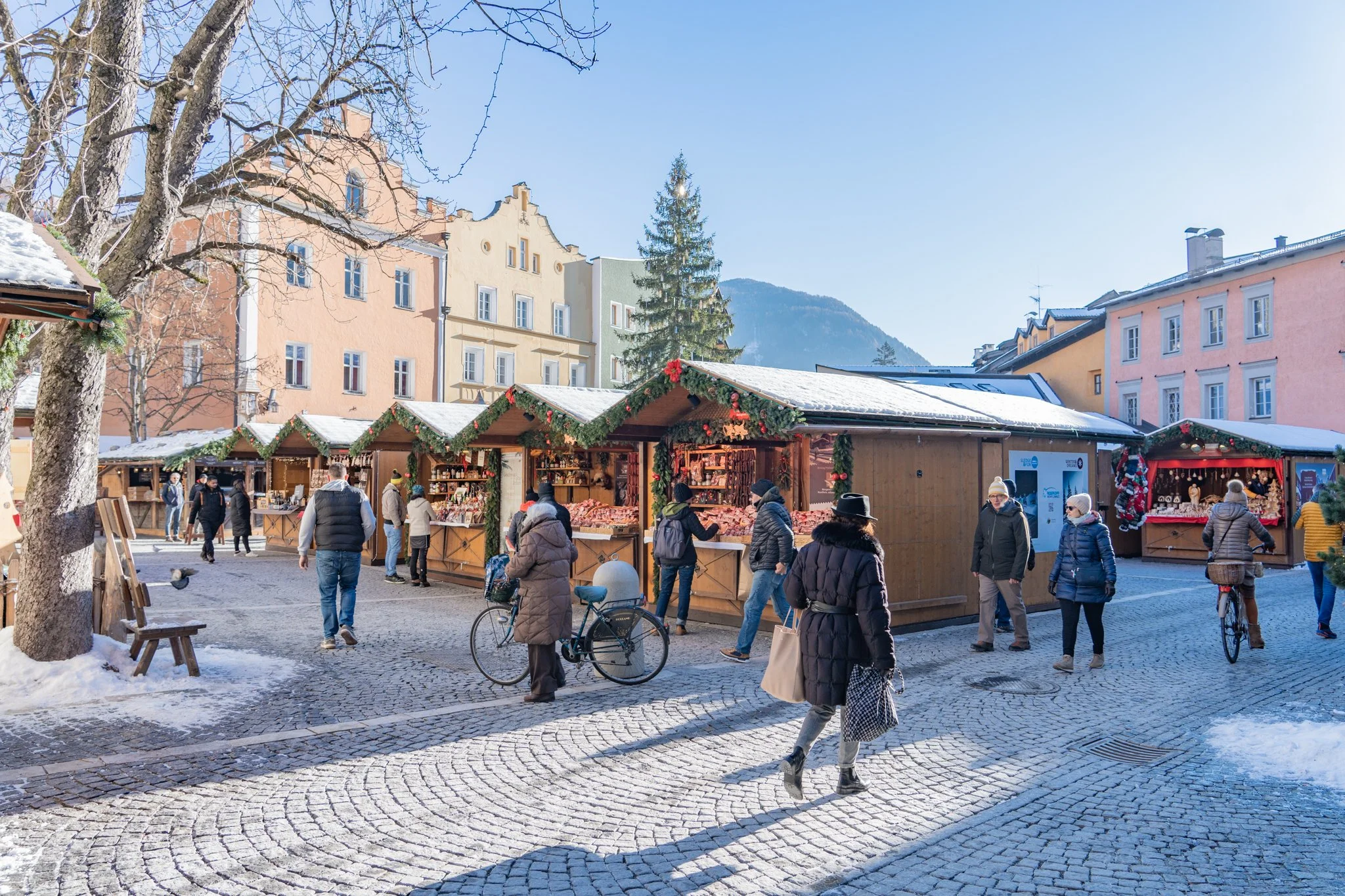
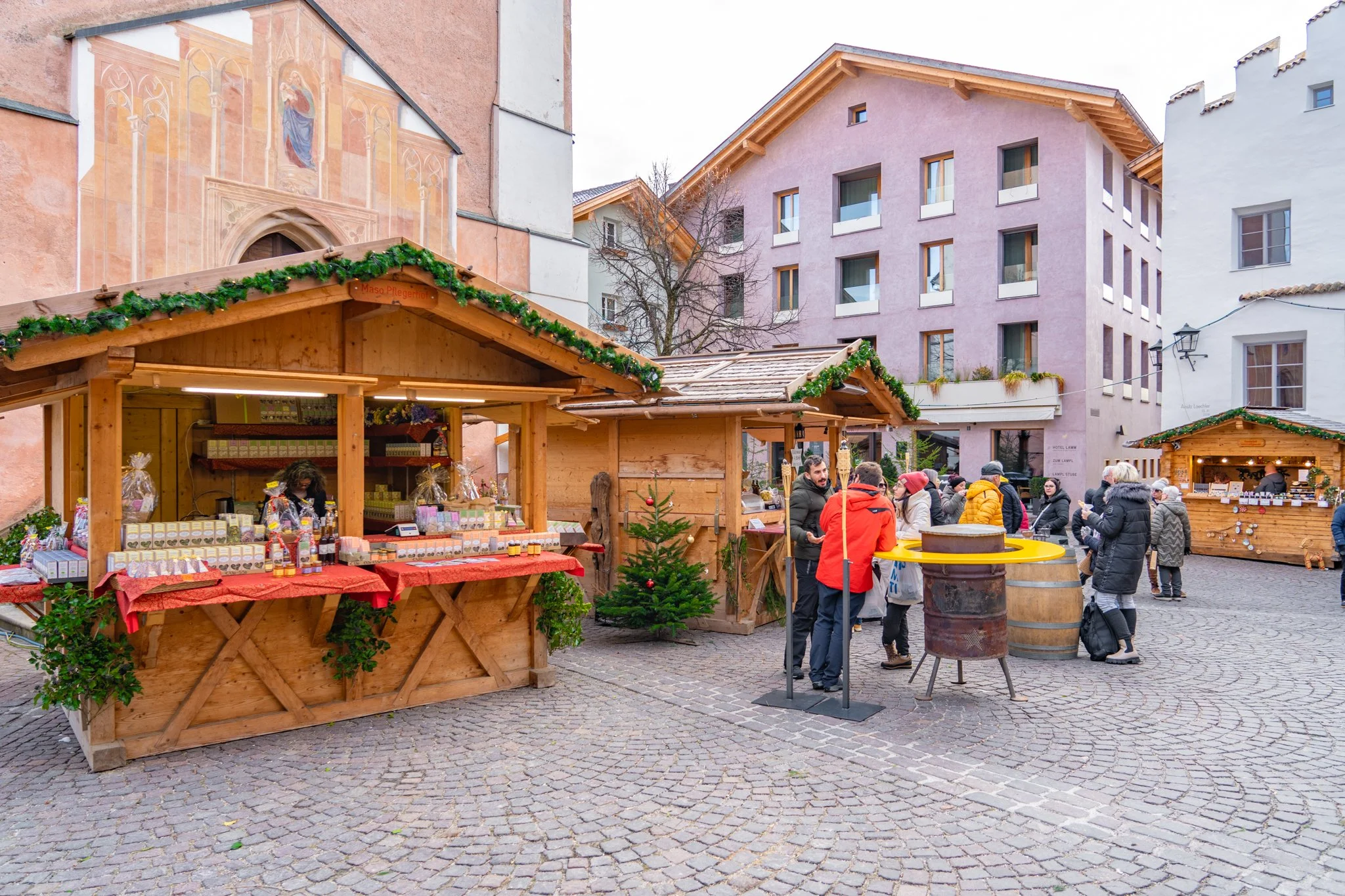
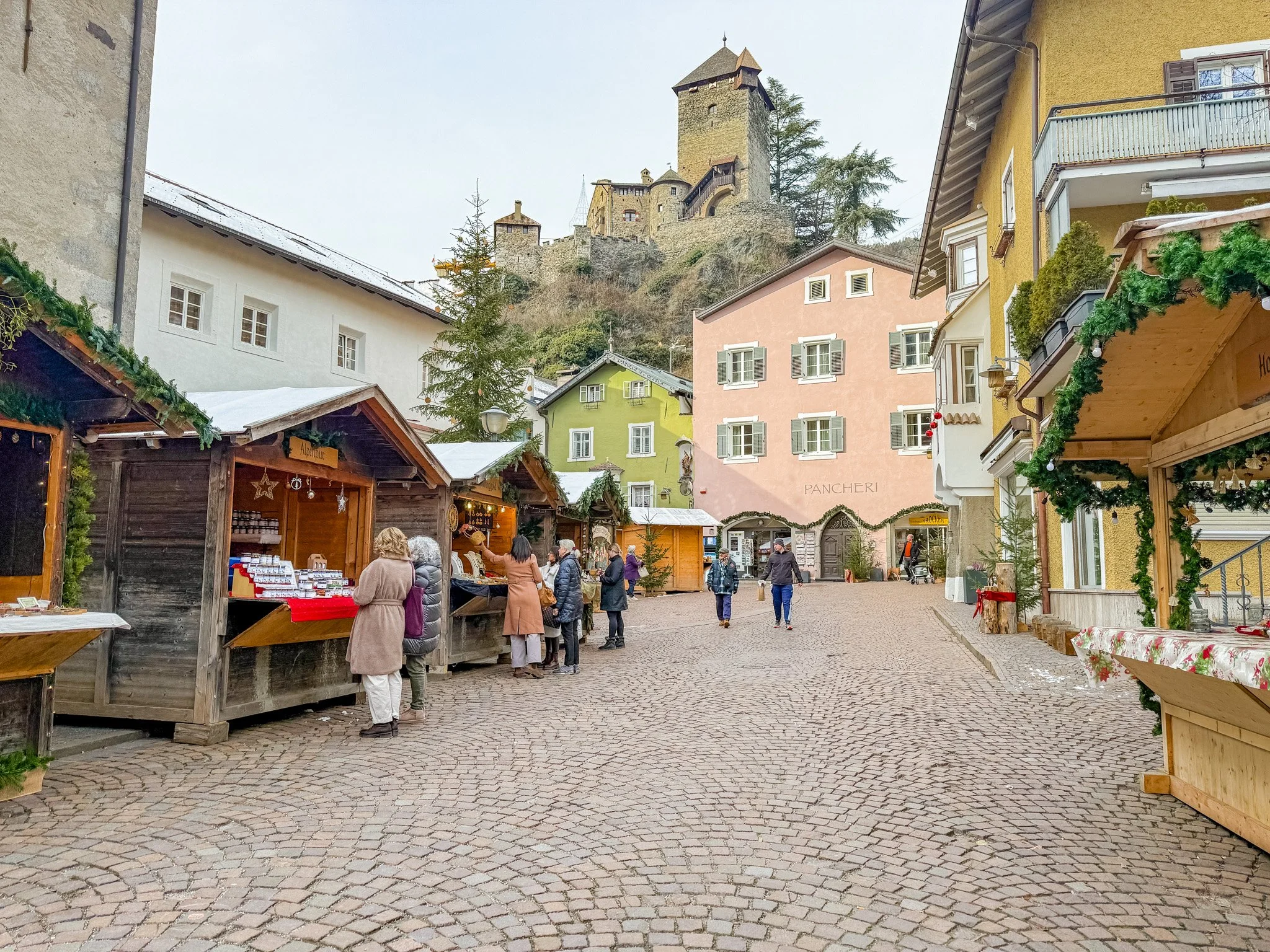
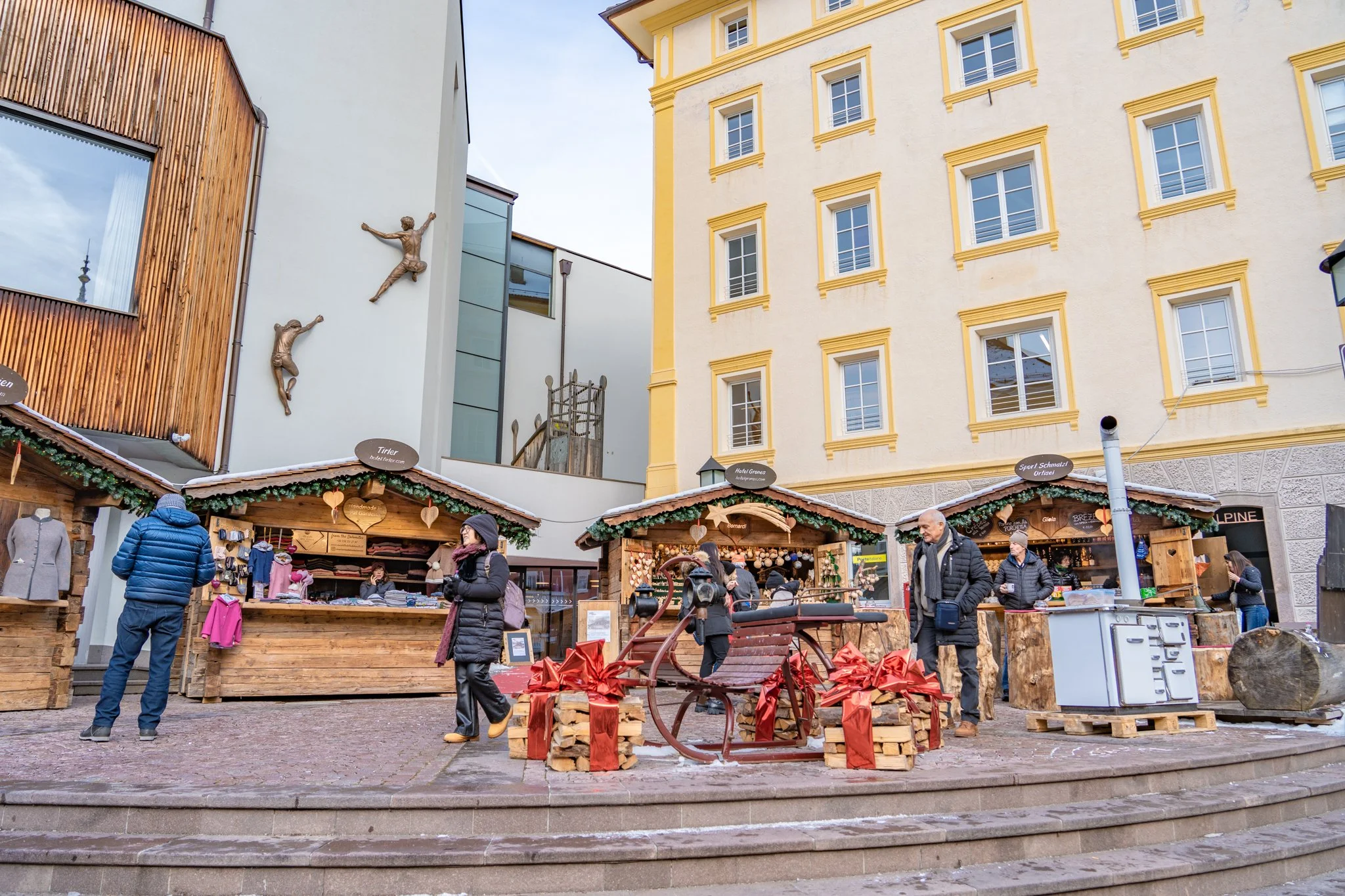
Vipiteno (Sterzing): This market is located in a charming courtyard beneath a beautiful bell tower. It feels like a true community gathering place rather than a tourist attraction.
Castelrotto (Kastelruth): One of the smallest markets we visited, but very charming with its large bell tower and pastel buildings. It is a true local hangout with only a handful of stalls.
Chiusa (Klausen): A small medieval town that hosts a market only on the weekends. It is divided into two halves and is known for its medieval opening parade in late November.
Ortisei (St. Ulrich): This is a wonderful ski town where the "market" is actually a series of stalls and decorations lining the streets rather than one central square.
Soprabolzano / Oberbozen, Italy
Foods & Drinks to Try in the Dolomites
The food in this region is a fantastic mix of Italian staples with Austrian flair and mountain comfort food.
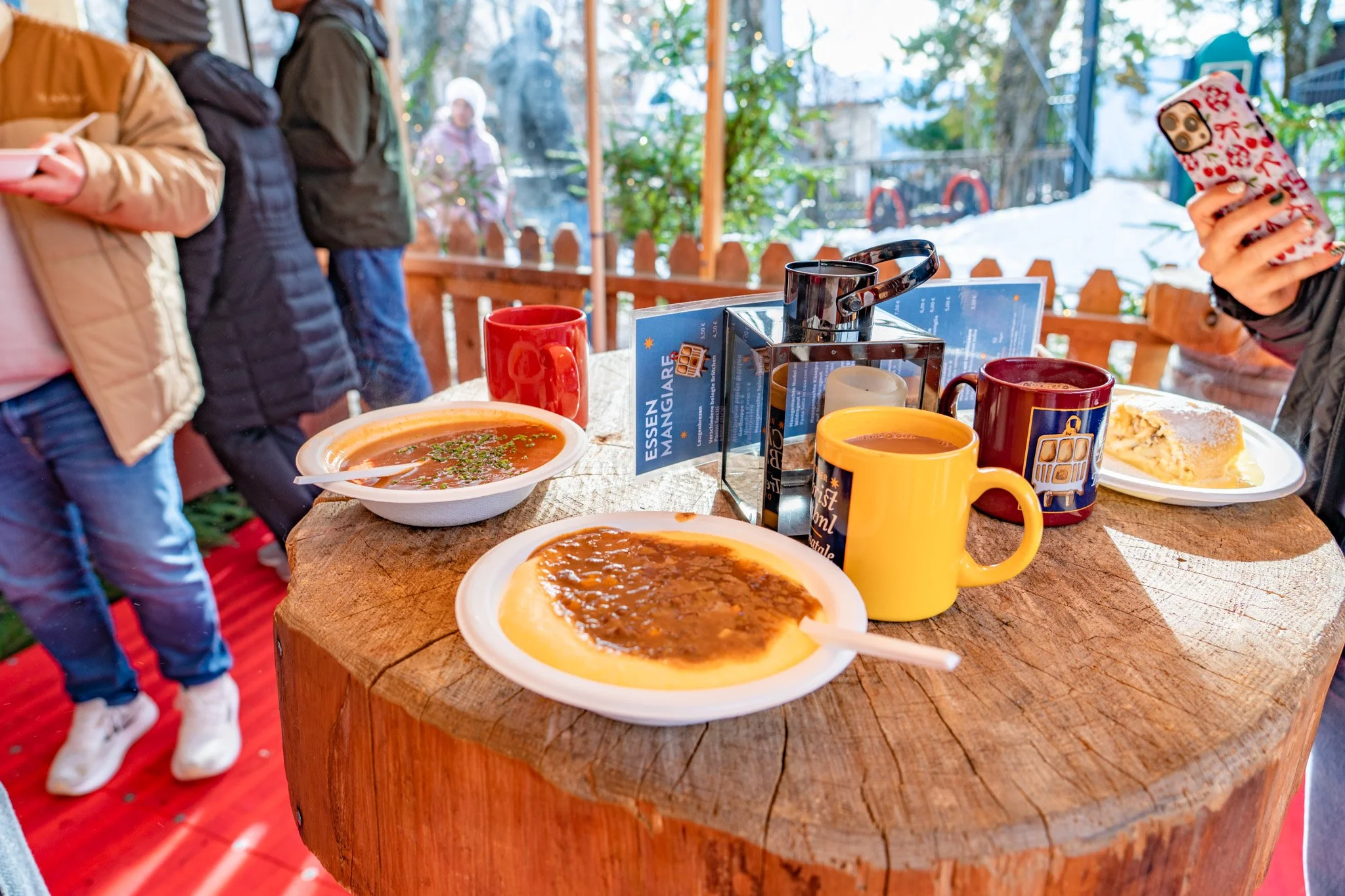
Regional Dishes: Look for Polenta, ragu pasta, and goulash.
Speck (Spec) Sandwiches: A local cured ham that is a staple at almost every Italian market. You’ll see speck sandwiches instead of bratwurst in a bun in this region.
Strudel: You will find plenty of apple strudel, which is the perfect pairing for a hot drink.
Drinks: While Glühwein/Vin Brulé (mulled wine) is everywhere, you can also find local apple cider, beer, and even coffee, which is a rare find at Christmas markets.
Woodcraft booth in Vipiteno / Sterzing, Italy
Shopping at Christmas Markets in Northern Italy
Shopping in the Dolomites focuses heavily on craftsmanship and local materials.
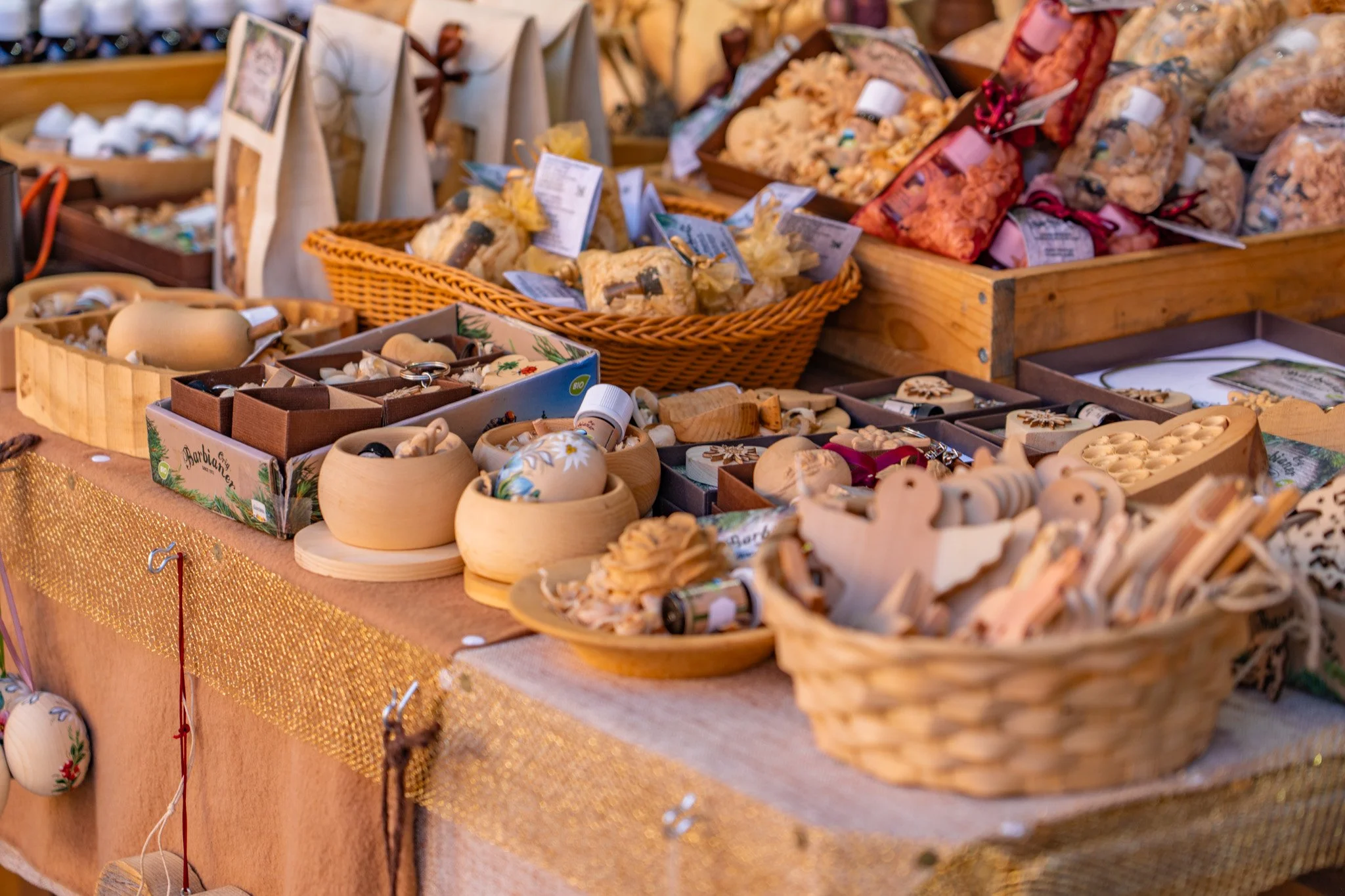
Woodwork: This region is famous for wood-carved nativities and handmade wooden toys!
Wool & Textiles: You will find plenty of wool goods, including slippers, scarves, ponchos, gloves, and other clothing.
Locally Made Goods: Look for beeswax items, handmade soaps, alpine oils, and Italian leather goods.
Ornaments: From handmade wooden ornaments, delicately blown glass, and hand-painted ceramics, there are so many various types and shapes of ornaments to be found at these craft-centric markets.
Merano, Italy
When are the Dates of the South Tyrol Christmas Markets?
Christmas market dates in Italy are definitely released late, but tend to be either the last weekend of November or the first weekend of December until the first weekend of January. Bolzano and Trento are the exceptions. They both open closer to mid-November. Some markets are only open on the weekend. Please refer to each destination’s official tourism websites for the most up-to-date information. (Linked above!)
Because of the relaxed energy of the area and plenty of beauty to explore in the great outdoors, this would be a fantastic place to visit during or after Christmas into New Year’s celebrations! Check out our blog full of other potential amazing itineraries here for 12 Christmas market trips you can take after Christmas!
Bressanone / Brixen, Italy
How are the Crowds at Italian Christmas Markets?
Most of these markets can get full on weekends but rarely feel "packed" or "overcrowded." Visiting on a weekday or during daylight hours is still a good way to ensure you have plenty of space to browse. Still, even on opening weekend visits, none of these markets ever felt too crowded. The most crowded markets were Trento, Bolzano, and Merano, but they still weren’t as crowded as some major German and French Christmas markets.
Terme Merano in Merano, Italy
What Else to See in Northern Italy
If you are planning a trip to the Dolomites and South Tyrol for the Christmas markets, do not miss the chance to explore the region’s deep historical roots and incredible winter activities:
Rosskopf Toboggan Run: While you are in the charming town of Vipiteno, make time for a bit of adventure. It is home to the longest toboggan run in Italy. It is a fantastic way to get a break from the market crowds and see the Alpine landscape from a much faster perspective.
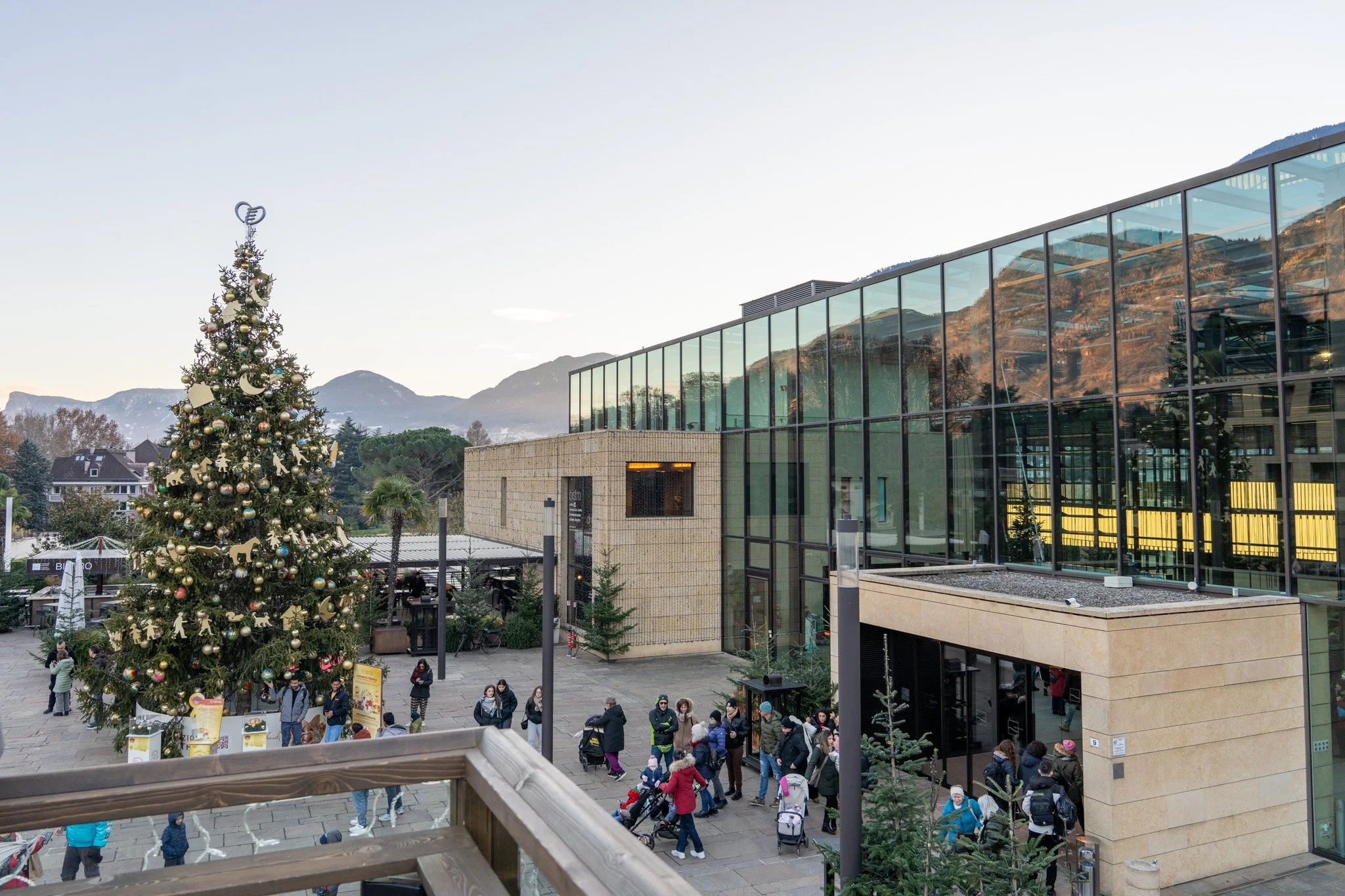
Terme Merano: Merano is famous for its thermal spa, which sits right near the food and drink market. You can even book private, ornament-shaped dining pods for a high-end meal nearby. A soak in these thermal baths is the best way to warm up after a long day of walking the stalls.
Museo Castello del Buonconsiglio: Stepping inside this gorgeous castle in Trento gives you a great look at the cultural layers that define this part of Italy. Plan to spend 1-2 hours here, depending on how many artifacts you wish to translate. After your visit, you can find a major Christmas market set right outside the entrance to this historic castle and museum.
South Tyrol Archaeological Museum: Bolzano is one of the top market destinations in the region, but it is also home to the famous Iceman, Ötzi. Seeing this Copper Age mummy is a sobering and vital experience that adds a layer of ancient history to your visit.
Brixen’s Annual Light & Music Show: Brixen / Bressanone, Italy hosts an impressive light show every year. It is located just steps away from the main market stalls. Though it requires an extra admission ticket, the setting and the quality of the show make it a standout feature of the town during the holidays.
Skiing in Val Gardena: Ortisei is a wonderful ski town where the festive decorations and market stalls line the streets. Whether you choose the slopes in Ortisei or the legendary runs in Cortina d'Ampezzo, the skiing in the Dolomites is world-class and well worth the visit on its own.
Lago di Braies: For the most iconic winter scenery in the area, a trip to Lago di Braies is essential. The drive through the mountains to reach these scenic spots is often just as beautiful as the destination itself. In the winter, the lake is typically frozen and surrounded by dramatic, snow-covered peaks. This is nearest to the markets you might visit in San Candido or Dobbiaco.
Bolzano, Italy
Is Going to the Christmas Markets in Northern Italy Worth It?
We think so! But not for the traditional “mega markets” trip or grand destinations you might see in Germany and Austria. We’ve visited 40 Christmas market destinations across Europe, and due to tough competition from some of the bigger markets that are better-known international spectacles, we don’t rank the Christmas markets in the South Tyrol region in our top 10 favorite Christmas market destinations. But that doesn’t mean they aren’t worth a visit!
You have to think of a trip to the Dolomites in December as an entirely different Christmas markets trip than a jaunt through Germany’s greatest hits or France’s most popular markets like Strasbourg and Colmar. What these markets lack in size and flash, they make up for in much more enjoyable ways. This area isn't just uncrowded; it feels far more like a local hangout than a tourist attraction
Instead of going to Italy with the goal of hopping from market to market or hoping to collect dozens of the cutest Christmas market mugs (though many markets in the Dolomites do have collectable mugs!), go to this area if you want an unhurried trip to see natural beauty, pastel and historic towns and villages, quaint Christmas markets, with the potential of seeing a mountainous, snowy winter wonderland. Go with the intention to enjoy the area while it’s temporarily speckled with a charming side of Christmas cheer!