Interested in visiting China but don't know how? We felt the same way, with a mix of intrigue and a touch of apprehension. For travelers like us who are coming from afar, a transit visa offers a unique and unexpected opportunity to glimpse this fascinating nation on a quick trip. We were able to take the chance and experience what it's like traveling through China on a transit visa firsthand during our journey from Bangkok to Tokyo, seizing the chance to get a small taste of Shanghai during a short and sweet 18-hour layover.

The Transit Visa: A Gateway to Visiting China
As US citizens, we were eligible for a 240-hour visa-free transit. This allowed us to explore Shanghai for a limited time without the hassle of a full tourist visa application. You cannot apply for this visa in advance; you have to do so upon landing in China.
The simplest explanation of a transit visa is within the name. Transit means you are going to fly from somewhere else, to mainland China, to another country. One example itinerary is going from the US to Shanghai for a few days, then continuing to fly to Seoul, South Korea, before returning to the US.
You don't have to start or finish in the US, though, even as an American. We were going back to the US from our trip to Bangkok, Thailand, and instead of flying directly back to LAX, we took a few opportunistic long layovers along the way. From Bangkok, we flew to Shanghai, then Tokyo, then the US.
Getting Through the Shanghai Airport
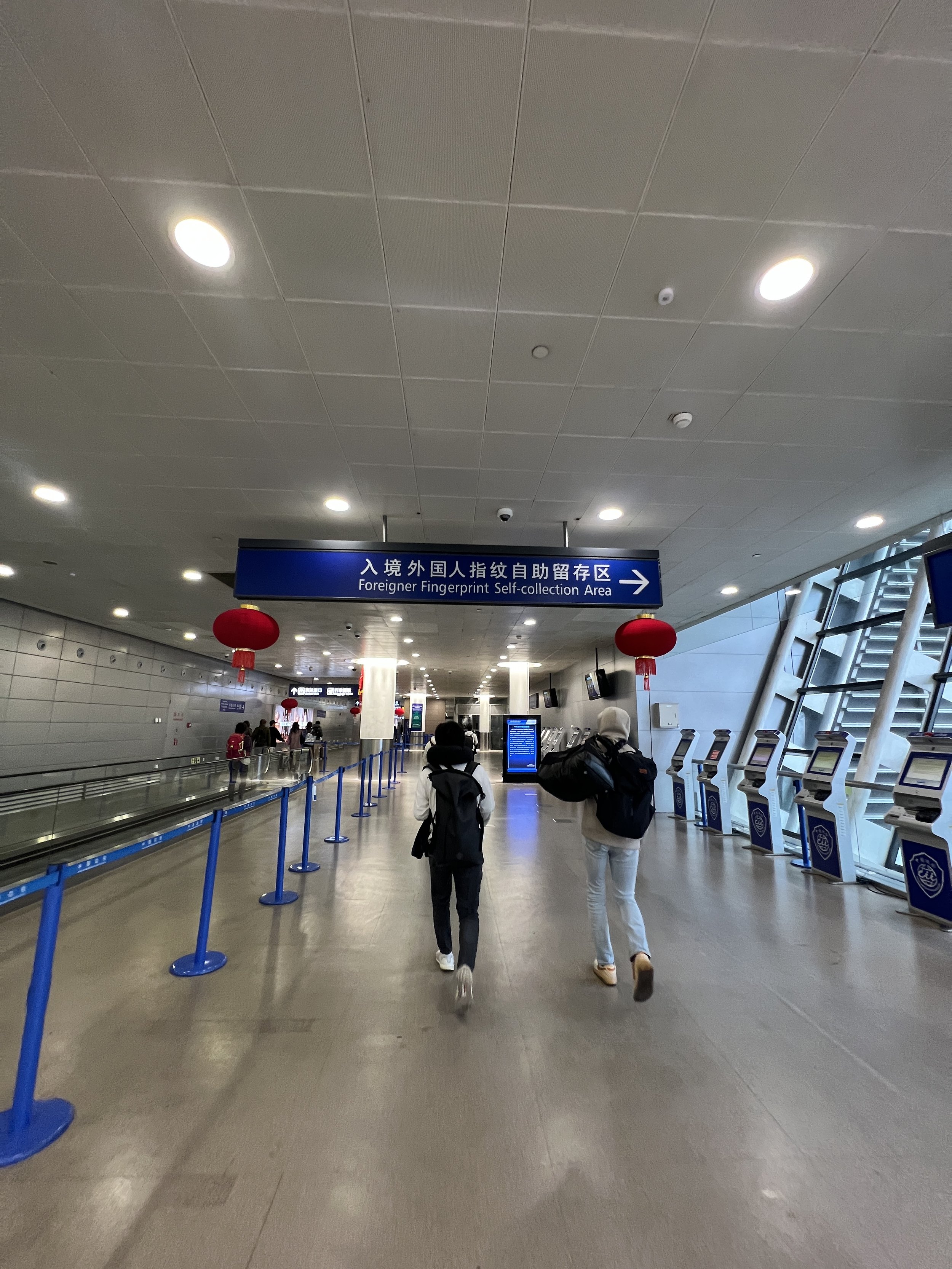
Landing at Shanghai Pudong International Airport was somehow both calm and a whirlwind. Immigration and customs were efficient. Thankfully, like nearly all international airports, signage and communication were in the local languages of Mandarin and English. Upon deplaning, we took the typical route you take upon landing in any country. First, we walked to border control, where signage pointed the way to a few different lines. There were lines for Chinese citizens, those who already had visas, and those looking to enter on a transit visa.
To fill out the transit visa form, you need papers or screenshots of your hotel name, address, phone number, flight information about where you came from, where you're going, and your passport information.
Once you fill out your transit visa form, hand it over to the border officers, answer their questions, and show them the documentation about your upcoming flight out of the country and your hotel information. This will confirm that you will be in the country for less than the 144-hour transit visa limit. Chinese border control didn't care where we were going from Tokyo on; they just needed to know that we were leaving the country less than 144 hours from the time we landed in China.
Leaving the Shanghai Airport
After passing through border control, we were encouraged to keep the transit visa papers we filled out, as it was necessary to exit China and continue onto our next flight when it was time. We passed through the doors to the classic luggage conveyor belt, collected our belongings, sent our bags through the extra security screening, and showed our passports one more time before heading towards the final exit doors.
Before we left, we took a moment to find a currency exchange booth and trade $100 for 730 Chinese Yuan (the rate was in February 2024). We were unsure how much we would need, but we certainly didn't want to have too little since we could no longer use Google upon entering China.
Frankly, we were initially very intimidated by this process as there's so little information out there about traveling through China. Still, we found the overall experience smoother, less rushed, and even kinder and more at ease than our experience landing and passing through Border control in Marrakech, Morocco. That was a much more intense questioning and security detail than even Shanghai, China! The airport is very nice, and the staff are helpful and professional and speak good enough English to converse as needed.
Getting to the Hotel in Shanghai
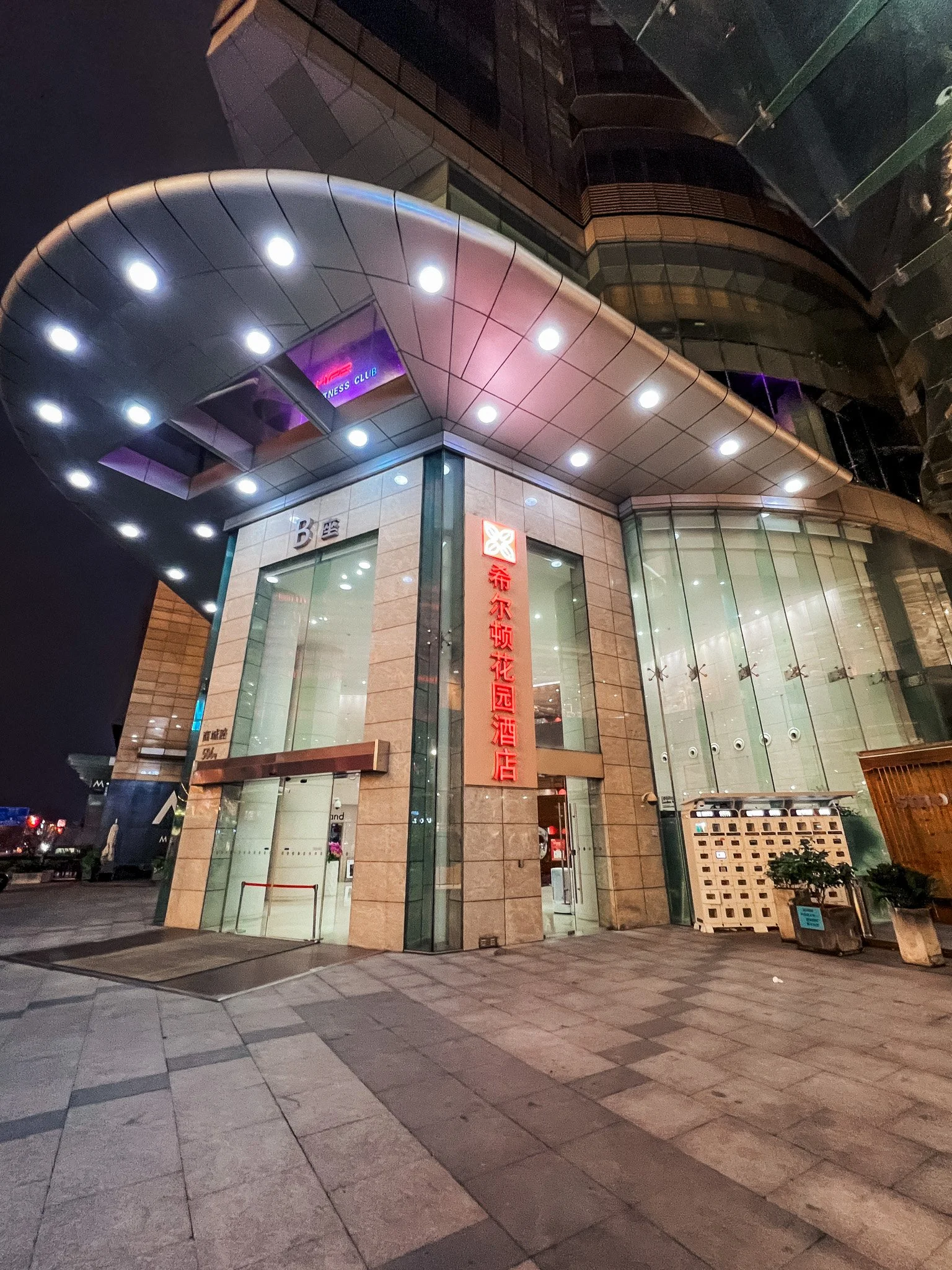
A week before our trip, the hotel that we pre-booked (Hilton Garden Inn Shanghai Lujiazui) sent us what turned out to be an invaluable document: a hotel address for taxi drivers in Mandarin and points of interest we could point to that were in Mandarin and English.
This email proved invaluable as we navigated the city and needed to go from the airport to the hotel. As not many locals speak English, this email allowed us to show the address to the taxi driver without having to communicate in words that neither of us knew.
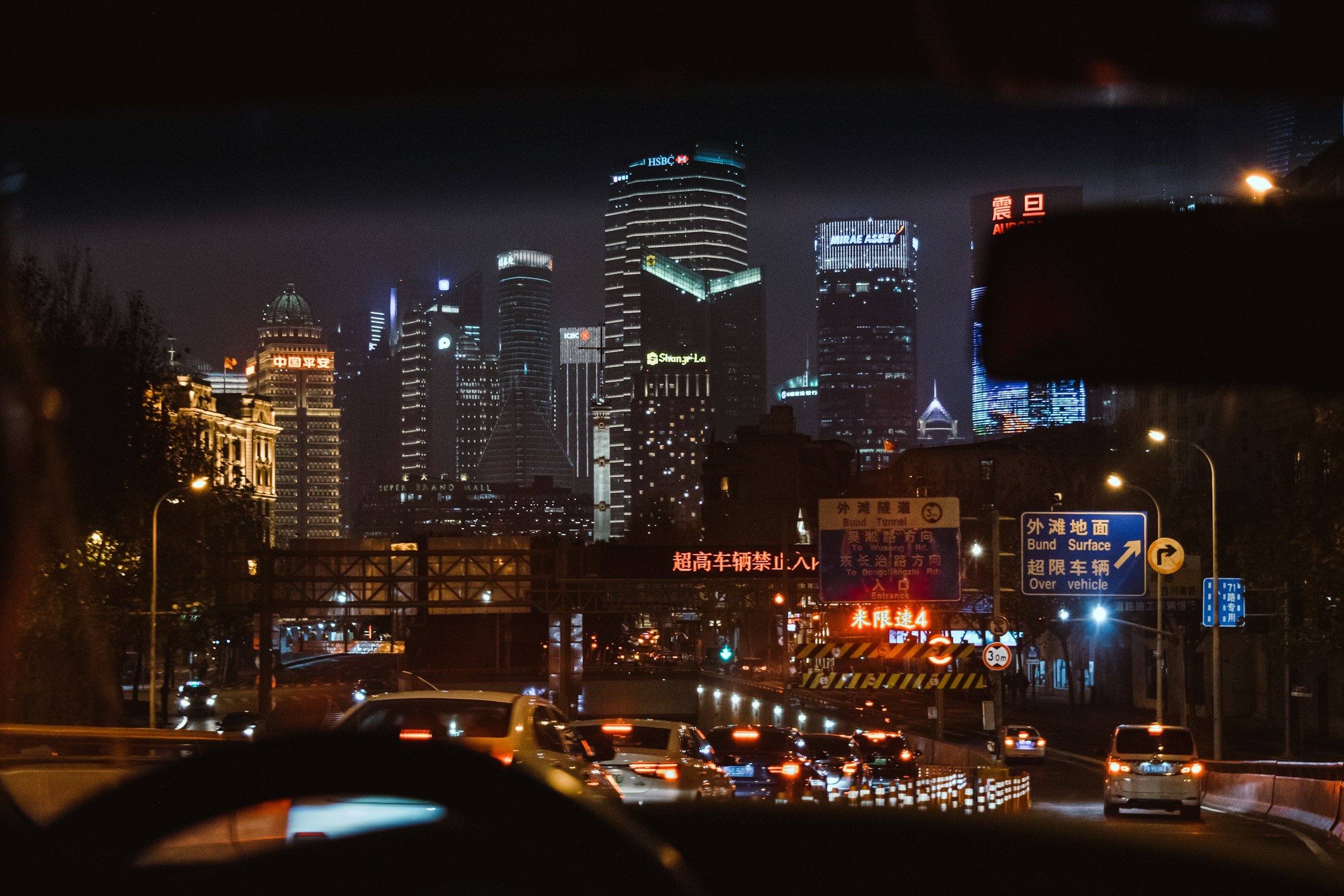
The 30-minute taxi ride from the airport to the city center costs about $28. In the city, taxis were readily available and affordable, with comparable costs anywhere in the world. We stayed in the heart of the city, allowing us to explore on foot.


Getting a Sample of Authentic Chinese Food
Because we were essentially only there long enough to eat dinner, explore a little, sleep, and head back to the airport, we wanted to make the most of our limited time. Once we checked into the hotel (which, yes, did feel just like a classic hotel check-in like anywhere else in the world), we took to the streets to wander until something smelled good to us.
Shanghai is a culinary haven, so the options were plentiful. It was hard to choose from steaming bowls of noodles to savory dumplings. Once we found a dumpling place that smelled and looked good, we walked in, ready to eat. But boy, did we stick out like a sore thumb. People looked at us, then looked away as we gawked at the largest menu in strictly Mandarin characters. No photos or hints as to what anything was, said, or cost. We've never been more perplexed abroad, and there's no access to Google Translate to save us now!
A bit overwhelmed and getting hungrier by the second, we continued to meander down the road and try again to find dinner. A few shops over, we found a fantastic smelling noodle shop. We felt like true tourists, but we were elated to see that the menu showcased at the front at least had photos! The owners quickly invited us in, got us seated, offered us tea, and gave us menus. He spoke a tiny bit of English, which was very helpful!
He asked, "Noodle, yes?" We agreed. He asked, "pork, beef, chicken, or duck." We got one duck and one beef. He said, "Spice?" And we awkwardly signed "a little bit." He nodded and put in our order. He brought out the piping-hot bowls of fresh noodles moments later. It was delicious but SO peppery! He smiled big, got us cokes, and said, "Sorry, too peppery for you! We like pepper too much." In broken English and hand signals, he said we didn't need to pay for the cokes because there was too much pepper. Still, we thanked him, enjoyed the tasty meal, paid for our meals and the cokes, and continued on our way.
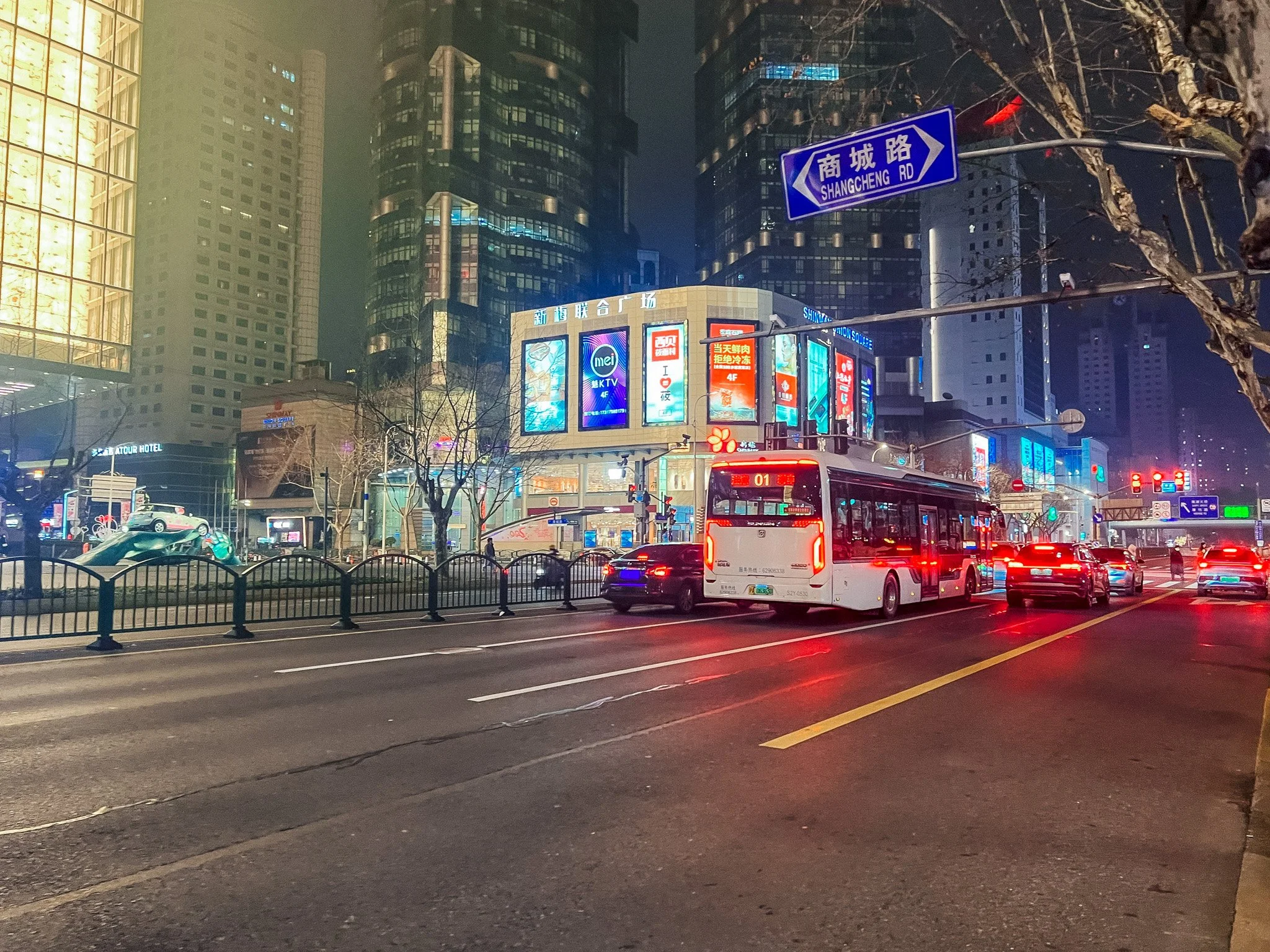
With little time left in the night, we walked around the city center, taking in the enormity of the buildings, the overabundance of security cameras, and the locals going about their daily lives. We wanted to try a few unique Chinese snacks, so we popped into 711 to try a few different tasty treats. (We'd tell you what they were, but we honestly couldn't read the wrappers—we took guesses, and it mostly turned out well!)
Communication Challenges & Language Barriers
While the language barrier was a constant factor on our short visit, it also added to the adventure. We relied heavily on context clues, gestures, and a few signs in both English and Mandarin. Most service workers were patient and helpful, even if they didn't speak English. The best thing you can do is learn to say hello, goodbye, and thank you in Mandarin, and maybe pick up a phrase book…and honestly hope for the best.

Quickly Exploring Shanghai
With limited time, the best plan is to focus on experiencing the city's iconic landmarks. The Bund, the iconic waterfront promenade, offered breathtaking panoramic views of the city's dazzling skyline. We also visited Yu Garden, a serene oasis of tranquility amidst the urban bustle featuring picturesque ponds, elegant pavilions, and intricate rock formations. The Shanghai Museum provided a fascinating glimpse into China's rich history and art, showcasing a diverse collection of artifacts.
Nanjing Road, a bustling pedestrian street, was a sensory overload of sights and sounds. We wandered through the vibrant street, marveling at the dazzling array of shops, savoring the street food, and enjoying the lively atmosphere. The French Concession, a charming district with European-inspired architecture, offers a peaceful contrast to the city's modern metropolis. We didn't get around to it, but we're daydreaming about revisiting and strolling through its tree-lined streets, discovering charming cafes and boutique shops.

Leaving China: Back at the Airport
The following day, it was time to go bright and back to the airport early. We took a pre-scheduled taxi (arranged by our hotel) to the airport 3 1/2 hours earlier than our flight - thankfully, we left early! We got to the airport in less than 30 minutes, but upon our early morning arrival, we joined a long line of people waiting to check in to our flight. We waited about 45 minutes to see a front desk agent to get our boarding passes and check our bags. Once we saw the agent, the process was quick and painless; the main issue was the long line to get to them. After check-in, we sailed through security quickly. And though it was a typical experience, we lost our large portable phone and computer charger to the security agents. They told us it was too big to bring on the plane. Through thirty countries and countless flights, we've never had a problem with it until China!
About 20 minutes later, we made it to the border control line, which was a scary long wait. We were getting legitimately nervous that we would miss our flight! The process was quick and easy once we were up to the agents. They asked us why we were here (tourism and passing through on the way back to the US) and where we were going next (Tokyo, Japan.) They stamped us out, and with only 10 minutes left in the boarding process (yes, it took THAT long!), we RAN to our gate, showed our tickets and passports to the gate agent, and sat on the plane in near disbelief that we even were able to dip our toes into experiencing even a little bit of traveling in and out of China.

Tips for a Successful Shanghai Stopover:
Thorough research is paramount when planning a transit visa stopover. Carefully examine the specific visa requirements based on your nationality and the duration of your layover. Download offline map applications like Google Maps or Citymapper that will work even while you don't have internet access to them while visiting.
While not mandatory, learning a few basic Mandarin phrases, such as "hello," "thank you," and "excuse me," can significantly enhance your interactions with locals. Be sure to print or screenshot the necessary addresses in Mandarin and English.
Choose your accommodations in a convenient area and book in advance. And though there are many fantastic local brands, we found our tried and true familiar brands like Hilton and Marriott to be a source of comfortable reassurance while visiting somewhere so different.
Exchanging currency at the airport or before you leave for your trip is another crucial step in your preparation. The only place that we found that would take our American cards was our hotel! We had to pay everything in cash because we didn't have Chinese payment methods. There are plenty of ATMs around the city to get out more cash as needed. The cost of exchange was about $5 per transaction.
No, your typical Google apps will not work here. Try as you might, you will not be able to use Google, Gmail, or Google Maps, which weren't previously downloaded while in China. In addition to your classic Google-related apps, you will have zero access to Google, YouTube, Facebook, Instagram, WhatsApp, and Pinterest. Through using Kait’s eSim from Airalo and our Surfshark VPN while connected to our hotel's WiFi, we were able to use a workaround to get on Instagram with, but that was all we successfully tried. Though we've mentioned it before, screenshot any and all information you might need while traveling through China before you get on the plane.
While public WiFi is available in some areas, reliable mobile data can be challenging to obtain. If you're there for more than 24 hours, consider purchasing a local SIM card if possible to ensure consistent connectivity. Alternatively, rely on your map-reading skills, sign-reading skills, and street smarts to help you navigate around the city.
Popular ride-sharing apps like Uber and Grab may have limited availability or require a local Chinese phone number, which you will not have. Be prepared to have cash for metros or taxis as needed. As you cannot call a cab, have your hotel arrange for your taxi to pick you up and take you back to the airport. We were hesitant at first, but it worked like a charm!
One "weird" thing to mention is not a note or tip, simply an observation: we have never seen so many surveillance cameras in our lives. We didn't necessarily feel unsafe or uneasy. Still, every corner, stop sign, street light, building, corner, you name it, had multiple cameras. It feels weird. We know NYC and other major cities have cameras all around. We've noted those, too, as we travel around. But this was next level. Nothing bad or scary, just incredibly…notable.
Finally, embrace the unexpected. Be prepared for potential challenges and approach your stopover with a spirit of adventure. Navigating a new culture, even briefly, is an enriching experience.

Final Thoughts:
Our 18-hour stopover in Shanghai was a whirlwind adventure, a captivating blend of cultural immersion and unexpected challenges. While the language barrier presented occasional hurdles, the vibrant city and its unique culture left an indelible mark on our memories. With careful planning and a spirit of adventure, a transit visa can transform a seemingly mundane layover into a truly memorable mini-adventure.