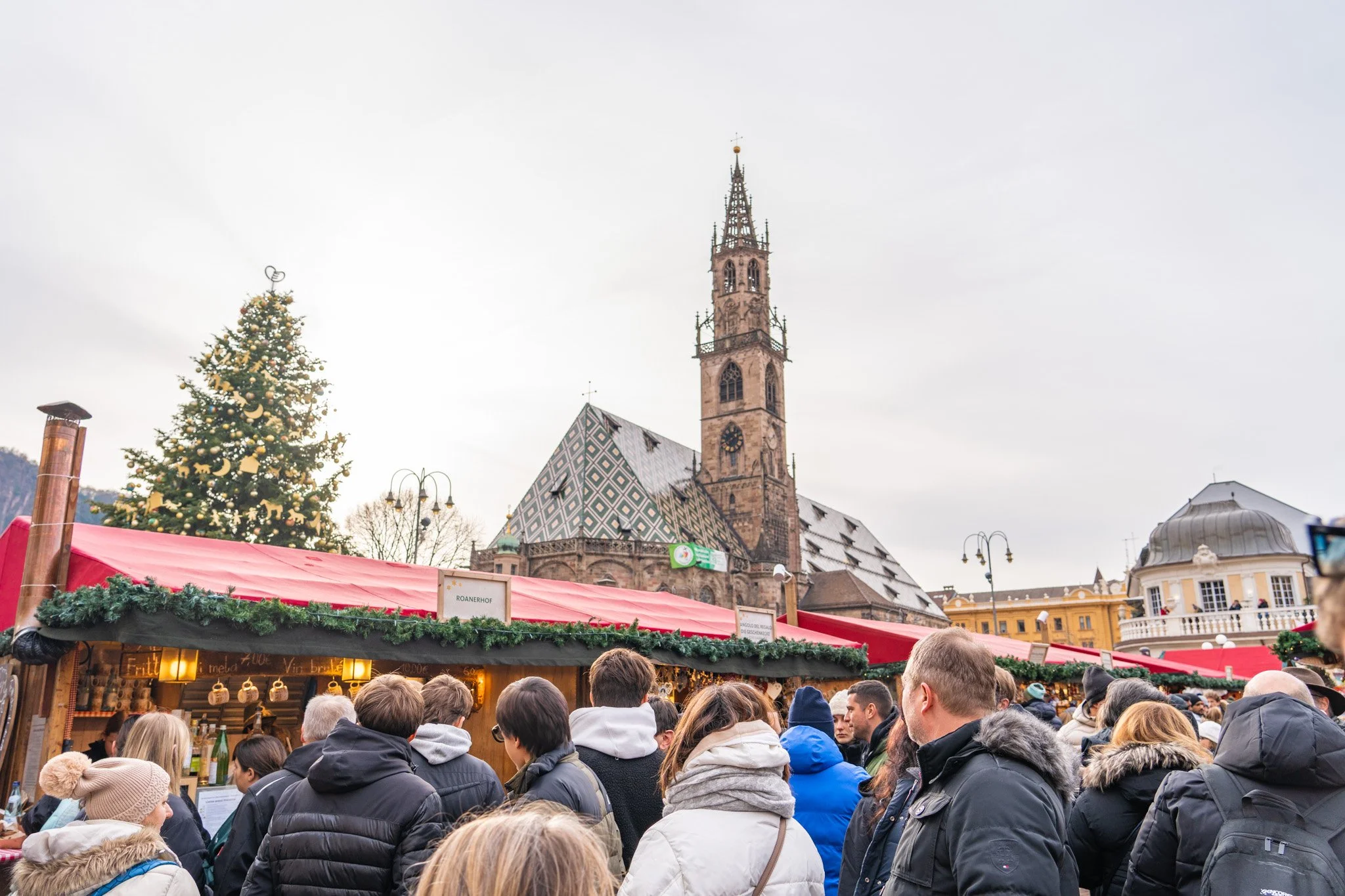
Nothing quite matches the distinct energy of the original South Tyrolean Christmas Market in Bolzano, Italy! Here, Italian flair completely merges with alpine tradition, giving festive experiences that feel unique to the area. Check out our complete 2026 Bolzano Christmas Market guide with market opening dates, tips on where to stay, how to get around, and what to order when you go!
(This post contains affiliate links. We may get a percentage of commission from your purchase(s) at no cost to you, but every little bit helps us keep sharing about the magic and logistics of visiting Europe’s best Christmas markets. Thanks!)
How to Get to Bolzano for the Christmas Markets
By Air: If you're coming from Europe, you can easily fly into Verona Villafranca Airport (VRN), which is the closest and most convenient major gateway for this region. From the airport, you can quickly reach Bolzano by train. Direct trains from Verona's central station (Verona Porta Nuova) take you straight to Bolzano's central station in approximately 1.5 hours. This is the quickest and most cost-effective option.
If you're coming from another continent, Milan Malpensa (MXP), Venice Marco Polo (VCE), or Munich Airport (MUC) in Germany will likely be your other major international hubs. High-speed and regional train connections can bring you from Milan, Venice, or Munich to Bolzano in roughly 3 to 4 hours.
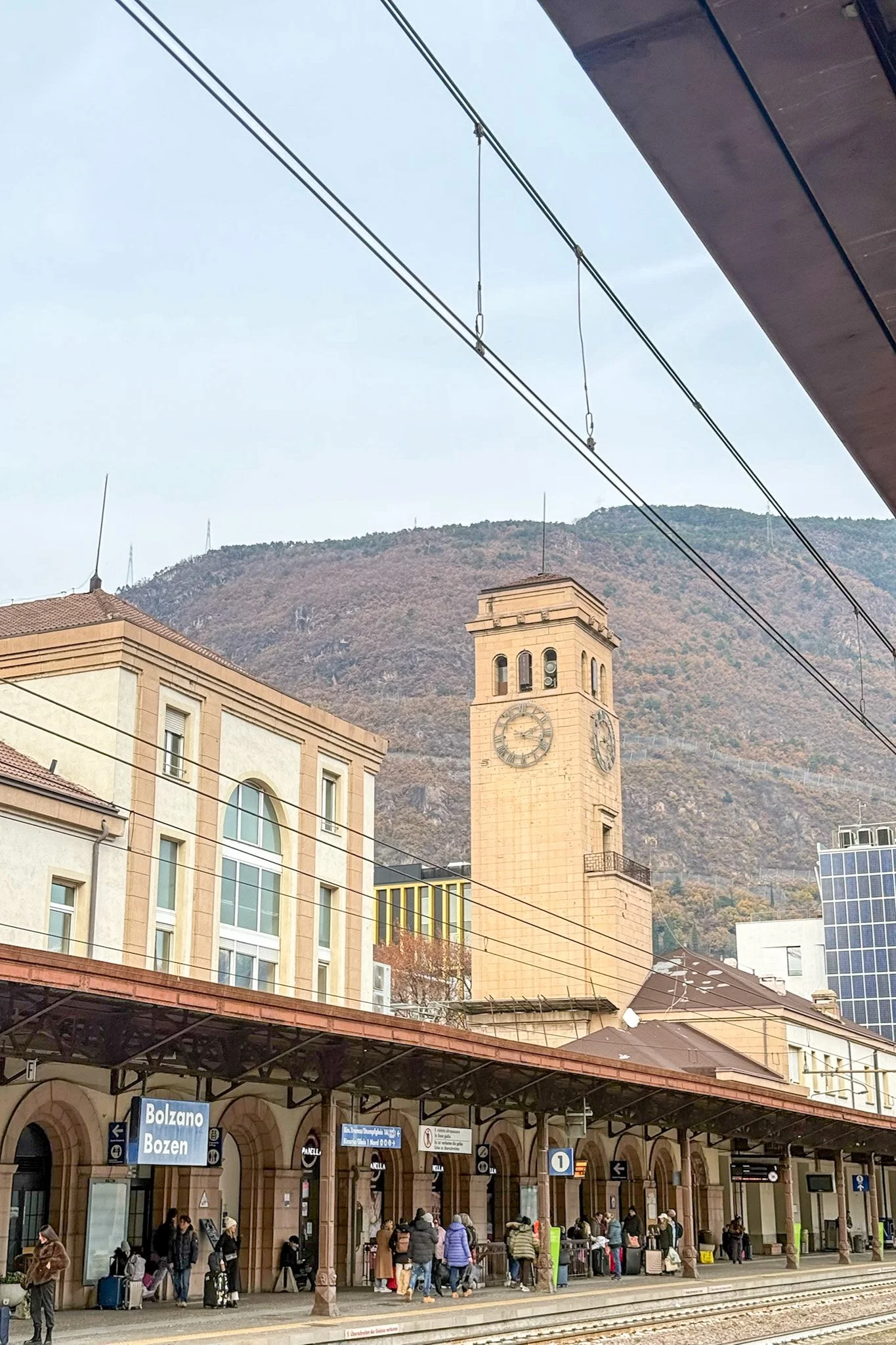
By Train: Bolzano's central station (Stazione di Bolzano / Bahnhof Bozen) is a major railway hub in South Tyrol, making it easily accessible from various cities. In less than 1.5 hours, you can reach Bolzano from Verona or Trento. Connections from Innsbruck, Austria take roughly 2 hours via the scenic Brenner Pass railway line. Munich to Bolzano via EuroCity trains takes about 4 hours. Book train tickets in advance, especially during the Christmas market season, to get the best rates!
Navigating the Language in Bolzano / Bozen
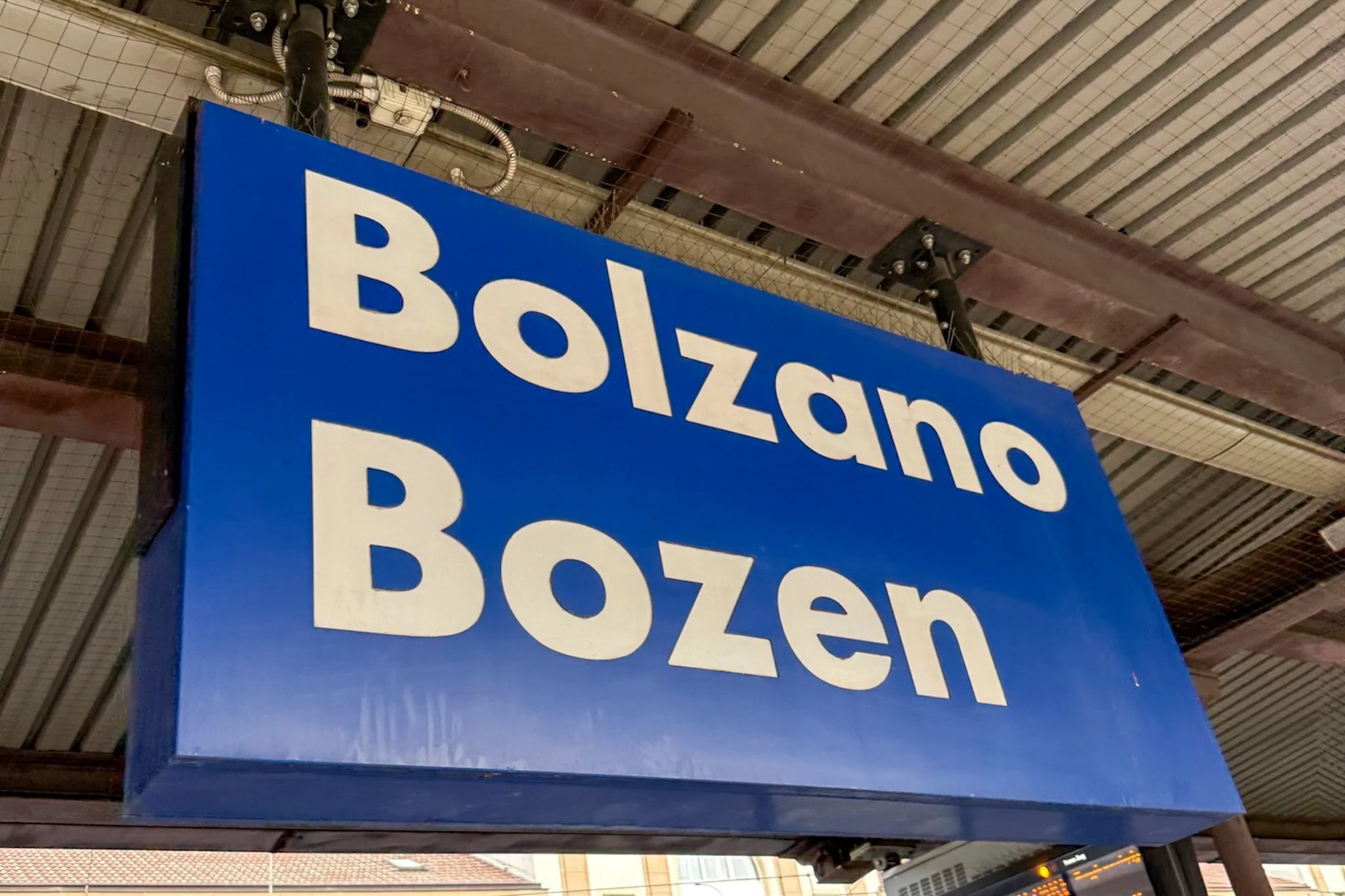
One unique thing that’s important to note before we get started is that this area of Italy primarily speaks German! Many also speak Italian and English, but you never really know which language you’ll be greeted with, so it’s best to come equipped to say “Hallo,” “Buongiorno,” and “Hello!”
You’ll also find that nearly every destination has two names: one in Italian and one in German. Apple Maps and Google Maps tended to list the Italian names; locals tended to refer to the town’s German names; and the street signs and local posters displayed both names.
You’ll see that we go back and forth on the names, but we more often refer to the destinations by their Italian names. Bolzano is the Italian version of the city’s name and Bozen is the German version of the city name. You’ll see both here, but you’ll hear and see Bolzano more.
How to Get Around Bolzano
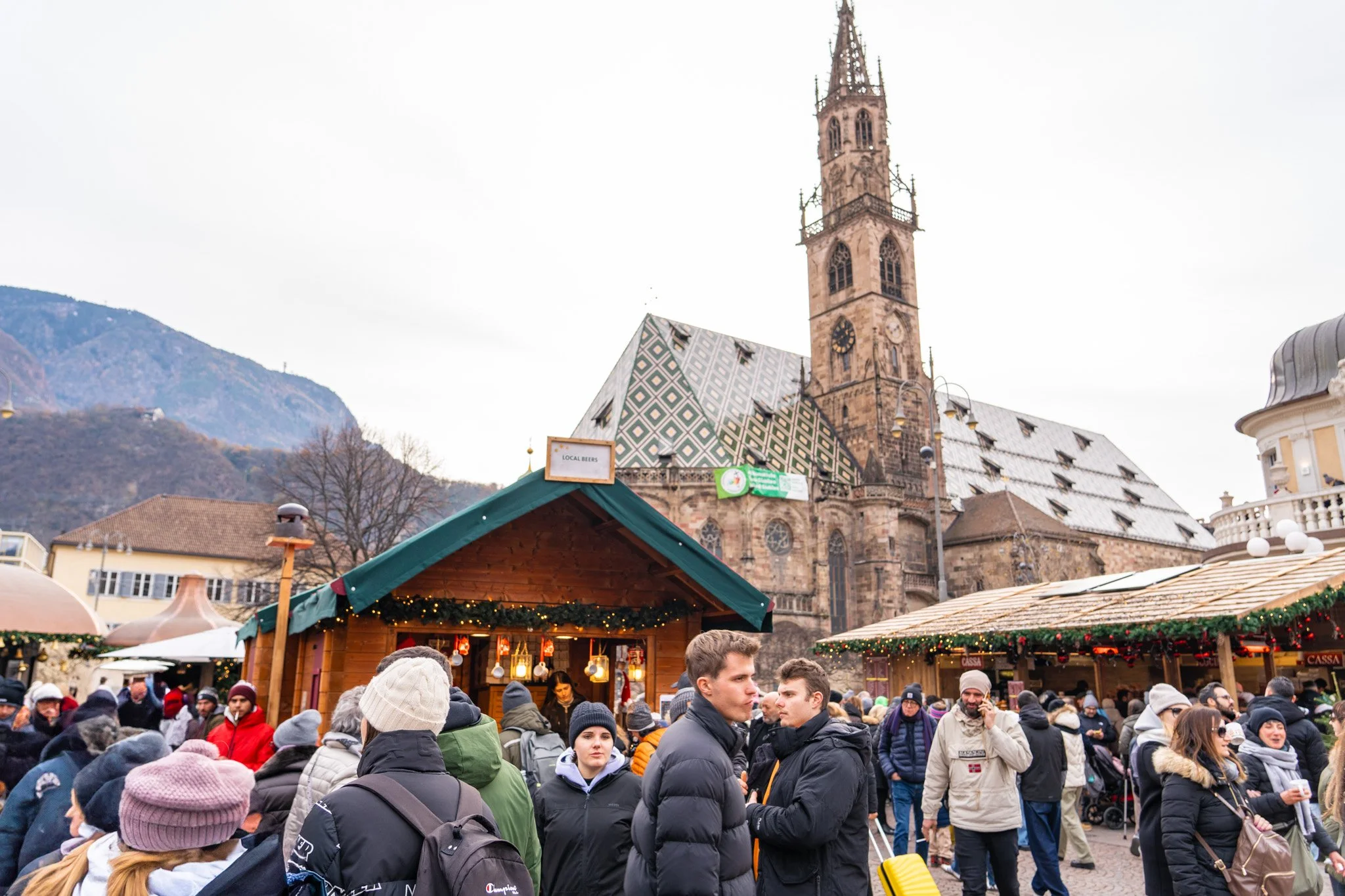
Stay in or near the city center to save your energy for exploring the wooden chalets! Walking is a great way to see the city, as the historic center is beautifully compact and highly pedestrian-friendly. If you'd like to give your legs a break or head up into the surrounding peaks, the city's public transit network and mountain cable cars are constantly running nearby. The Renon cable car (Funivia del Renon) is particularly helpful for navigating the dramatic climb from the city center up to the high plateau above for even more alpine views. The Soprabolzano Christmas market can be reached using the cable car and is also well worth a visit!
Getting to the main market area from the train station is a breeze and requires just a flat, brief three-minute walk to Piazza Walther, meaning you won't have to face any hikes right off the train. Bolzano's main train station is easy to access and connects to many other major stations in nearby holiday towns. Being so close to Merano, Bressanone, Brunico, and Vipiteno, Bolzano is the perfect launching pad for more adventures exploring the Northern Italian Christmas markets.
While you don’t need a car in Bolzano, if you’re planning to explore the Dolomites, we would highly recommend renting a car to see as much of the area as possible and to not be reliant on train and bus times in these smaller towns.
Bolzano Christmas Market Locations, Opening Dates, & Operating Times
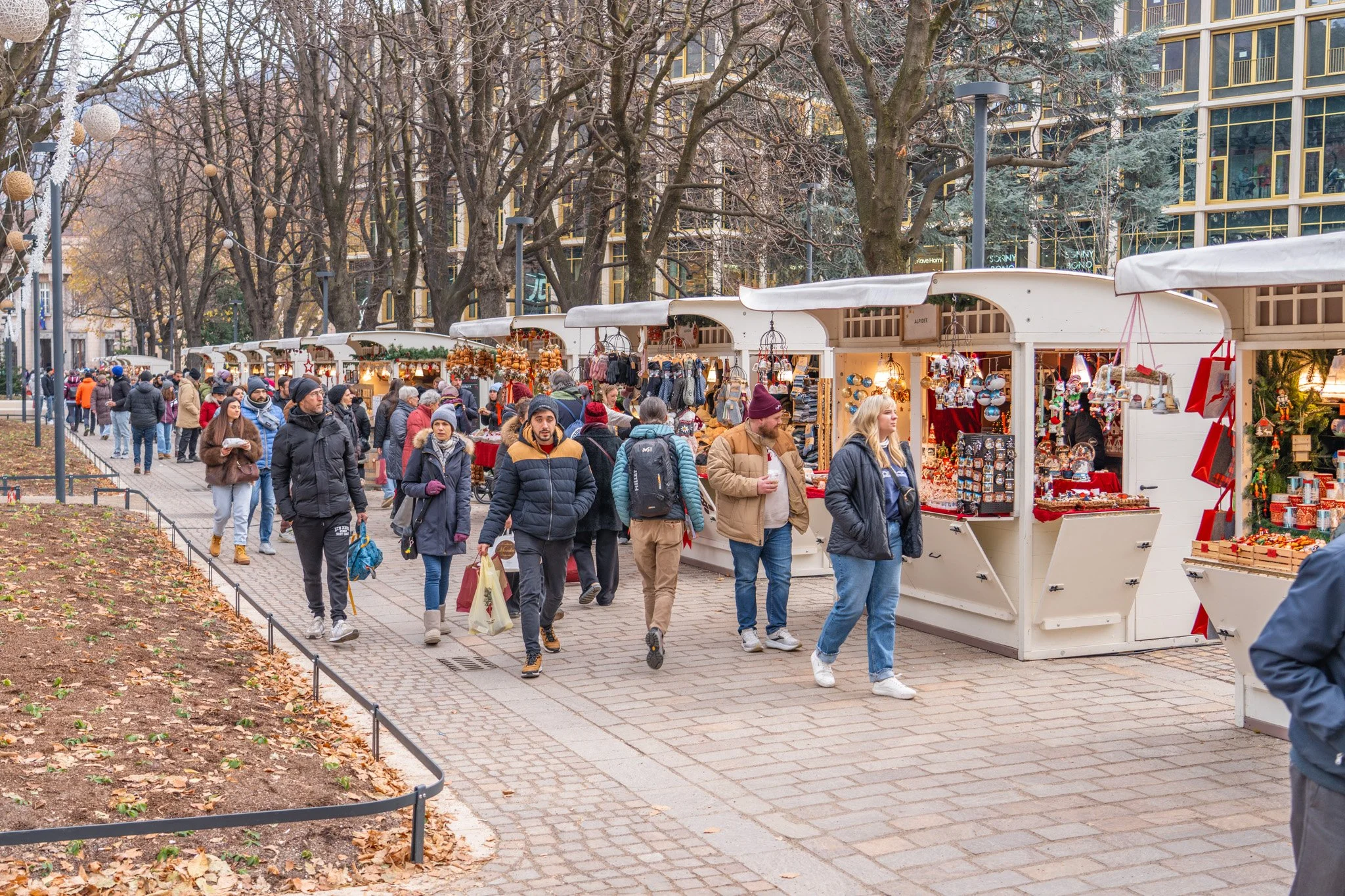
Bolzano's Christmas market spreads across several central squares, each offering a unique and immersive experience. The primary heart of the event is centered in Piazza Walther (Waltherplatz), where the main festive village and massive Christmas tree are located. These market hubs expand to the Christmas Park near the cathedral, along Via Isarco, and into Capuchin Park, all conveniently connected within the city center, allowing you to easily map out a festive walking route.
The official 2026 Bolzano Christmas Market dates have been announced! The Bolzano Christmas market will run from November 27, 2026, to January 6, 2027, with the traditional opening ceremony taking place on the evening of November 26, 2026.
The regular opening hours for the market stalls are from 11:00 a.m. - 7:00 p.m. Monday through Thursday and from 10:00 a.m. to 7:00 p.m. on Fridays, Saturdays, and Sundays. Holiday hours vary!
Please check the Bolzano tourism website for the most up-to-date information on dates and hours.
Weekends and evenings do get a little more crowded than weekdays, but the atmosphere remains open, light, and fun.
Does the Bolzano Christmas Market Have Mugs?
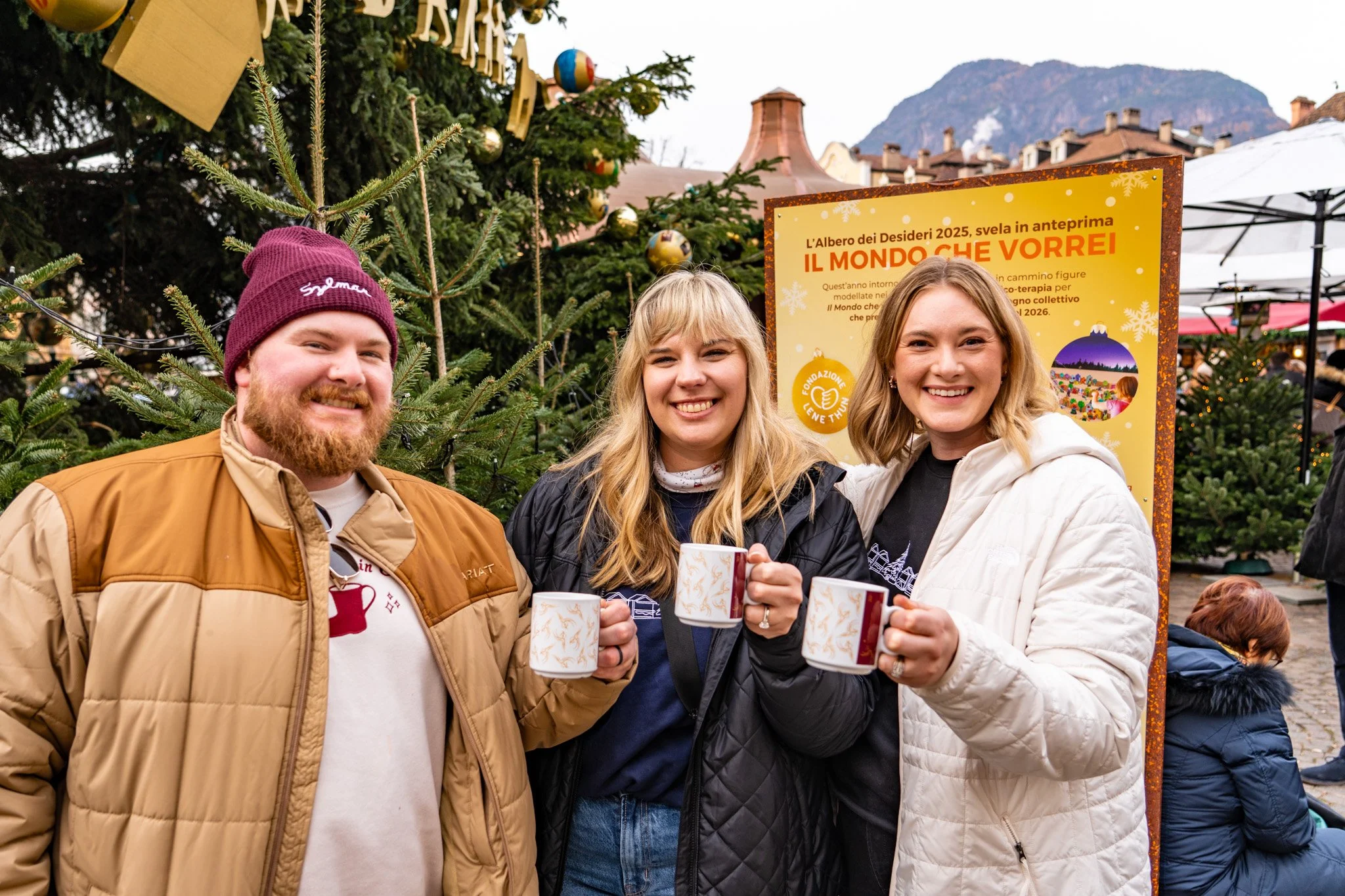
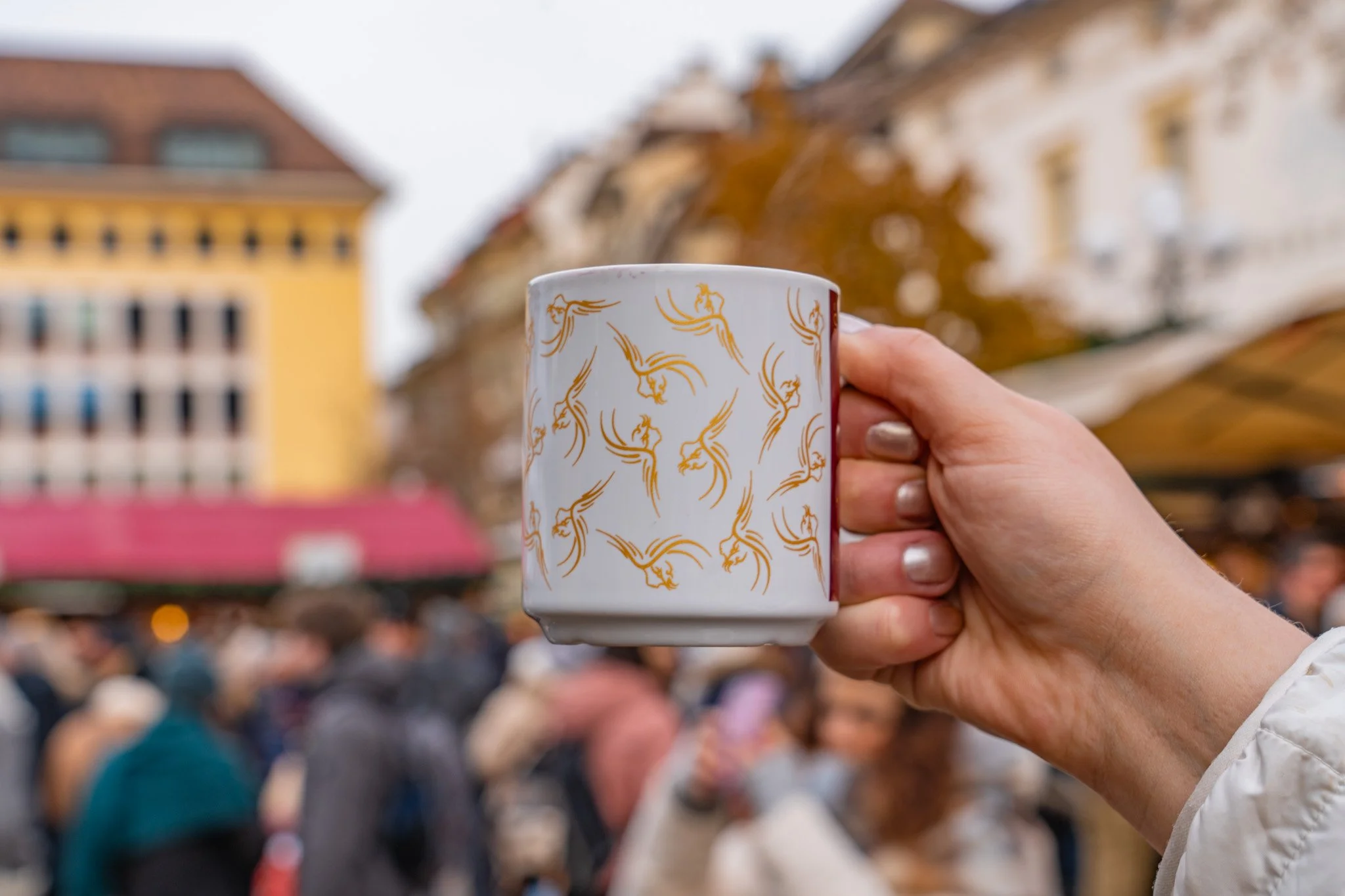
Yes! They have a few different ceramic mug designs. The ones pictured above were one of the few designs at the market. Of course designs often change from year to year, so this is just a reference point from a past design. But if you’re a Christmas market mug collector, you’re in luck! The deposit for the mug is about €5.
Though, this has never happened to us outside of Italy, but as we didn’t want to take this mug home, when we went to pay for our drinks, the vendor asked “are you keeping the mug or returning it?” We responded that we’ll be returning it, and they said “if you stand near hear, you don’t have to pay the deposit and just return it when you’re done. Okay, honor system! We enjoyed our drinks by the massive Christmas tree just across from the booth, then returned the mugs like we promised when we were done. This also happened to us in Castlerotto!

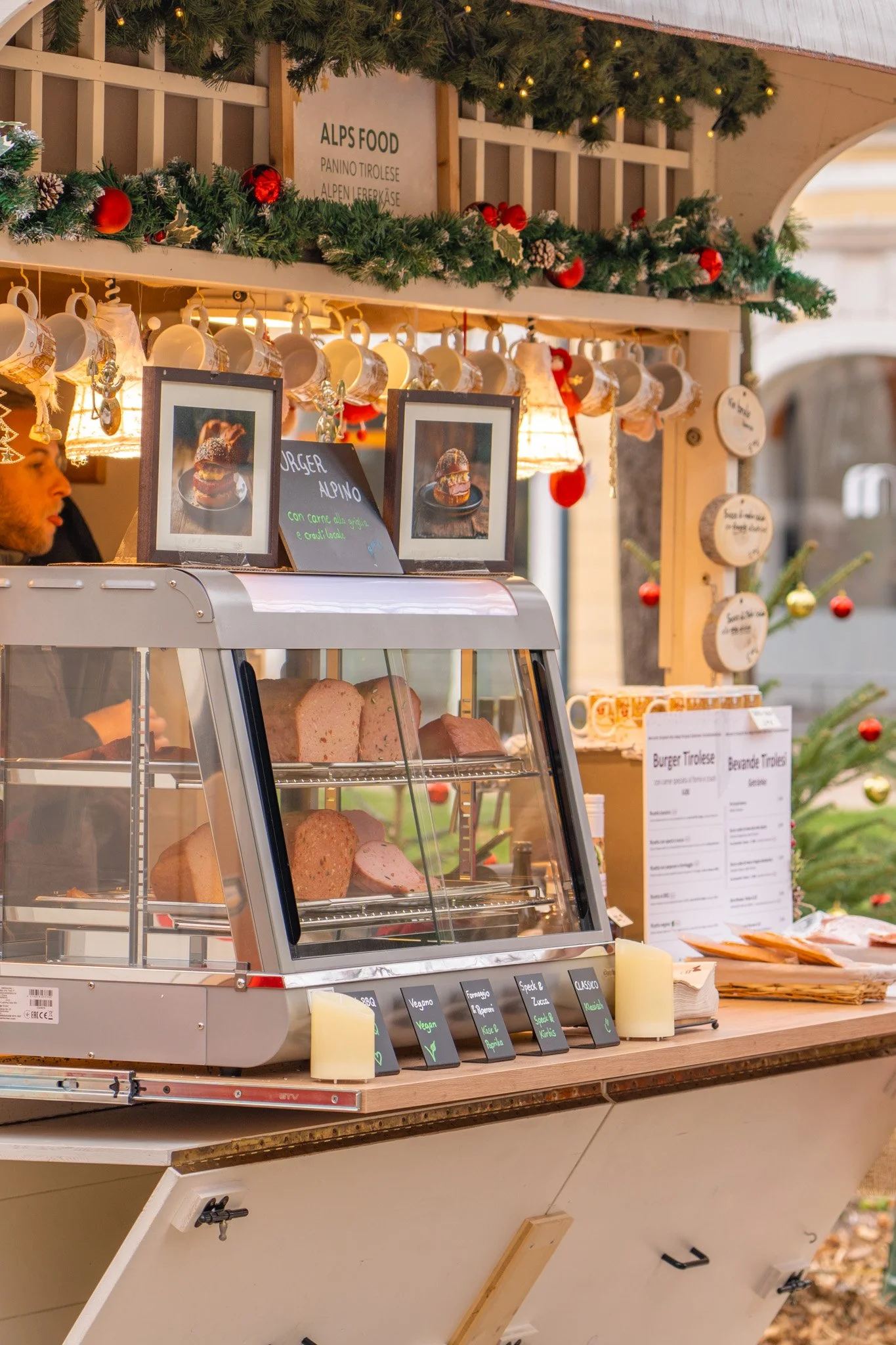
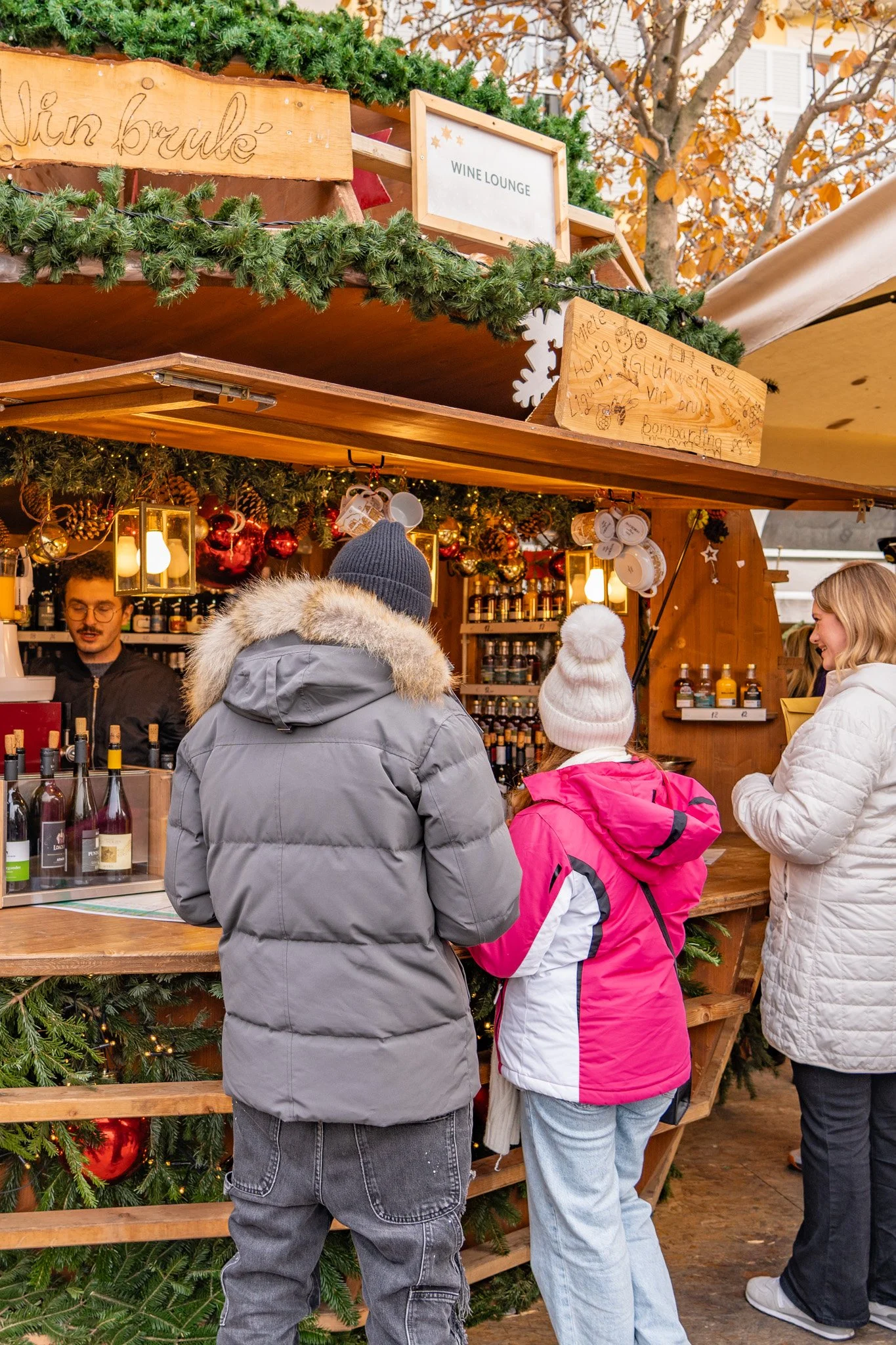
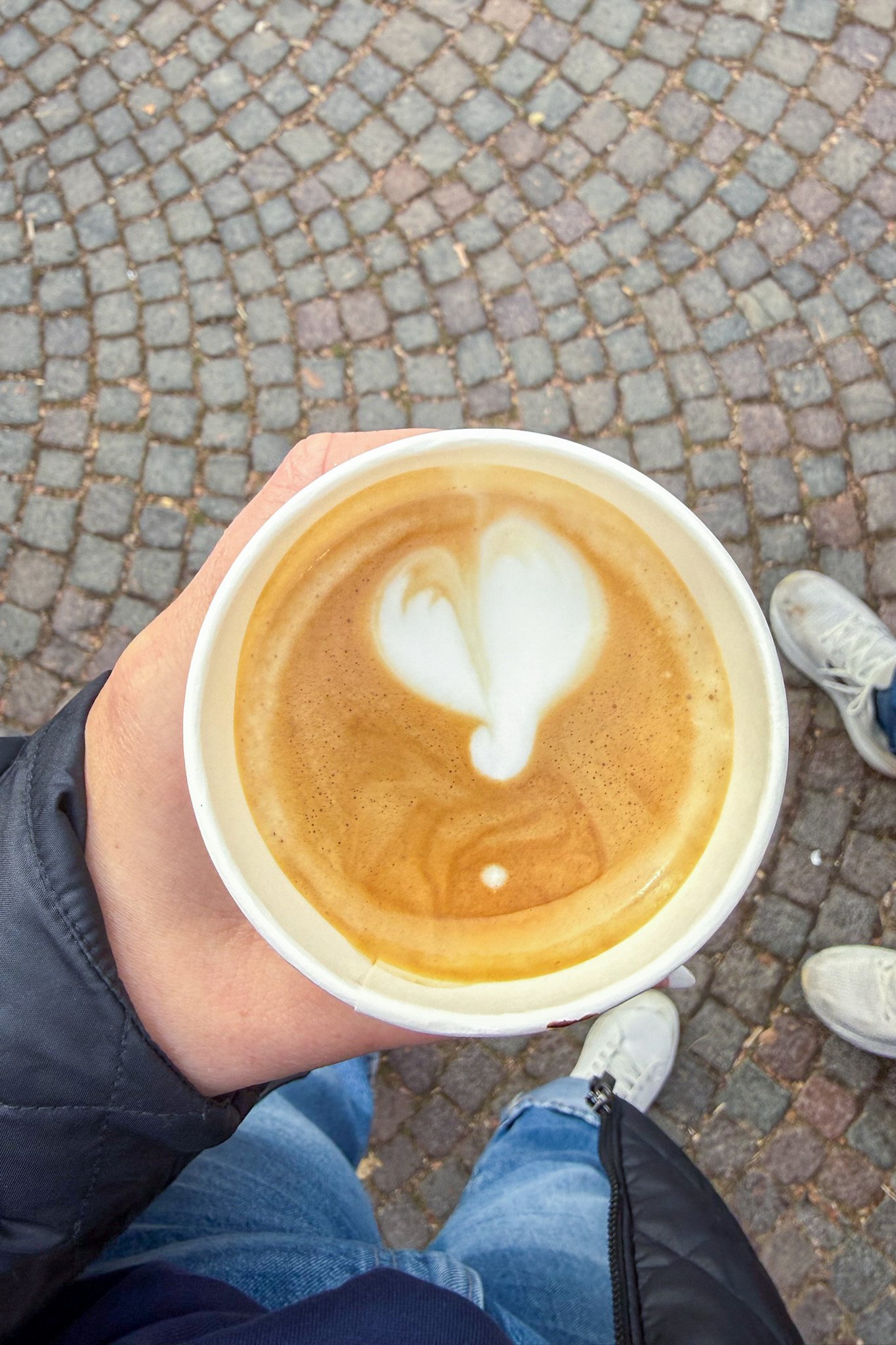
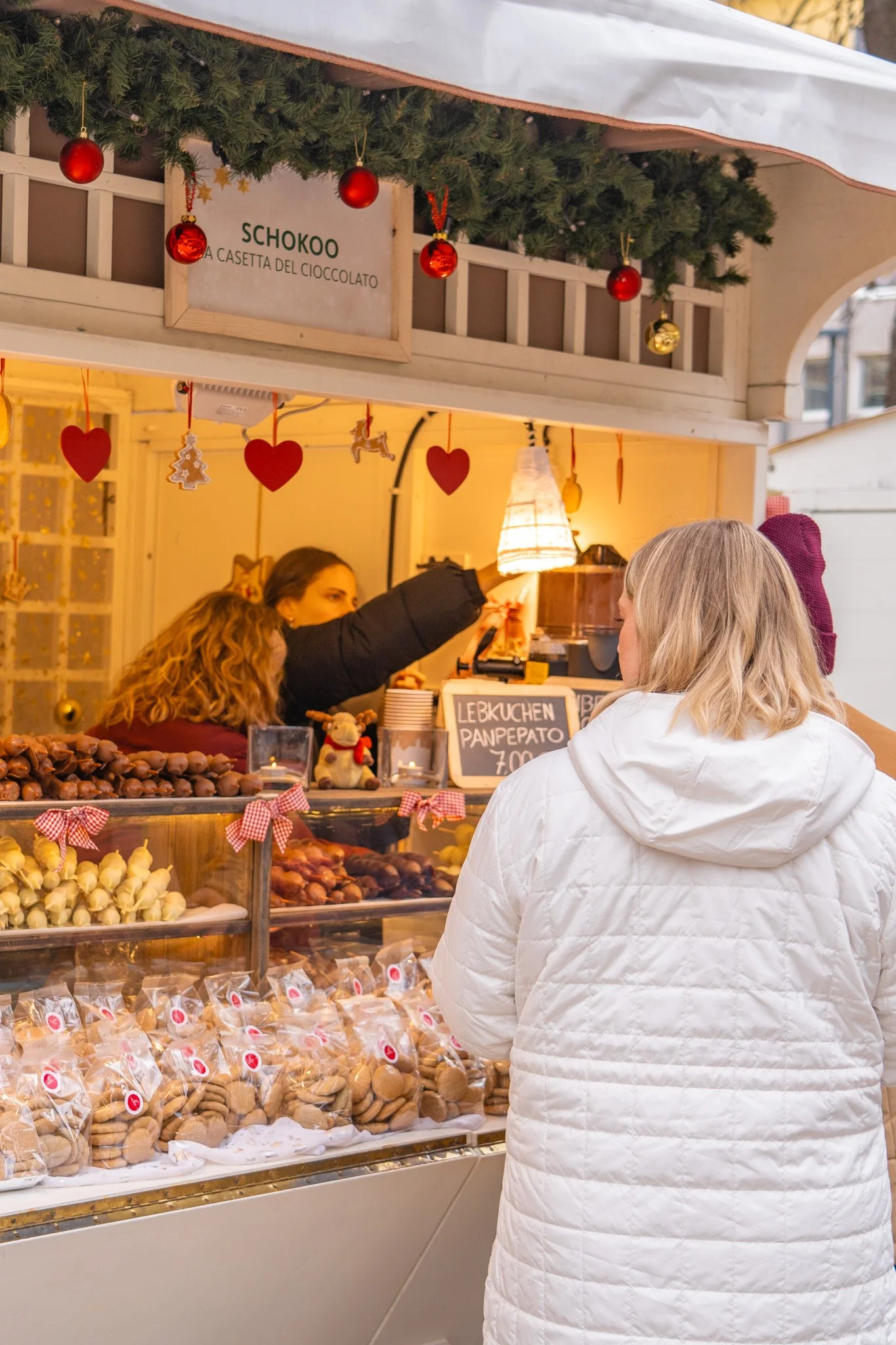
Foods & Drinks to Try in Bolzano
Canederli (Knödel): You can't visit a South Tyrolean market without diving into these traditional boiled bread dumplings. Usually flavored with speck (smoked ham), cheese, or spinach, they are served hot in a savory broth or rolled in melted butter.
Zelten: A traditional South Tyrolean Christmas fruitcake. This rye-bread-based festive loaf is heavily packed with dried figs, raisins, walnuts, pine nuts, and almonds, spiced perfectly with cinnamon and cloves.
Coffee: We are in Italy, after all! Not many Christmas markets offer coffee, so when we can find a latte or espresso at a Christmas market, we have to share about it! Bonus points - it was actually good!
Strauben: A classic alpine funnel cake. The batter is fried into a crisp, golden spiral, heavily dusted with powdered sugar, and traditionally served with a large dollop of sweet mountain cranberry (lingonberry) jam.
Vin Brulé (Glühwein): The mulled wine here is comforting on a cold day! Utilizing the region's incredible local red wines, it is simmered with orange slices, cloves, and cinnamon sticks. Sip it hot from a festive, collectible market mug!
Apple Strudel (Apfelstrudel): Made using fresh South Tyrolean apples, the thin pastry dough is wrapped tightly around a warm filling of spiced apples, pine nuts, and raisins, usually paired with vanilla sauce.
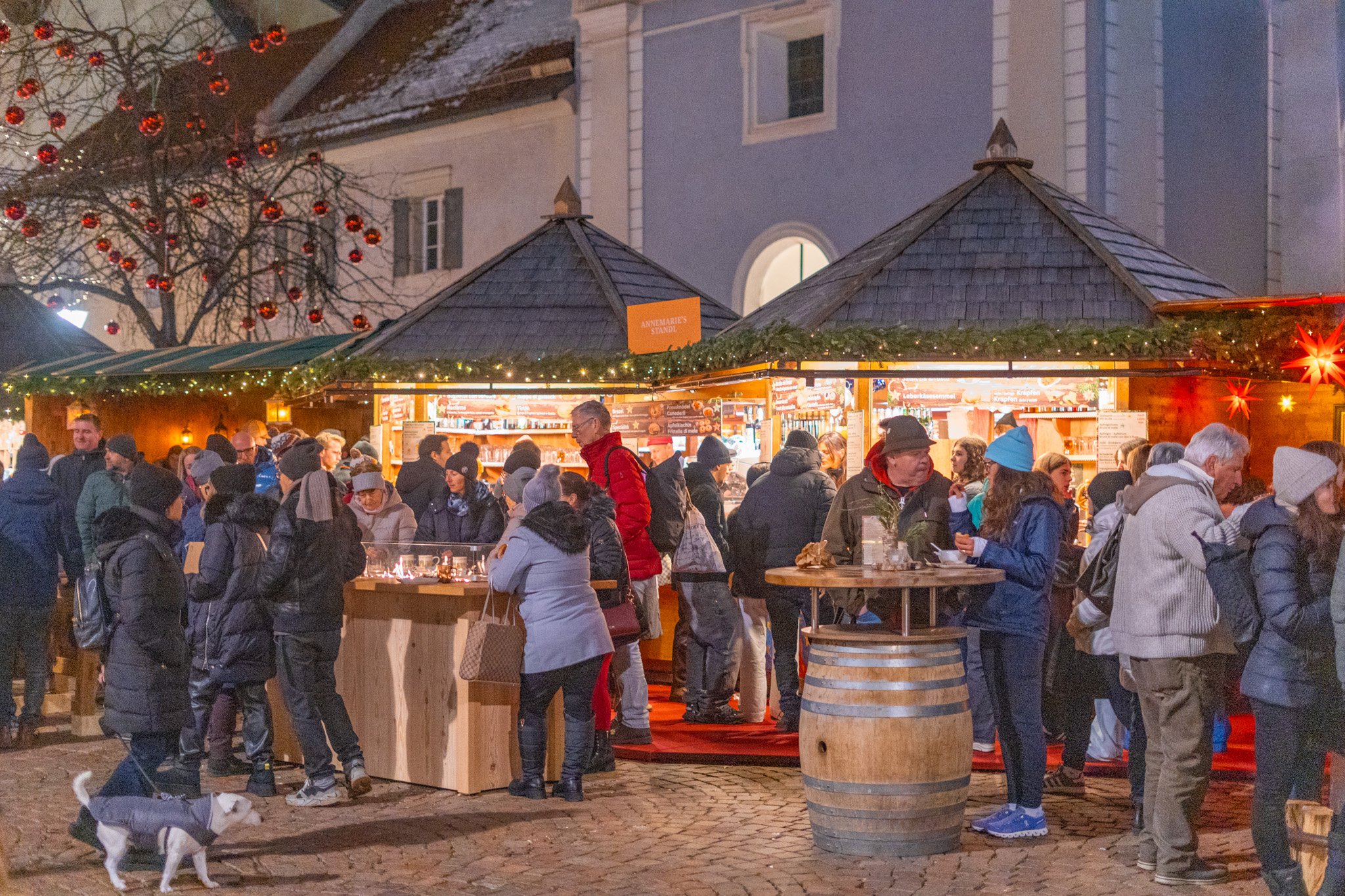
Northern Italy Christmas Markets Guide (South Tyrol & the Dolomites)
After wandering through nearly a dozen of these Northern Italian Christmas markets, we’ve created a quick guide for what to know before you go to the Dolomites for Christmas!
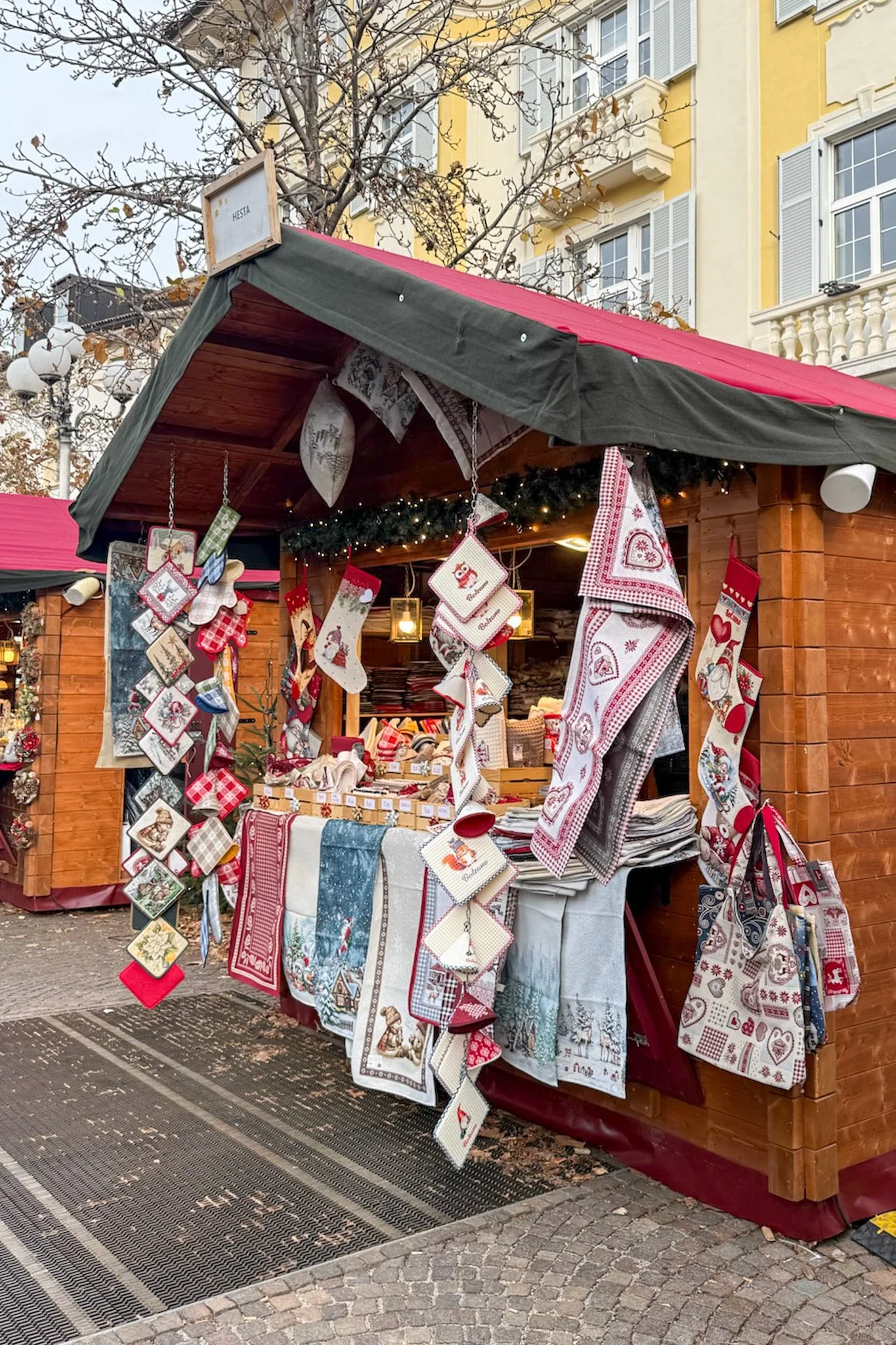
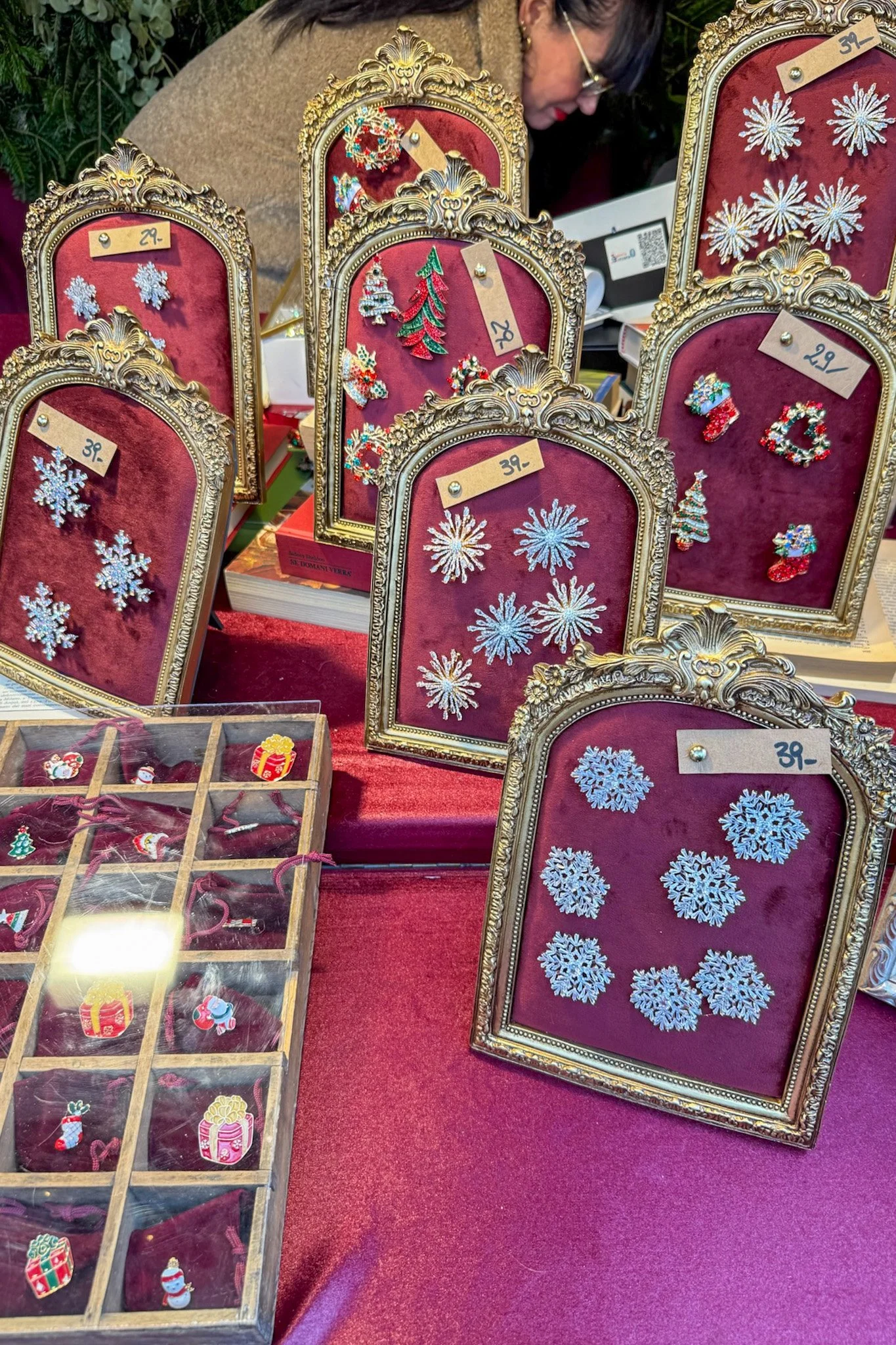
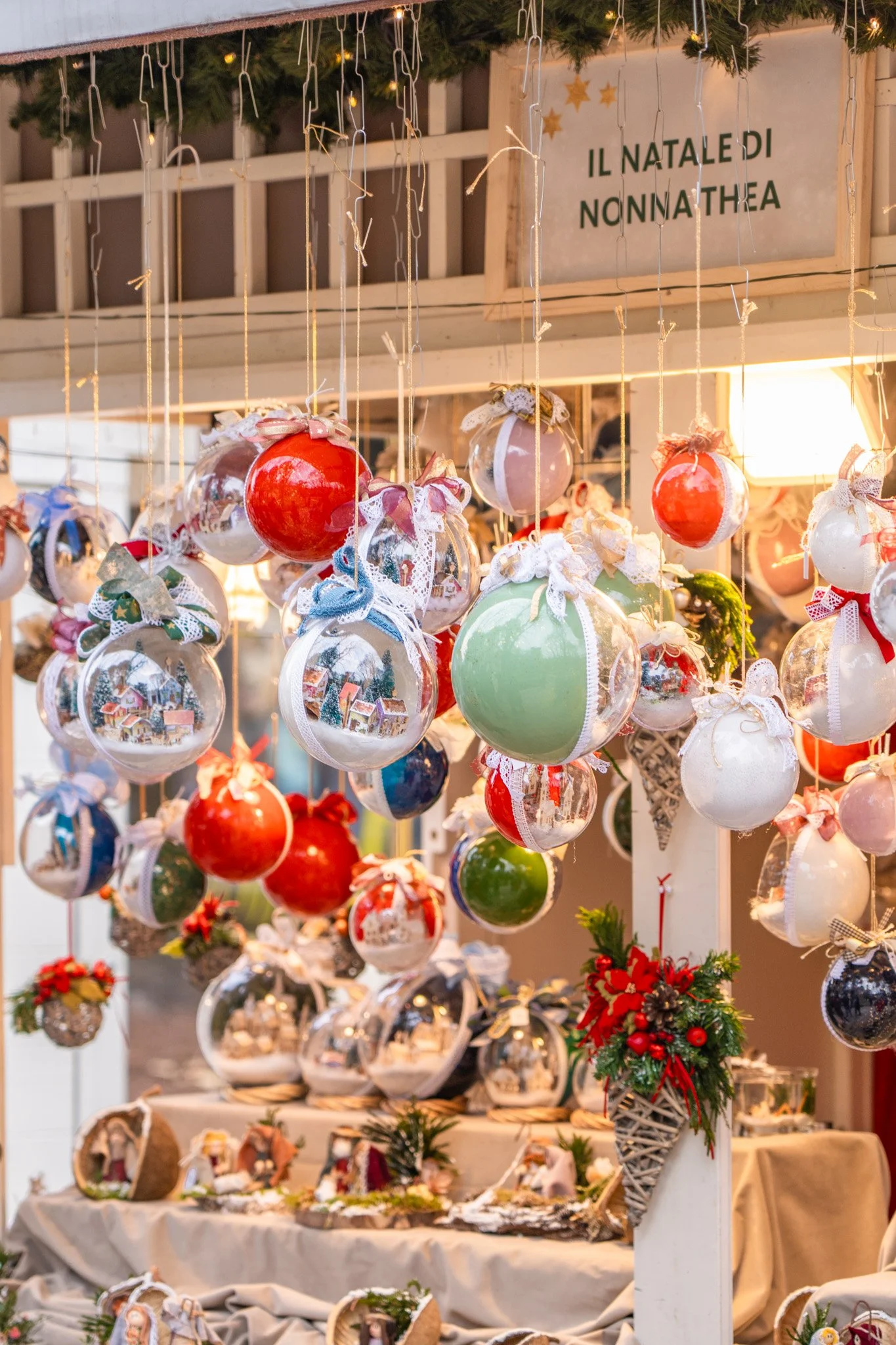
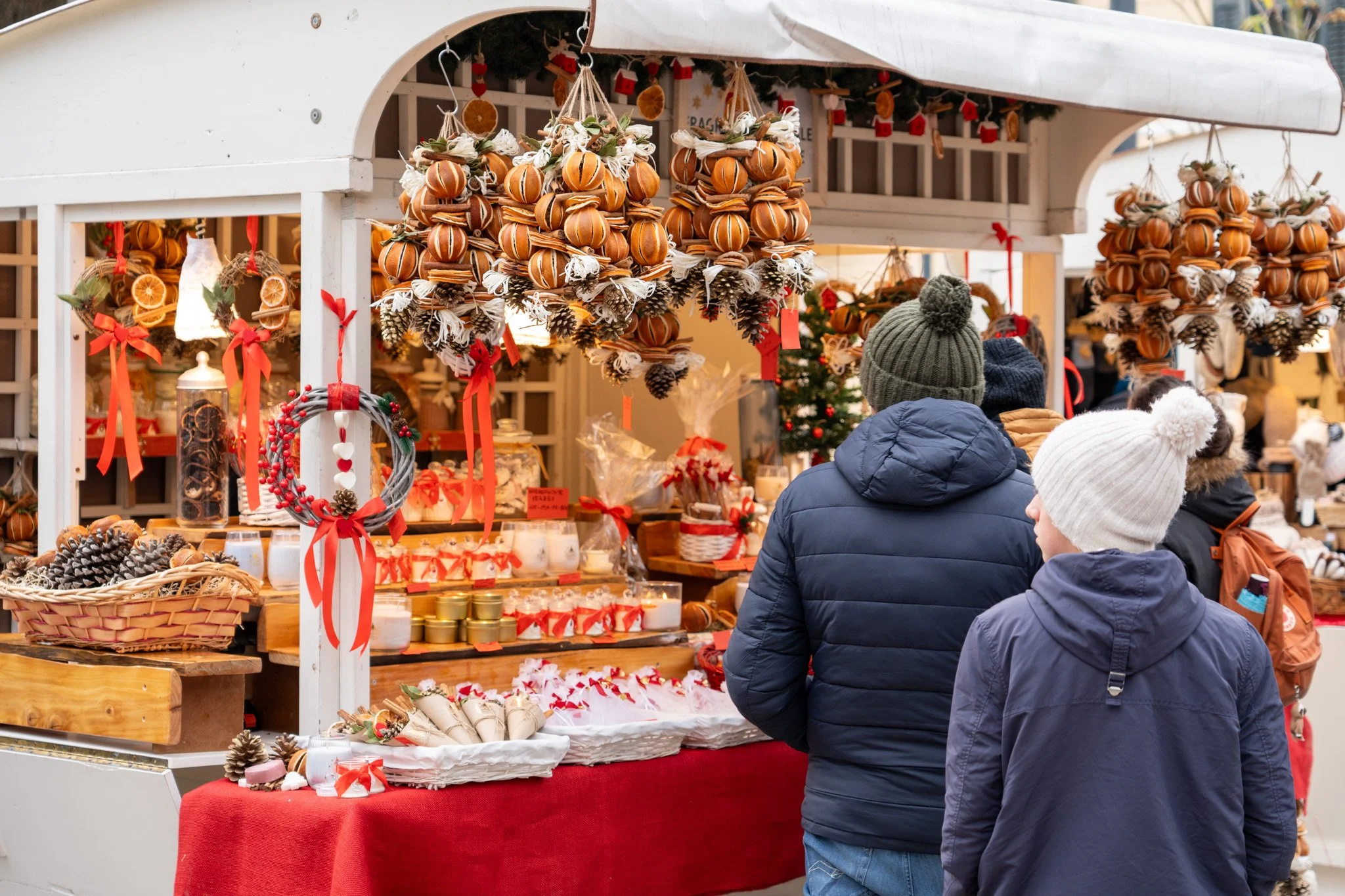
What to Buy in Bolzano and at the Christmas Market
Locally Grown Products: Take a piece of South Tyrol home with regional speck, Alpine mountain cheeses, herbal teas, and regional wine selections from local producers along the Alto Adige wine route.
Local Artisan Crafts: The wooden chalets are filled with sustainable local goods, handcrafted Loden textiles (traditional water-resistant wool), fine ceramics, jewelry, hand-painted ornaments, and local felt slippers called Pantofole.
Handmade Wooden Toys and Decor: Wander the chalets to find beautifully carved wooden crafts from the nearby Val Gardena, traditional nativity scene figurines, and festive decorations for your tree.
Thun Ceramics: Bolzano is the birthplace of the Thun brand ceramics. Look out for their famous, distinctively styled ceramic angels, ornaments, and holiday kitchenware that make iconic collectibles.
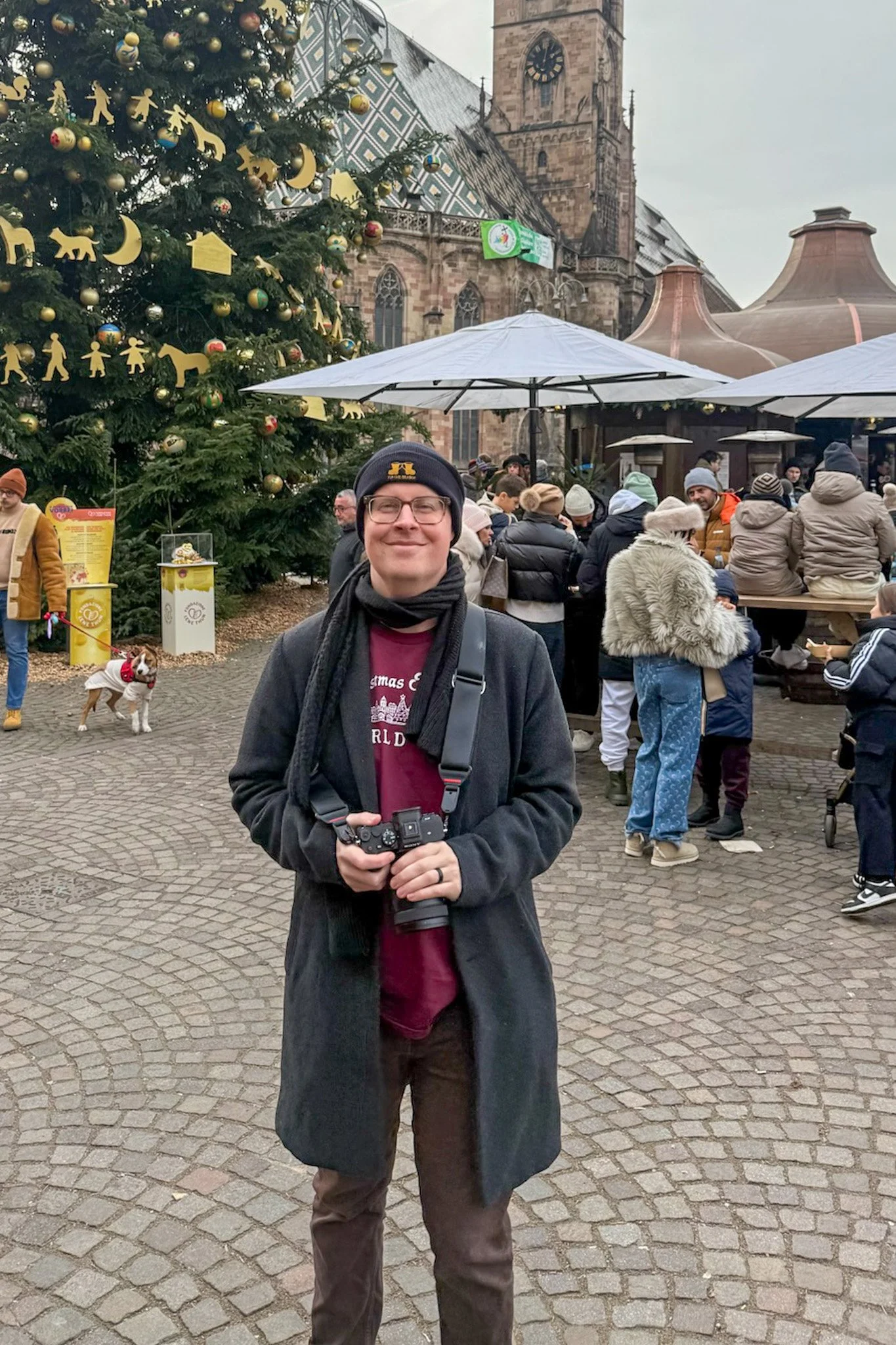
What Else to See and Do in Bolzano
If you are planning a trip to Bolzano for the Christmas markets, don't miss the chance to explore more of the city's deep historical and cultural layers:
Book a Christmas market photo session: For an amazing way to get memorable photos of your unforgettable Christmas market trip that are many steps up from selfie-mode, you can book an inexpesnive photography session for you or your group here in Trento! Click here to book.
Visit the South Tyrol Museum of Archaeology (Museo Archeologico dell'Alto Adige): This museum is world-renowned for being the home of Ötzi the Iceman, a remarkably well-preserved 5,300-year-old natural mummy found in the nearby glacier ice. It offers an incredible look at the Copper Age. Get tickets here!
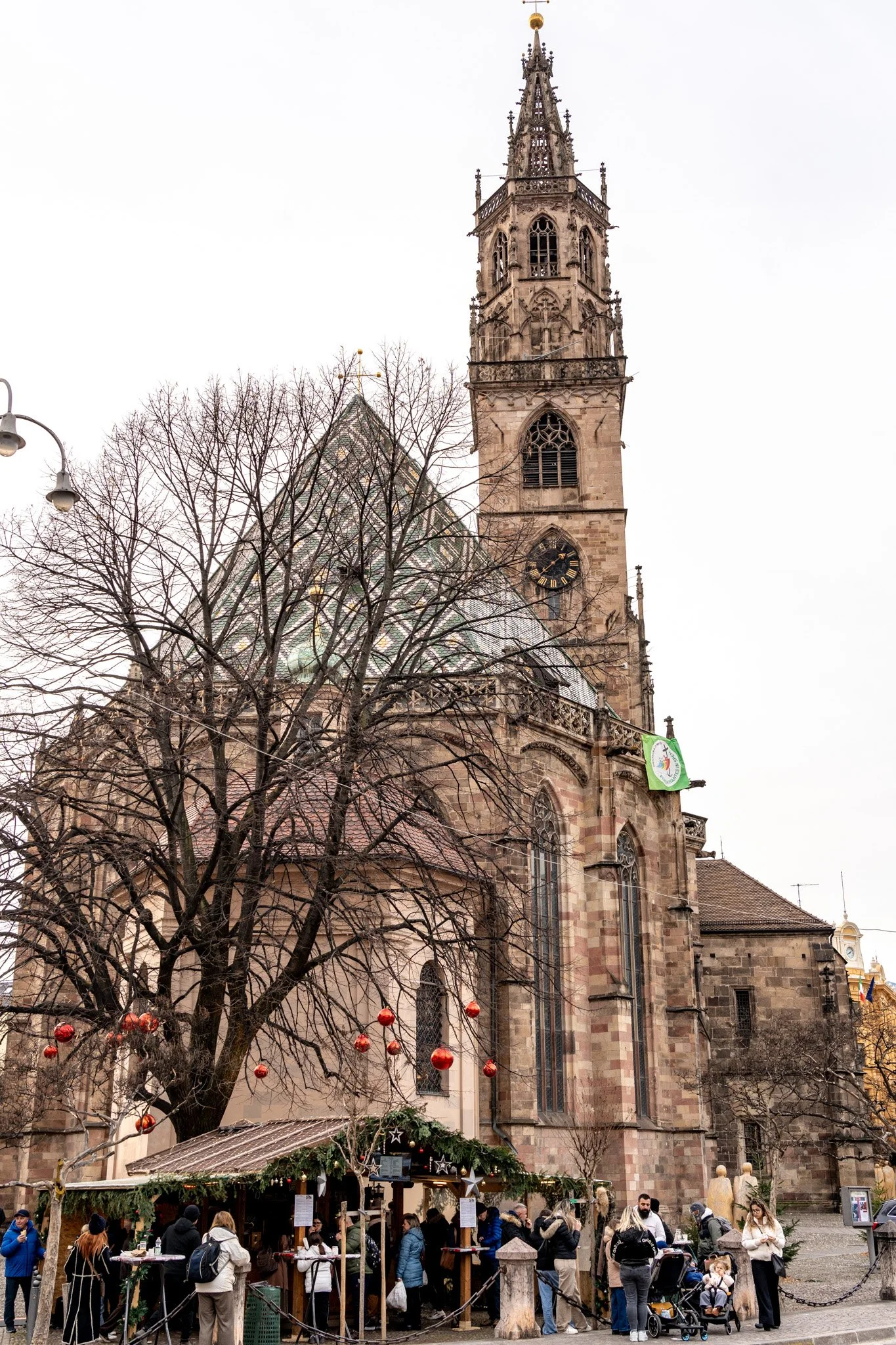
See the Bolzano Cathedral (Duomo di Bolzano): This stunning Gothic masterpiece dominates the corner of Piazza Walther. Step inside to see the beautiful pulpit carved from sandstone, or marvel at its striking, intricately patterned green and yellow tiled roof from the market square below.
Take a street food tour: One of the best ways to get to know the heart of an area is through discovering it’s food! This 2.5-hour food tour makes for a great way to get acquainted with Bolzano and its local flavors.
Shop and eat around Palais Campofranco: Located right off Piazza Walther, this beautifully restored historic palace features an inner courtyard filled with upscale dining stalls, festive lights, and a unique, stylish marketplace vibe during the winter season.
Take a wine & nature tour: The Discover Bolzano: History & Nature with Wine Tasting at Thurnhof tour through GetYourGuide is a fantastic way to get a scenic view of the area, a quick dive into history, and enjoy a sampling of the best of the region’s wine.
Stroll the Porticoes (I Portici / Laubengasse): Beyond the holiday market stalls, this medieval arcaded street is the historic shopping heart of the city, packed with elegant boutiques, traditional Tyrolean clothing shops, and vibrant architectural facades.