
It’s time to add Marrakesh, Morocco, to your travel bucket list! Check out our guide on why everyone should plan a trip to experience the culture, cuisine, and a little chaos. As the perfect destination to start a grand Moroccan adventure rather than a laid-back vacation, here's what you need to know before you go to Marrakesh.
(This post contains affiliate links. We may earn a commission from your purchase(s) at no cost to you, but every little bit helps us keep sharing the magic and logistics of visiting amazing places. Thanks!)
Five Rapid-fire FAQ’s About Marrakesh
Should I use a card or cash? Mostly cash. Visit your bank before your trip to withdraw dirhams in advance. (More about this later in the blog.)
Is it safe? Moroccans are generally very hospitable and kind people. However, we were told that if someone is recognizably eager to help you, steer clear. You’ll find everyone else on the street who doesn’t engage you in a coercive way to be nice and friendly.
How should I get around the city? A mix of walking and taxis.
Can I drink the water? Overall, yes. We had no issues after a week. We mostly drank bottled water, but we used tap water to brush our teeth, and all was well. We’ve also heard mixed reviews from other travelers, so if your gut health and immune system are decent, you should be fine.
What should I pack? What to wear varies greatly by season. In winter, bring a light jacket. In the summer, dress in cool layers. Because Marrakesh is a major international city, really anything goes. You won’t find “dress codes” here, but you’ll see people from all walks of life dressing however feels most comfortable.
Navigating Morocco’s Many Languages
Arabic and Standard Moroccan Berber are the national languages, though you will hear Arabic the most. However, one mind-blowingly impressive thing about traveling to Morocco’s most popular destinations is finding out how many Moroccans speak SO many languages! Most people we encountered throughout our travels speak at least Arabic, English, and French, and we noticed many in the tourism industry also speak Spanish, Mandarin, and sometimes Italian. These folks are truly impressive! In a week-long road trip across the country, we encountered a hospitality worker who didn’t speak conversational English only twice.
You can always quickly remedy any language barrier with Google Translate. While you definitely don’t need to know Arabic to enjoy Morocco, here are a few words that are helpful to know while exploring the country:
Salam – pronounced Sah-Lahm (think salami, without the ending “ee” sound) – means hello
Shukran – pronounced Shoo-Crohn – means thanks/thank you
Lyeh – pronounced ee-yeh – means yes
La – pronounced Lah – means no
Inshallah - pronounced in-sha-lah - means “if God/Allah has willed it” (While this is not a phrase you must say, you will hear it often anytime someone says anything about the future, be it an hour from now, tomorrow, or when wishing to come back to visit in the future. It’s, as some people say, “Lord willing,” after discussing plans.
How to Get Around Marrakesh as a Tourist
Get your walking shoes on! The only ideal way to navigate the medina (old city) is on foot. You could rent a bike, but why not take the opportunity to stroll around town and visit the sites? The best way to get to Marrakesh from other cities is by plane or car. We don't recommend renting a car because you cannot even get to most places in the city. Get a taxi if you need to go further into the “new” parts of town or to and from the airport. We felt safe walking throughout the medina by ourselves.
Understanding Cultural Norms & Safety precautions in Marrakesh
Moroccan hospitality is next level. We hope you like tea (especially sweetened green or mint tea), because you will find it everywhere. Moroccans approach life and tourism with a hospitality-first mindset. Before any money is exchanged, paperwork is completed, or deals are made, they will almost always offer you a cup of tea, often accompanied by little sweet cookies. Everything we did and everywhere we stayed only asked for or accepted payment right before we left. This felt very different than traveling through Europe and North America!
Since our recent visit, one of the most common questions we're asked is, "Is Marrakesh safe?" Overall, yes. If you'd like the full scoop on our experience (the good, the bad, and the kind of scary), check out our full blog on safety in Morocco.
Bonus tip: Marrakesh is home to so many cats! The city is full of friendly and sleepy kitties everywhere you look. Residents treat them nicely because they take care of rats and other pests. We're cat people, so we love them, but if you’re allergic, come prepared with allergy medicine because there’s almost no avoiding them.
Money Matters in Morocco
Exchange those dollars for dirhams before you leave! Yes, there are money exchanges and ATMs at the airport if you find yourself in a bind (like we did, sadly), but take it from us and get out of money before. Why? You will want many small bills, and ATMs typically give you larger bills, which are hard to break while negotiating or trying to tip.
EXCHANGE RATE
At the time of writing (August 2024), the exchange rate for USD to MAD is almost 10%. 1,000 = about $100; 100 MAD = about $10; 10 MAD = $1. This was a helpful and easy mental conversion when bargaining in the markets!
TIPPING
Tipping is expected after someone provides a service for you in Morocco. We tipped anyone who helped us with bags, guided us to a specific destination, or arranged transportation. We typically tipped 50-100 dirhams for these services, which is about $5-$10.
HOW MUCH CASH DO YOU NEED?
Most places prefer cash. Our riad even offered a lower cash price if we had enough dirhams for our stay than paying with a card. That said, you can use credit cards for larger lunches, dinners, riad stays, or bigger purchases. We brought about $700 USD and definitely needed more cash by the end of the trip.
What to Expect of Moroccan Dining in Marrakesh
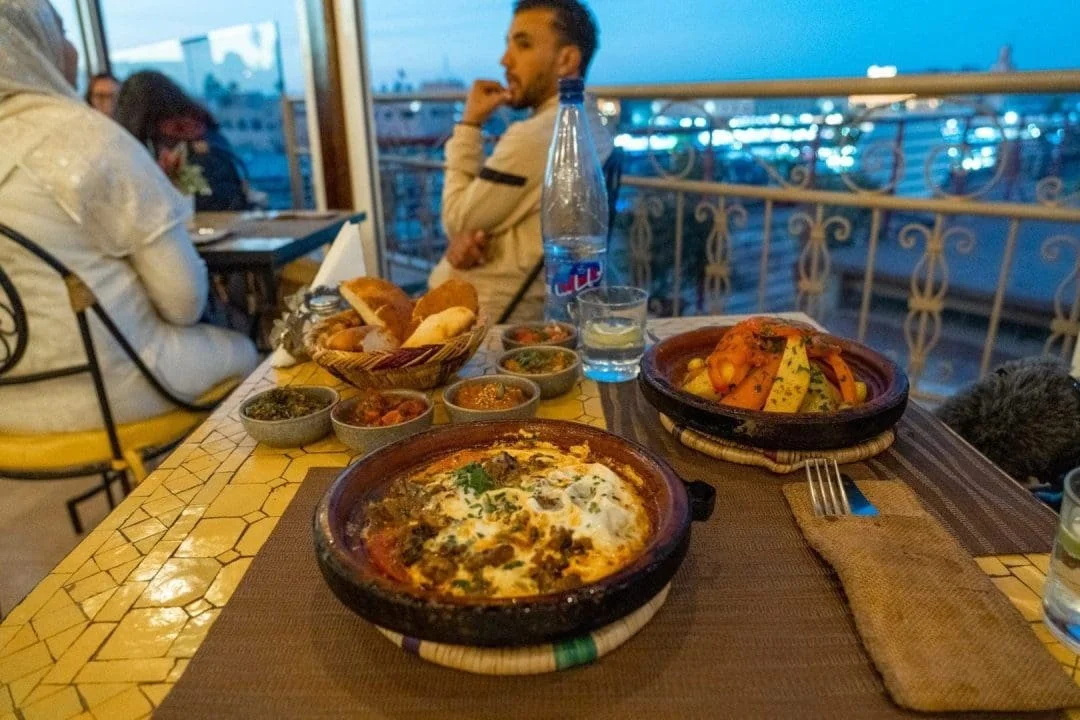
We found the food to be plentiful and delicious. Each morning, every riad (local hotel stay) offered complimentary breakfast. Lunches are a mix of options. Dinners are leisurely and offered in many nice restaurants as well as almost always at every riad.
BREAKFAST
They say there's no typical or traditional breakfast food for Moroccans, but as tourists, we had the exact same breakfast at every hotel or riad we stayed at across the country. Each morning starts with freshly squeezed sweet orange juice, coffee, tea, yogurt, fruit, eggs made to order, and about six kinds of bread, served with jams, jellies, butter, and cream. Just a casual (more like comically) large breakfast spread.
LUNCH
Typically either a simple pita sandwich, a hearty stew, or an assorted variety of Moroccan salads along with a tagine (various veggies or meat and veggies cooked in a pointed clay pot)
DINNER
Consists of several courses. You'll begin with olives and bread on the table (always), followed by assorted salads, soup, and then a light appetizer. The main entree is typically a tagine, kabab, or savory meat-and-veggie dish. Save room for dessert because Moroccans are very into organic sweets and practically won’t let you leave the table until you’ve had dessert and tea. Desserts ranged from fruit with spices to sweet breads or cakes. While we ate plenty of different types of meats, we noticed it would be pretty easy to be vegetarian, if not vegan, in Morocco!
In addition to these meals, we hope you like tea, because there will be plenty of it! It's a major part of their hospitality and will be offered frequently.
FOODS & DRINKS TO TRY
TAGINE
The inevitable dinner dish you’ll have almost every day. Think of it as a hearty meal of meat, potatoes, and vegetables cooked inside a clay pot instead of in your mom’s slow cooker. Everything is slow-cooked and utterly delicious. They rely on multiple different spices and herbs, but not spicy heat.
BERBER PIZZA
Unlike Italian pizza, this is a delicious stuffed flatbread. More like a calzone than a pizza, this flatbread is full of beef or lamb, onions, and spices. It makes for the perfect lunch dish!
MOROCCAN ORANGE & CINNAMON DESSERT
Oranges grow abundantly here, so you’ll have plenty. A typical dessert is sliced oranges sprinkled with Moroccan cinnamon. We don’t know how, but this cinnamon is DIFFERENT. It naturally tastes sweet, so we add very little (if any) additional sugar to the dessert. However, it’s still sweet enough to hit the spot.
COUSCOUS
But only on Fridays…seriously! It’s on a few menus during the week. Still, this classic Moroccan dish is primarily eaten on Fridays along with veggies, lamb, or chicken.
What’s Shopping Like in Marrakesh?
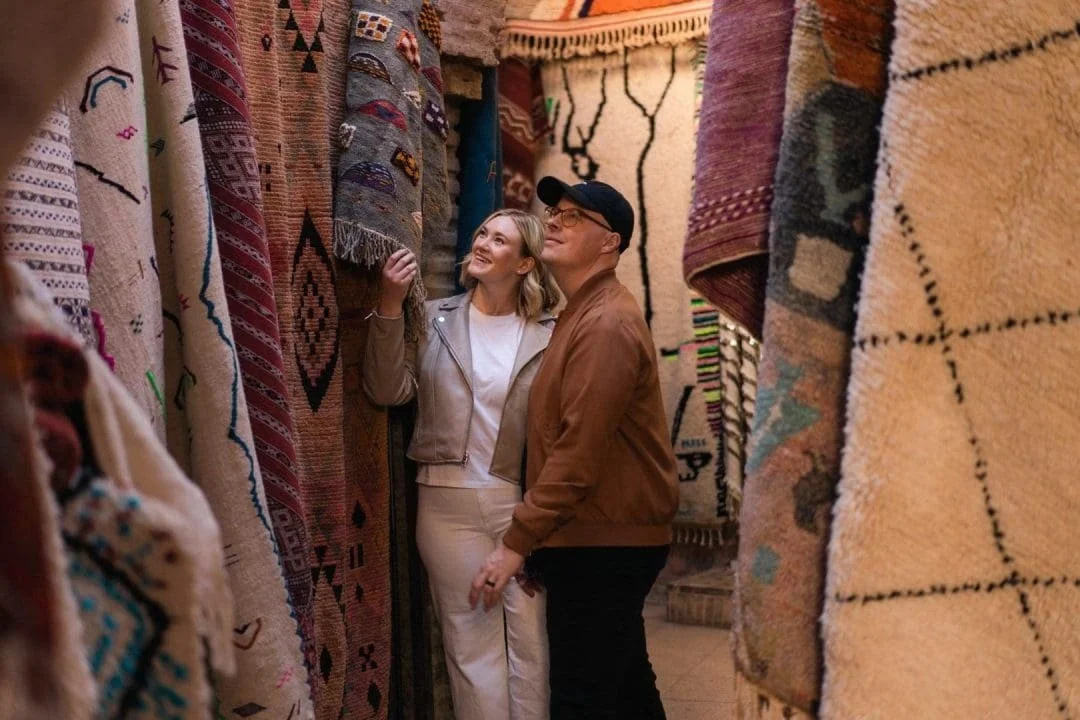
The best and most iconic shopping is at the souks (markets). Marrakesh offers fantastic shopping opportunities in the souk stalls. From handmade rugs, lamps, and jewelry to spices, oils, and herbs, your senses will be happily overwhelmed as you find treasures to bring home for a great deal. Get comfortable with negotiating quickly, though! It’s expected in Morocco. Once a shopkeeper tells you a price, offer half first, then either agree somewhere in the middle or walk away if the deal isn’t good enough for you. The good news is, there will be a nearby stall selling similar goods you can compare.
Where to Stay in Marrakesh
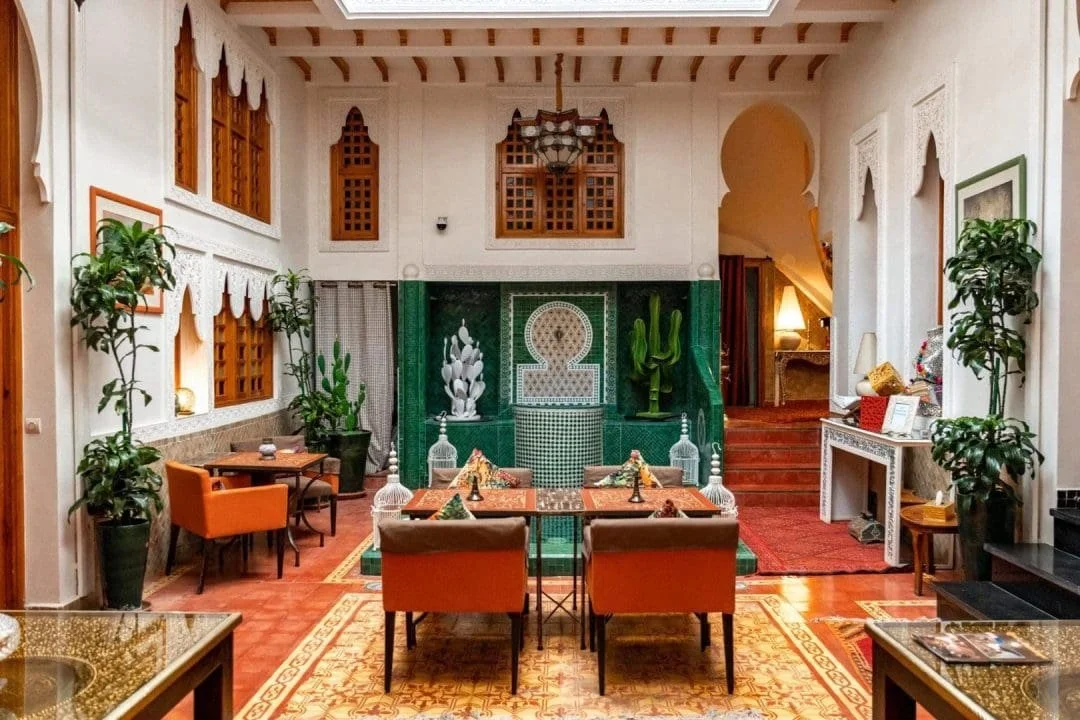
Most hotels are riads. Instead of staying at a typical chain hotel, we highly recommend booking a stay within the medina (old city surrounded by walls - typically where you’d want to stay on a visit to Marrakech anyway) at a riad. They are traditional Moroccan houses or palaces with a central indoor courtyard or garden.
Riads are typically incredibly detailed, with ornate touches, yet have all the modern amenities you’d expect in a hotel. Think of them as small, local boutique hotels. Prices vary, but we stayed in a beautiful and centrally located riad with AC, power, and complimentary breakfast for two nights for less than $150 per night.
After our visit, asking around, and researching the best properties and areas, we've put together a list of the best mid-range luxury riads in Marrakesh! Find that information here.